
Materials Engineering
FOCUS OF OUR RESEARCH
Engineering structures, interfaces, and hybrid materials for multifunctional systems.
OBJECTIVE
We develop material architectures that combine multiple functions, such as conductivity, stability, catalytic activity, and light emission, and can be reliably integrated into functional components and demonstrators.
HIGHLIGHTS
-
Structuring materials across multiple length scales, from nanostructures to macroscopic components.
-
Thin-film deposition, coating, and patterning techniques for functional layers, electrodes, and membranes.
-
Development of hybrid materials combining electronic, optical, thermal, or catalytic functions.
-
Linking processing parameters and material architecture through modeling and targeted characterization.
STRUCTURING ACROSS MULTIPLE LENGTH SCALES
Material properties depend not only on chemical composition but also on structure at the nano-, meso-, and microscale. We develop methods to precisely control porosity, grain size, phase distribution, and conductive pathways through controlled sintering, self-assembly, and structured coating techniques. This enables materials with optimized transport pathways for charge, heat, and molecules.
COATING AND SURFACE MODIFICATION
Coatings play a key role in protecting sensitive materials and introducing additional functions at interfaces. At NETZ, we use a wide range of coating techniques, including solution-based spin coating, printing, plasma- and laser-based deposition, and chemical coating processes. Combined with tailored pre- and post-treatments, these methods allow precise control of adhesion, conductivity, roughness, and wettability.
HYBRID MATERIAL SYSTEMS
Hybrid materials combine the advantages of different material classes, such as metal oxides and polymers, nanoparticles and carbon structures, or inorganic phases and organic emitters. We focus on the controlled integration of individual components to exploit synergistic effects while minimizing unwanted interactions, such as degradation. This enables materials for electrodes, membranes, thermoelectric elements, and optoelectronic devices.
MATERIAL ENGINEERING IN LINKED FACILITIES
Material engineering is closely integrated with synthesis and processing. In our Linked Facilities, gas-phase and laser-synthesized nanoparticles are directly processed, functionalized, and incorporated into coating processes. This allows us to jointly optimize structure, composition, and processing conditions and rapidly test the resulting material architectures in demonstrators.
Research Groups




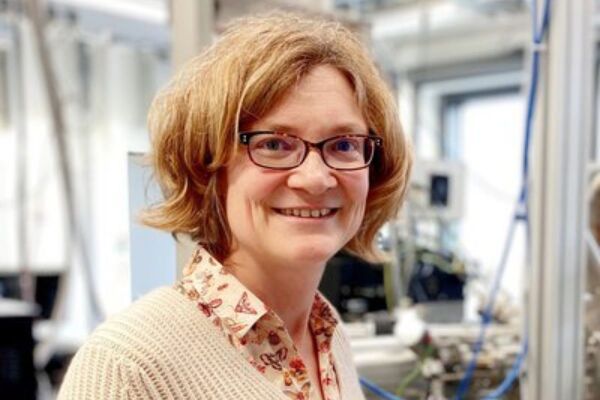


Dr. Nicolas Wöhrl
Laser- and Plasma Coating