

Research Group Leaders

Prof. Dr.Corina Andronescu
Corina Andronescu’s research focuses on electrocatalytic reactions for sustainable energy conversion. She develops tailored electrode materials for hydrogen evolution and CO₂ reduction, aiming to realize efficient, largely noble-metal-free catalysts for electrolyzers and fuel cells.

Prof. Dr.Stephan Barcikowski
Stephan Barcikowski’s research focuses on laser-generated nanoparticles and functional materials. His group develops physical synthesis processes in which pulsed lasers produce clean, ligand-free colloids in liquids or from solid materials. These processes enable the production of catalysts, bio-nanomaterials, and powders for additive manufacturing, paving the way for new solutions in energy conversion, medical technology, and 3D printing.

Dr.Viktor Čolić
Viktor Čolić’s research group focuses on electrocatalytic reactions for energy conversion and storage. By combining electrochemistry with surface analysis, the team investigates the relationships between catalyst surfaces, electrolytes, and catalytic activity, developing more efficient materials for fuel cells, electrolyzers, and power-to-X processes.
Dr. Sebastian Hardt
Sebastian Hardt’s research focuses on the development and production of tailored nanomaterials for a wide range of industrial applications. Using gas-phase synthesis methods and flame-based reactor concepts, his work combines precise control over particle properties with application-oriented process engineering to enable the scalable production of functional materials and customized nanoparticles.

Prof. Dr. Andreas Kempf
Andreas Kempf’s research focuses on the simulation, measurement, and optimization of reactive flows, flames, and detonations in chemical reactors, gas turbine combustors, hydrogen systems, and nanoparticle synthesis processes. Using numerical models, reaction kinetics, and tomographic measurement techniques, his work investigates complex transport and conversion processes to develop more efficient, safer, and lower-emission energy and synthesis systems.
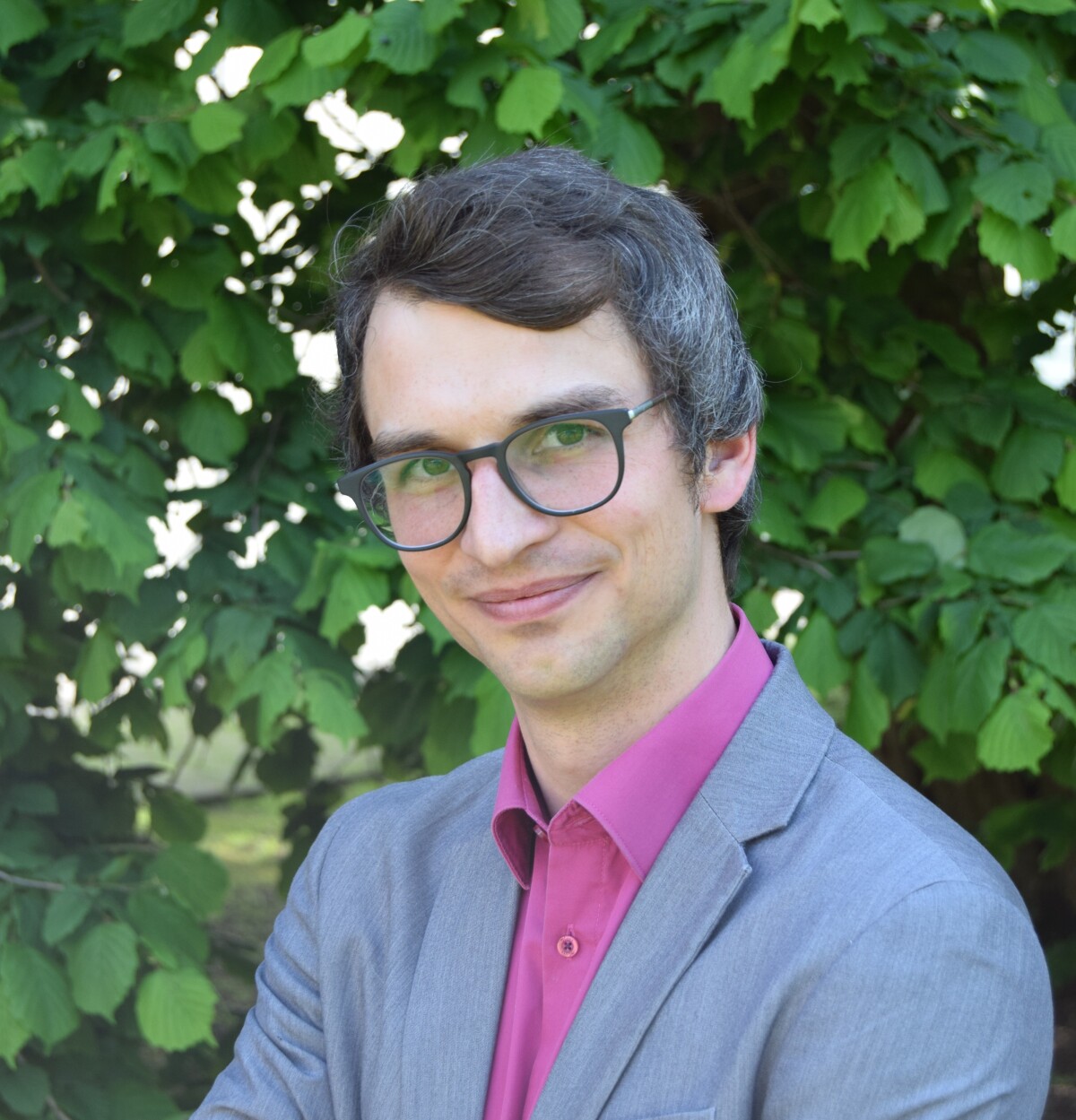
Dr.Benjamin Mockenhaupt
Benjamin Mockenhaupt’s research focuses on both heterogeneous catalysts for electrochemical energy processes and sustainable thermochemical processes for the production of platform chemicals. Laser-generated nanoparticles and complex alloys are used to optimize catalytic activity and stability, for example in water electrolysis, and to investigate the structure–property relationships of sustainable catalysts.

Prof. Dr.Khadijeh Mohri
Khadijeh Mohri develops 3D tomographic imaging techniques for reactive, non-reactive, and two-phase flows. She combines tailored reconstruction algorithms with emission imaging, background-oriented schlieren (BOS), and shadowgraphy measurements to resolve flow structures, refractive index fields, and other flow properties. Her group pioneered BOS tomography of reacting flows, advanced ratiometric emission thermometry, and introduced the TIMes method for synchronized multimodal measurements.

Prof. Dr.Franziska Münzer
Franziska Münzer develops functional materials for energy-related electronic applications based on inorganic semiconductors. She investigates thin films and nanostructured materials for flexible optoelectronics and energy-efficient devices, combining targeted materials design with precise characterization and device physics.

Prof. Dr.Hannah Roth
Hannah Roth develops sustainable membranes for demanding separation processes in water treatment, lithium recovery, carbon-free energy processes, and medical technology. Her research focuses on environmentally friendly, fluorine-free polymers and aqueous or solvent-free membrane manufacturing processes. With her “Chemistry in a Spinneret” method, she takes this approach a step further: During fabrication, a simultaneous crosslinking reaction creates an additional functional polymer layer, enabling the production of multilayer fibers and films in a single process step. Her goal is to enhance membrane performance and facilitate their integration into industrial processes.
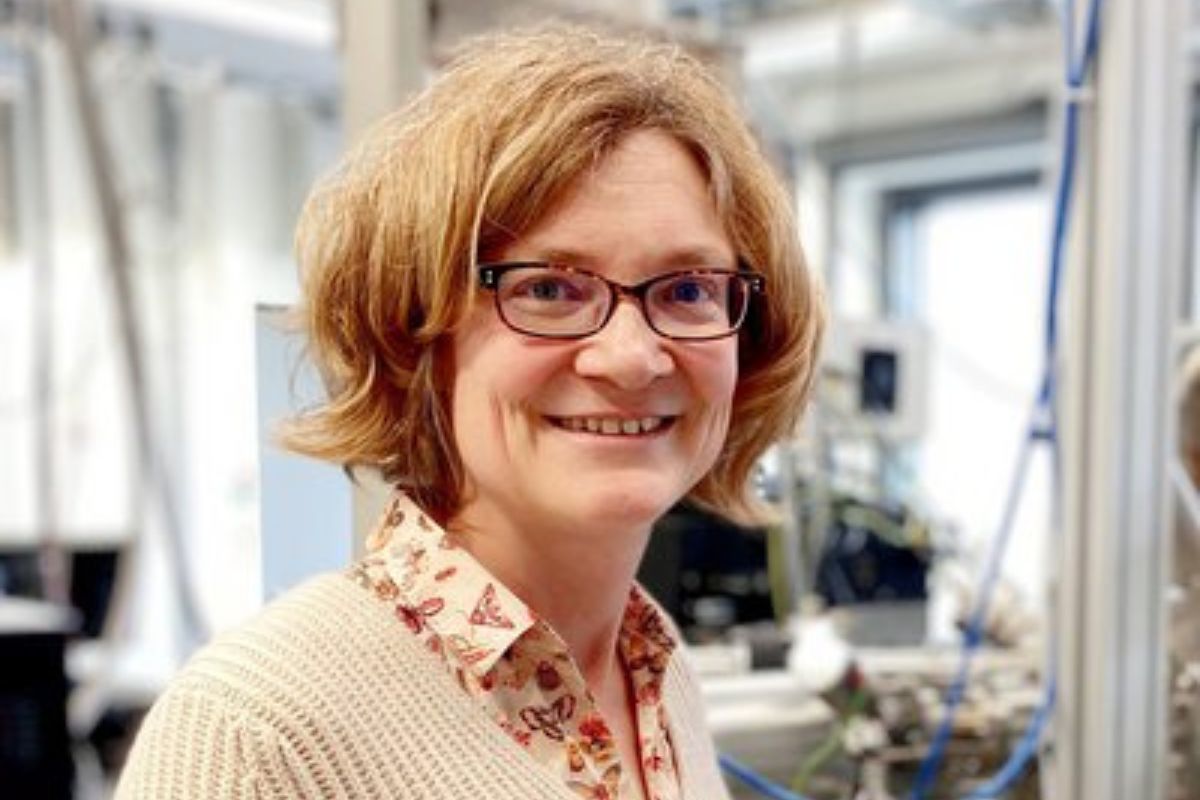
Prof. Dr.Gabi Schierning
Gabi Schierning’s research focuses on electronic transport properties. She investigates topological materials and metals with correlated electron systems, combining quantum transport, nanostructuring, and innovative materials concepts.

Prof. Dr.Roland Schmechel
Roland Schmechel’s research focuses on nanostructured semiconductor materials for optoelectronic and thermoelectric applications. His work ranges from the synthesis of thin films and nanostructures to their electrical, optical, and thermoelectric characterization, as well as the development of devices for efficient light sources, displays, and energy conversion systems.

Prof. Dr.Christof Schulz
Christof Schulz’s research focuses on reactive fluids, particularly in the gas-phase synthesis of nanoparticles and in ignition and combustion processes. Using laser-based diagnostics and kinetic measurement techniques, his work investigates fundamental mechanisms and translates these insights into practical reaction processes to produce functional materials and enable efficient energy conversion.

Prof. Dr.Doris Segets
Doris Segets combines particle technology with data-driven process development for electrochemical functional materials. She investigates how particle and dispersion properties interact with the morphology of electrode layers and translates nanotechnology-based synthesis methods into robust, scalable processes for energy storage and conversion systems.

Prof. Dr.Mathias Ulbricht
Mathias Ulbricht develops functionalized polymer membranes for demanding separation processes, particularly in water treatment. Through targeted surface and pore modification, his research creates selective, fouling-resistant, and stimuli-responsive membranes that enable controlled mass transport and energy-efficient filtration and purification processes.

Prof. Dr.Hartmut Wiggers
Hartmut Wiggers’ research focuses on the scalable gas-phase synthesis of inorganic nanoparticles in flames, wall-heated reactors, and plasmas. By closely integrating gas-phase and particle diagnostics, process parameters, and simulations, his work enables precise control over particle composition, size, and structure, thereby tailoring their properties for applications such as battery materials, catalysts, and sensors.

Dr.Nicolas Wöhrl
Nicolas Wöhrl investigates and applies plasma processes for the synthesis of nanostructured carbon materials and the chemical and physical modification of surfaces. Using plasma-enhanced chemical vapor deposition (PECVD), he precisely controls material structure, morphology, and defect architecture to develop high-performance electrodes for water electrolysis and create tailored surfaces and color centers in diamond for quantum sensing and other sensor applications.