
The “Globetrader GmbH” assessment environment
A Look at the Design - Beyond Substitution
Authentic Assessment as a Pilot Project








What does the digital environment look like?
The “Globetrader GmbH” simulation environment
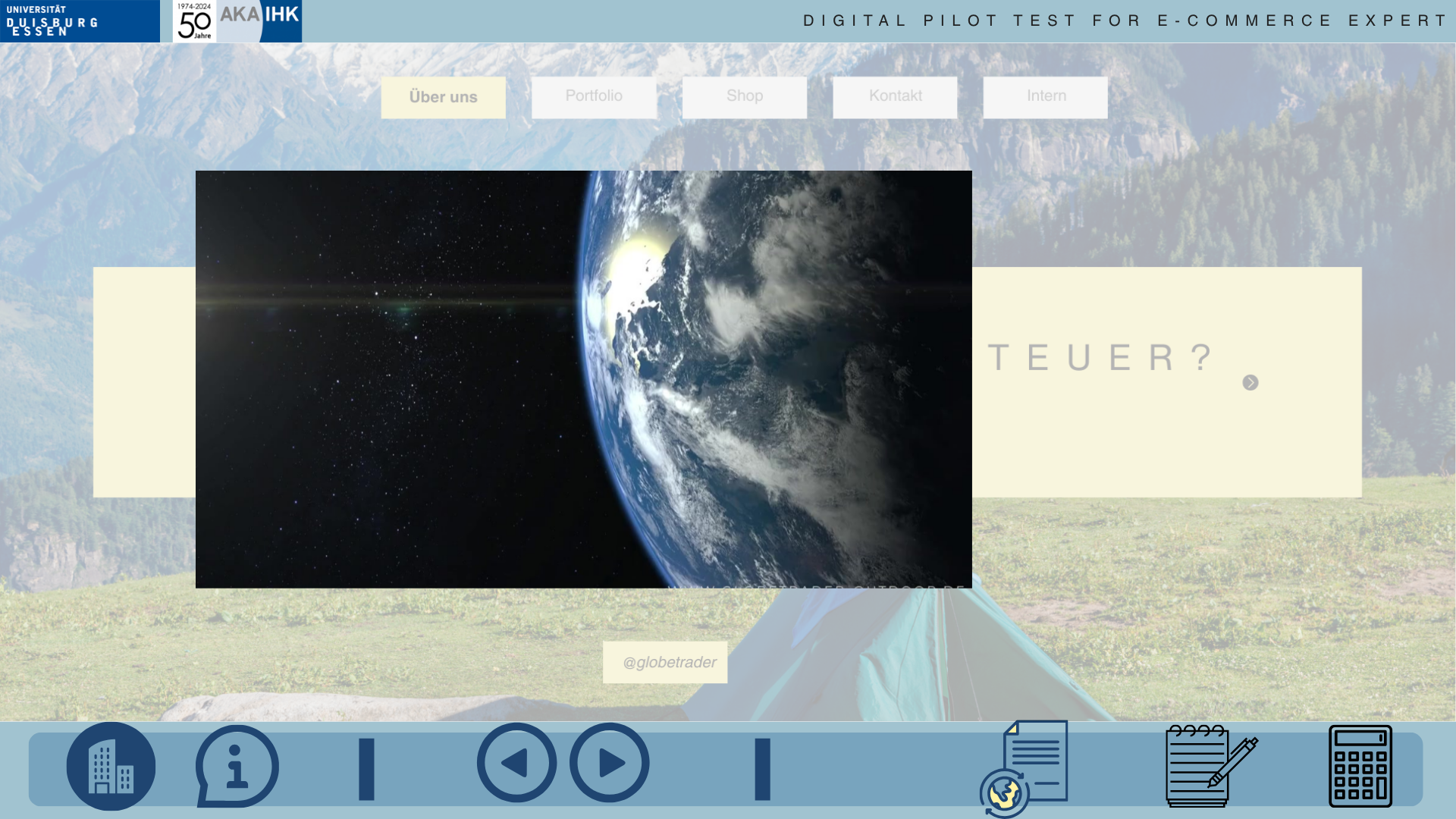
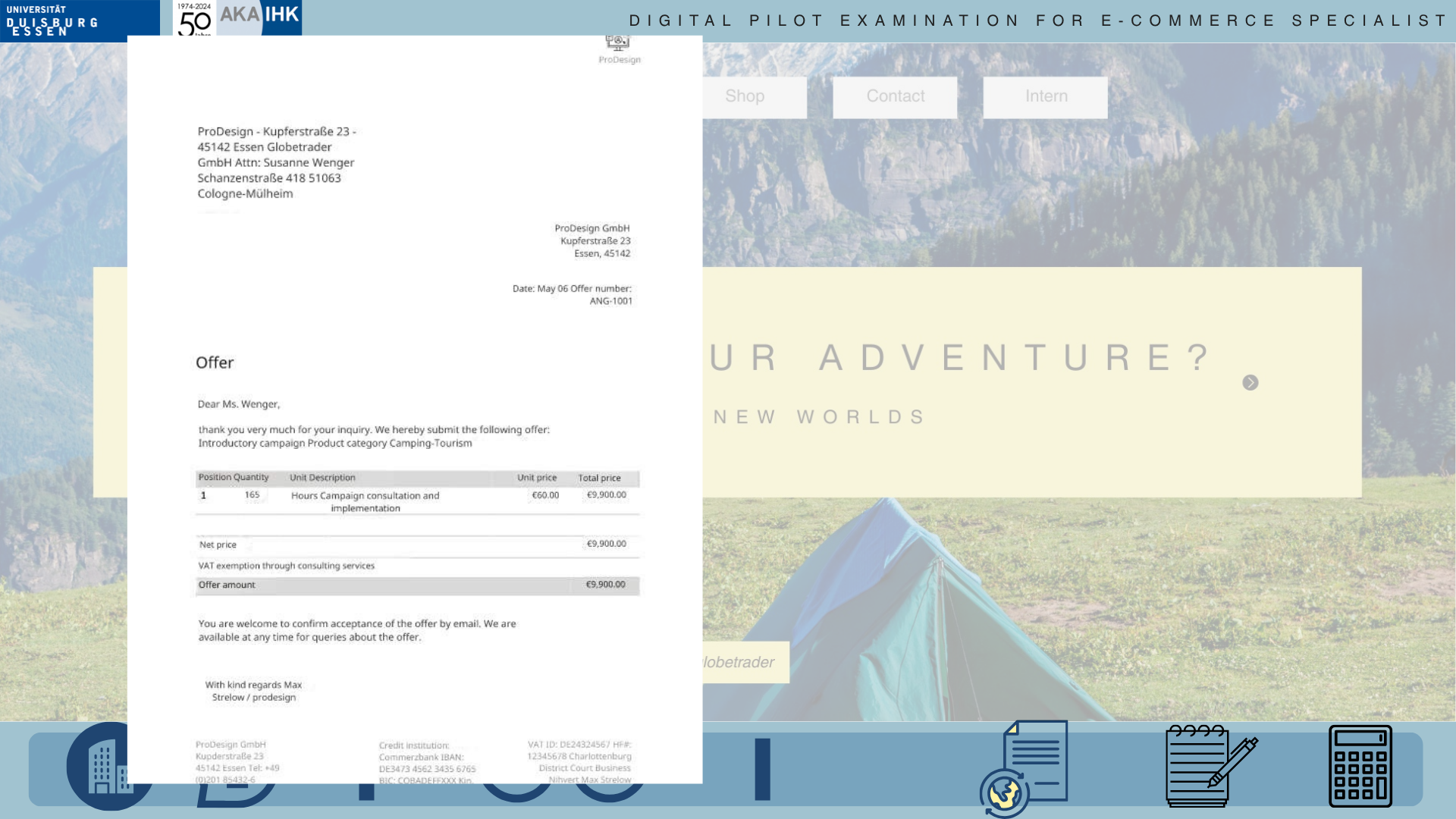
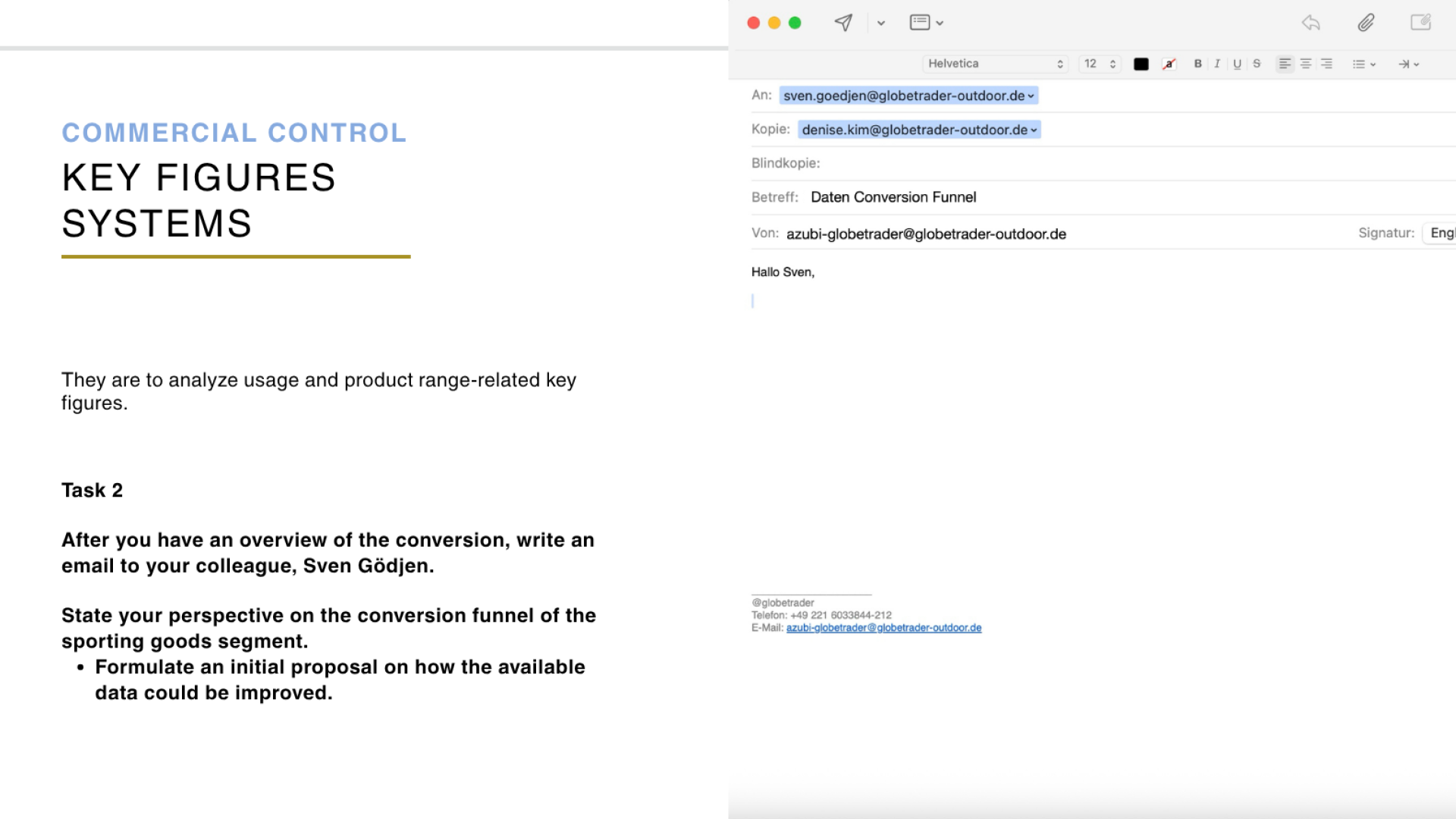
The examination simulates the real ecosystem of the omnichannel retailer “Globetrader GmbH” via three interconnected modules: A Customer Frontend (online shop), an internal Operations Backend (ERP system and KPI dashboards) for operational process control, and an optional stationary store view via high-fidelity video for physical customer interactions.
Technically, this immersive and accessible test environment is realized using the professional authoring tool CBA ItemBuilder.
1. The Architecture of the Simulation Environment
To overcome the isolated query of fragmented sub-tasks, examinees operate in a holistic, digital workplace. The systems are information-technologically interconnected:
Customer Frontend
The external market perspective. An interactive, customer-oriented e-commerce web presence (campaign and shop interface) where UX analyses and landing page evaluations take place.
Operations Backend
The internal employee workspace. A central node with integrated ERP systems, live reporting dashboards, spreadsheets, and simulated email clients for process control.
Physical Store (Optional)
Mapping omnichannel concepts at the point of sale. Supported by high-fidelity videos for interpersonal communication situations and physical product presentation logic.
2. Curricular Alignment & Competency Descriptions
Transferring dual curriculum structures (Training Framework Plan and Framework Curriculum) into a digital exam requires systematic curricular mapping. In the sense of Evidence-Centered Design, abstract competencies are translated into directly observable performance indicators (so-called “Can-Do Statements”), which form the direct construction basis for the assessment tasks:
1. Selecting and deploying online sales channels
- Channel selection: Can independently define criteria for sales channels (e.g., marketplaces, social commerce) and evaluate them using multi-criteria analysis.
- User behavior: Can interpret data from web analytics programs (bounce rates, click paths) and optimize the customer journey.
- Legal compliance: Can flawlessly apply legal frameworks (GDPR, imprint obligations) when operating digital channels.
2. Shaping and managing product assortments
- Catalog management: Can prepare and structure product data for PIM systems and optimize system-internal search attributes (SEO).
- Conversion optimization: Can design conversion-optimized product presentations considering digital accessibility and pricing psychology.
- Price calculation: Can calculate net and gross sales prices (considering procurement costs and dynamic strategies).
3. Supporting procurement
- Demand analysis: Can quantitatively analyze the digital demand situation and derive sound forecasts or procurement signals.
- Order quantity optimization: Can determine the optimal order quantity by weighing storage and ordering fixed costs.
4. Designing contract initiation in online sales
- Checkout process: Can structure the checkout to be user-friendly, low-friction, and legally compliant (e.g., button solution, terms and conditions).
- Risk management: Can evaluate digital payment methods and implement preventive credit checks in compliance with data protection.
5. Handling online sales contracts
- Order processing: Can process transactional order data system-side (order management) and automatically generate follow-up documents.
- Dispute management: Can initiate appropriate commercial and legal steps for performance disruptions (delivery delays, material defects).
6. Designing customer communication
- Omnichannel service infrastructure: Can select, set up, and monitor synchronous and asynchronous communication channels (email, chatbots) based on target groups.
- De-escalation: Can handle complex customer requests and complaints in a solution-oriented, legally secure, and empathetic manner – even in an international context.
7. Developing and implementing online marketing
- Campaign conception: Can conceptualize and budget target-group-specific performance marketing campaigns (SEO, SEA, SMA).
- KPI control: Can calculate success metrics (conversion rate, CTR, ROAS, KUR), analyze them in dashboards, and perform operational adjustments.
8. Commercial control and monitoring
- Financial accounting: Can record transactional value flows in ERP systems and calculate/interpret profitability and liquidity ratios.
- Cost accounting: Can manage assortment profitability using full and partial costing procedures (contribution margin accounting).
- Returns management: Can evaluate operational return rates, calculate process costs, and develop strategies for preventive return reduction.
Note: These operationalized performance indicators serve as direct construction matrices for the closed and semi-open simulation scenarios within the operations backend.
3. Methodological Mapping: From Analog to Digital
To maintain measurement invariance with the existing Chamber of Industry and Commerce (IHK) anchoring exam, core competencies were systematically transferred into the digital format. This reveals significant didactical added values:
| Competency Area | Analog Exam Reality (PBT) | Digital Transformation (TBA) |
|---|---|---|
| Project Management Identical Construct |
Multiple-choice assignment of Scrum role profiles and cyclical events. | Interactive drag-and-drop on virtual flipcharts and situational conflict scenarios in an agile workspace. |
| KPI Control (Funnel) Extended Transfer |
Static calculation of conversion rates and cost-revenue relations on paper. | Dynamic live dashboard with responsive sliders to simulate micro-conversions in real-time. |
| UX/UI Evaluation New Depth of Action |
Theoretical naming and explanation of design elements of a landing page in a fill-in-the-blank text. | Visual analysis and functional testing of optimization elements directly on a real digital agency prototype (wireframe). |
Core Statement
“The ‘Globetrader GmbH’ simulation environment breaks with fragmented sub-tasks in favor of a fully integrated digital workplace. It requires examinees to manage complex processes and real customer interactions seamlessly within a holistic, authentic context.”