

Projects
SPP 2289: Creation of synergies in tailor-made mixtures of heterogeneous powders: Hetero aggregations of particulate systems and their properties
More information
Information
SPP 2289: Creation of synergies in tailor-made mixtures of heterogeneous powders: Hetero aggregations of particulate systems and their properties
- Funding :
- Since 2021
- Contact:
-
Christof Schulz (Project member)
- Website:
- https://gepris.dfg.de/gepris/projekt/441399220?language=de
Abstract
The mixing of disperse systems (particles and powders) is a traditional unit operation in process engineering. The applications of mixed particulate systems range from the processing of food, pharmaceutical and chemical substances to materials processing and materials engineering. Functional mixing of different particle types (hetero-aggregation) has the potential to create outstanding new properties of disperse products that depend on the mixture composition and various secondary process conditions. A new product property can be created by the direct contact of different particles (heterocontact) and thus by the resulting interface between the respective subcomponents. Many applications have shown that these hetero-contacts are of fundamental importance for certain functional properties. In most cases, the new properties result from the transfer of charges, mass, heat, forces or moments without the need for a chemical reaction between the components. The quality of such a particle mixture is therefore directly related to the contact points and interfaces of the different particles and the details of the interaction between their species in contact. The new property from the contact zone controls the material and product properties of the entire system, which is referred to as hetero-contact in the context of SPP. Direct information on the quality of the hetero-contact (e.g. number of contacts, transport properties between different particle types) could therefore form the basis for a fundamental description of the new properties of the particle mixture. At the same time, the hetero-aggregation process for generating such hetero-contacts must be investigated and controlled. In the remaining three years of the SPP, research will increasingly focus on specific material functions of the hetero-aggregated particulate systems, which will be verified and linked to the process parameters. This focus in turn places special demands on adapted process measurement and control techniques as well as on material and particle characterization. In detail, the SPP has the following objectives: - Utilization of previous findings for multi-stage processes for the production of hetero-aggregates with integrated process control. This includes aerosol processes for the defined generation of hetero-aggregates, with adequate process diagnostics for the detection of mixing processes. - Utilization and coupling of various CFD, particle and reaction models and development of a holistic simulation environment for the design of material functions. - Establishment of standard procedures for the characterization of hetero-aggregates in the sub-micrometer range using sample trains from rapid aggregation processes and tomographic methods for the characterization of hetero-aggregates.
SPP 2122: Materials for Additive Manufacturing
More information
Information
SPP 2122: Materials for Additive Manufacturing
- Funding :
- Since 2018
- Contact:
-
Stephan Barcikowski (Coordinator)
Anna Ziefuß (Project member)
- Website:
- https://www.uni-due.de/matframe/index.php
Abstract
Lasers in production are becoming increasingly powerful and brilliant, but the materials available are often completely inadequate for the processing tasks currently required. To date, metal powders are used in additive manufacturing that were developed over 50 years ago for a completely different process - thermal spraying. However, in modern laser-based additive processes, these powders lead to process instabilities, porosities, and defects in the component. In the field of polymer powders, there is also a lack of a wide range of materials. Therefore, there is an urgent need to adapt the materials to these widespread production processes, as laser-based processes will dominate important production processes in the long term due to their throughput and precision. In fact, a fundamental research approach already at the beginning of the process chain, the material, is required. Therefore, there is an urgent need for action to defend and further expand Germany's leading position worldwide in photonics and materials science. A coordinated, coherent research program combining materials development and photonics research for the first time, starting at the materials synthesis stage, should help exploit this considerable potential. To ensure feedback between process behavior and material properties, the SPP will fund tandem projects from the fields of "materials" and "laser process", which will cooperate across projects in thematic clusters. The scientific questions will be formulated across materials and focused on the photonic process of additive laser manufacturing. With this, for the first time, chemical, as well as metallurgical and additive-based modifications, will be developed specifically for photonic production. Such a large-scale interdisciplinary study requires targeted coordination and enables a unique Interlaboratory Study (Round Robin), including Research Data Management. Only by this, is it possible to generate an inter-laboratory scientific exchange, which guarantees reproducibility and statistical robustness.
SPP 1980: Sprayflame Synthesis
More information
Information
SPP 1980: Sprayflame Synthesis
- CENIDE Research Focus:
-
Gas-phase synthesis of nanomaterials
- Funding :
- Since 2017
- Contact:
-
Christof Schulz (Coordinator)
- Website:
- https://www.uni-due.de/spp1980/
Abstract
Sprayflame synthesis offers a promising approach for the production of functional nanomaterials. The viability of this route has already been proven for a wide range of materials on the laboratory scale. Compared to existing large-scale methods for nanomaterials synthesis in pure gas-phase processes, the sprayflame synthesis provides access to an abundance of additional materials, which cannot be produced with other processes. The actual industrial application of sprayflame synthesis has failed so far due to the necessity of using expensive starting materials and a lack of understanding of the process. This situation should be overcome by an interdisciplinary approach within the SPP1980 which lays the foundations for practical applications of sprayflame synthesis. The chances for this are excellent within an interdisciplinary collaborative network that links recent developments on experimental, theoretical, and simulation techniques that have been previously used in their individual research disciplines. Their combination will allow to analyze and describe the underlying sub-processes. The aim of this priority program is to develop the fundamental understanding and the simulation capabilities for of sprayflame synthesis processes and to establish an interdisciplinary research network. Sub-processes will be analyzed and their understanding will be integrated into a comprehensive model that provides the chance for the development of processes that are based on inexpensive starting materials and that can be scaled-up to an industrial scale for the targeted production of materials with a wide range of properties.
SFB/TRR 247: Heterogeneous Oxidation Catalysis in the Liquid Phase – Mechanisms and Materials in Thermal, Electro-, and Photocatalysis
More information
Information
SFB/TRR 247: Heterogeneous Oxidation Catalysis in the Liquid Phase – Mechanisms and Materials in Thermal, Electro-, and Photocatalysis
- CENIDE Research Focus:
-
Catalysis
- Funding :
- Since 2018
- Contact:
-
Stephan Schulz (Deputy spokesperson)
Kristina Tschulik (Spokesperson)
- Website:
- https://www.sfbtrr247.ruhr-uni-bochum.de/
Abstract
The goal of the project is to elevate heterogeneous oxidation catalysis on transition metal oxides in the liquid phase to a level of understanding comparable to that of gas-phase catalysis on metals. To achieve this, the active sites and reaction mechanisms will be identified. The research program of the SFB is based on three hypotheses: The prerequisites for a highly active oxidation catalyst (precursor structural motifs for the active sites) can be determined through experimental structure-activity relationships, focusing on structural motifs beyond the ideal crystal structure. By combining theoretical calculations with experimental in situ and operando methods, the transformation of these sites under reaction conditions can be analyzed, enabling the identification of the working active sites. A systematic comparison of a catalyst in various oxidation reactions with hierarchical complexity in thermal, electro-, and photocatalysis allows for deducing the relevant elementary steps from the multitude of possibilities. This ultimately facilitates collaboration between experiment and theory to determine the reaction mechanism. A central element of collaboration in the SFB is a comparative study aimed at verifying these hypotheses. The material basis for this study consists of iron-cobalt mixed oxides of the spinel and perovskite types. These prototypical transition metal oxide catalysts are active in the reactions included in the study, namely the oxidation of alcohols, saturated and unsaturated hydrocarbons, and the redox chemistry of oxygen. The first funding phase is dedicated to establishing real structure-activity relationships and modeling potential active sites. In the second funding phase, the theoretical and experimental results will converge into a comprehensive description of the active sites and the reaction mechanism. Additionally, the findings will be generalized to other materials and reactions. In the third funding phase, the acquired knowledge will be applied to the rational design of new catalysts, enabling innovative new processes in liquid-phase oxidation.

Natural Water to Hydrogen
More information
Information
Natural Water to Hydrogen
- CENIDE Research Focus:
-
Functional materials for energy applications
- Funding :
- 2023 - 2026
- Contact:
-
Corina Andronescu (Project coordinator)
- Website:
- https://www.uni-due.de/water2h2/
Abstract
“Natural Water to Hydrogen" will establish a new research profile at the UDE, in which the research fields of "water research" and "hydrogen" will be synergistically combined. Specifically, the project aims to increase the sustainability of hydrogen production through anion exchange membrane (AEM) water electrolysis. For the first time, a fundamental understanding is to be gained of how water quality, electrodes and membranes influence each other. Organic and inorganic lead substances will be used to quantify how/to what extent water needs to be purified before and during electrolysis. The new research profile will combine the UDE strategic research areas water research and nanosciences (catalysis) in the field of "Natural Water to Hydrogen".
MAT4HY.NRW
More information
Information
MAT4HY.NRW
- CENIDE Research Focus:
-
Functional materials for energy applications
- Funding :
- 2023 - 2027
- Contact:
-
Doris Segets (Project member)
- Website:
- https://www.mat4hy.de/
Abstract
The use and efficiency of water electrolysers are crucial for the future supply with hydrogen and thus central to the success of the energy transition. Due to their high power densities and the possibility of discontinuous operation, membrane electrolysers play a central role in many application scenarios. The efficient interlocking of the building blocks of the value chain in the production of electrolysers is of great importance for the economic efficiency of the end application. Building blocks with high development and transfer potential include electrode materials, where the aim is to reduce the use of precious metals or substitute them. Material development and production as well as system integration must be dovetailed with the fundamental understanding of electrochemistry. The cooperation platform aims to sustainably strengthen and expand existing, thematically focused and cross-locational networks of the partners and participating companies along the knowledge and value chain. This increases the potential to transfer material-specific knowledge in the field of material synthesis and processing or electrochemistry to industry in addition to the end application "electrolyser". The aim is to find solutions for company-specific issues.
Lead Project H2Giga
More information
Information
Lead Project H2Giga
- CENIDE Research Focus:
-
Catalysis
Functional materials for energy applications
- Funding :
- Since 2021
- Contact:
-
Corina Andronescu (Project member)
Doris Segets (Project member)
Nicolas Wöhrl (Project member)
- Website:
- https://www.wasserstoff-leitprojekte.de/leitprojekte/h2giga
Abstract
To cover Germany’s demand for green hydrogen, large capacities of efficient and cost-effective electrolysers are needed. Although efficient electrolysers are already on the market today, they are usually still produced by hand. The H2Giga flagship project will therefore support the series production of electrolysers.
IMPRS on Reactive Structure Analysis for Chemical Reactions (RECHARGE)
More information
Information
IMPRS on Reactive Structure Analysis for Chemical Reactions (RECHARGE)
- CENIDE Research Focus:
-
Functional materials for energy applications
- Funding :
- 2021 - 2026
- Contact:
-
Christof Schulz (Project member)
Stephan Schulz (Project member)
Doris Segets (Project member)
Hartmut Wiggers (Project member)
Tobias Teckentrup (Project management)
- Website:
- https://imprs.cec.mpg.de/
Abstract
The training of young academics is essential for the future of science and research. Therefore the Max Planck Society launched a unique postgraduate training program – the International Max Planck Research Schools (IMPRS). In a highly competitive process the Max-Planck-Institut für Chemische Energiekonversion (MPI CEC) was able to secure funding to establish a new IMPRS. Together with Ruhr-Universität Bochum, Universität Duisburg-Essen, Universität Bonn and the neighboring Max-Planck-Institut für Kohlenforschung the IMPRS on Reactive Structure Analysis for Chemical Reactions (RECHARGE) was founded. Spokesperson for the Research School is Prof. Dr. Frank Neese, Director at MPI CEC.
IMPRS for Sustainable Metallurgy – from Fundamentals to Engineering Materials (SusMet)
More information
Information
IMPRS for Sustainable Metallurgy – from Fundamentals to Engineering Materials (SusMet)
Abstract
The proposed IMPRS-SusMet will address and answer fundamental questions in the emerging field of Sustainable Metallurgy. Metallurgy is one of the core foundations of modern society and has provided humankind since more than five millennia, the beginning of the bronze age, with materials, tools and the associated progress. In the past, research in metallurgy was mainly directed towards inventing new alloys, advancing mechanical properties through microstructure adjustment and reducing costs. The huge annual production of nowadays about 2 billion tons of metallic materials is not only an engineering success story but has also become the biggest single industrial environmental burden of our generation. The present grand societal challenges in the context of sustainability, energy, transportation, health and pollution therefore require fundamental and disruptive innovations in the field of metallurgy. Key topics that need to be addressed in this context are (i) primary synthesis, which is e.g. for steels one of the largest global sources of greenhouse gas emissions, (ii) secondary synthesis (recycling), (iii) increasing operation and service lifetimes and related to this (iv) prevention and reduction of environmental induced degradation (e.g. corrosion). These challenges do not only encompass mass produced materials such as steels and aluminium but also scarce ones such as copper and lithium as well as cobalt and rare earth elements.

GRK 2803: Scalable 2D-Materials Architectures (2D-MATURE): Synthesis and Processing, Characterization and Functionality, Implementation and Demonstration
More information
Information
GRK 2803: Scalable 2D-Materials Architectures (2D-MATURE): Synthesis and Processing, Characterization and Functionality, Implementation and Demonstration
- CENIDE Research Focus:
-
Dynamic processes in solids
Gas-phase synthesis of nanomaterials
Functional materials for energy applications
- Funding :
- Since 2022
- Contact:
-
Gerd Bacher (Speaker UDE)
Michael Pope (Speaker University of Waterloo)
- Website:
- https://2d-mature.org/
Abstract
Two-dimensional (2D) materials, with graphene and transition metal dichalcogenides (TMDCs) as their most prominent representatives, exhibit exceptional properties that are of great interest for a wide range of electronic applications. Existing synthesis and processing methods at the laboratory scale include the chemical synthesis and exfoliation of micrometer-sized 2D flakes with functionalized surfaces, which can be further processed through printing and coating techniques, as well as chemical vapor deposition (CVD) for wafer-scale, extended 2D materials. These materials can be used as synthesized or transferred onto arbitrary, even flexible, target substrates. However, technological implementation lags significantly behind due to a large gap in scalable processing technologies, device architectures, and fundamental understanding of the associated interfacial phenomena. The primary goal of the DFG Research Training Group / NSERC Collaborative Research and Training Experience Scalable 2D-Materials Architectures (2D-MATURE) is to establish an integrated approach to scalable synthesis and processing pathways for 2D material units—2D flakes and extended 2D materials. It aims to advance their unconventional combination and implementation into application-oriented, scalable architectures and to develop a deep understanding of interfacial functionality, enabling and testing their applicability in exemplary electronic components. 2D-MATURE will address these challenges in two key ways: i) Through its research program, the team of early-career and established researchers will: develop scalable synthesis and processing pathways for 2D materials with high yield and control, characterize, understand, and manipulate their interfacial functionality, implement 2D materials and their combinations into realistic device architectures and demonstrate their potential in exemplary electronic components. ii) Through its training program, 2D-MATURE will educate the next generation of scientists in an interdisciplinary, international, and cross-sectoral environment, equipping them with knowledge and skills highly valued in academia and industry in the context of Workplace 4.0. These tasks will be undertaken by a team of Principal Investigators (PIs) from electrical engineering, process engineering, mechanical engineering, physics, and chemistry at the University of Duisburg-Essen and the University of Waterloo (Canada), both leading centers for nanotechnology research with a long tradition of connecting fundamental and applied sciences. The team is further supported by a PI from RWTH Aachen. 2D-MATURE will leverage the expertise and facilities of these institutions and expand existing partnerships with industrial organizations.
FOR 2982: UNODE - Unusual Anode Reactions
More information
Information
FOR 2982: UNODE - Unusual Anode Reactions
- CENIDE Research Focus:
-
Catalysis
- Funding :
- Since 2019
- Contact:
-
Corina Andronescu (Project member)
- Website:
- https://www.ruhr-uni-bochum.de/for2982/
Abstract
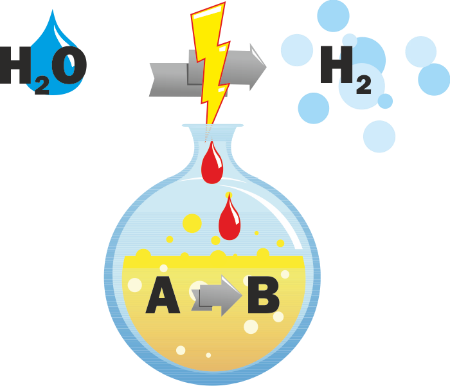
A future sustainable energy system based on hydrogen is inevitable and the generation of this energy carrier will be definitely achieved by electrolysis. The oxygen evolution in the course of water electrolysis represents still a challenge which consumes a significant amount of electric power due to high overpotentials. Alternative anodic conversions which do not liberate dioxygen but serve as useful and significant anodic transformations represent an innovative solution. For this aim, two different approaches are pursued: The development and establishing of electrochemical oxidation reactions with a high impact and technical relevance. Among others, the anodic functionalization of methane, the oxidation of alcohols, specifically glycerol under formation of e.g. lactic acid, the oxidation of hydroxymethylfurfural to the renewable platform chemical 2,5-furan dicarboxylic acid, as well as the oxidation of amines to amine-N-oxides represent such challenging oxidative conversions. An alternative approach will anodically generate oxidizing equivalents which can later on be exploited to a variety of chemical applications. This strategy avoids the selectivity issues of rather complex molecules at the anode. In addition, it will establish a general route which opens up multipurpose applications and compensate fluctuations in the electric current consumptions since these oxidizers can be stored. In order to tackle these challenges in a knowledge-driven way, important tools of investigation such as operando electrochemistry/spectroscopy and the influence of the electrode morphology will be addressed. This research unit will bridge the gap from fundamentals of organic electrochemistry and electrocatalysis to prep-type electrolysis including initial steps to upscaling.

EIT Raw Materials Innovation Project
More information
Information
EIT Raw Materials Innovation Project
- CENIDE Research Focus:
-
Functional materials for energy applications
- Funding :
- 2022 - 2025
- Contact:
-
Hartmut Wiggers (Project member)
- Website:
- https://eitrawmaterials.eu/knowledge-innovation/all-projects
Abstract
Batteries for mobile phones and electric vehicles rely on graphite anodes that reached their performance limits. The current market expects new anodes alternatives. Therefore, one of the major challenges for Europe is to find efficient and sustainable substitutes for critical raw materials. SIRIUS project led by Nanomakers kicked off work to supply the highest performance and cost-efficient silicon material for the battery market and e-mobility by upscaling Nanomakers’ production capacity. The idea was to secure the raw materials supply by working on two aspects. On the one hand, use silicon gas precursors to obtain silicon metal and the partial substitution of graphite. On the other hand, Nanomakers developed high capacity anodes to reduce the anode materials quantity in batteries.

BatWoMan
More information
Information
BatWoMan
- CENIDE Research Focus:
-
Functional materials for energy applications
- Funding :
- 2022 - 2025
- Contact:
-
Harry Hoster (Project manager)
Theresa Schredelseker (Project member)
- Website:
- https://batwoman.eu/
Abstract
Europe’s leadership position in sustainable battery production will be secured via new sustainable and cost-efficient lithium-ion battery cell production. This is the goal of the EU-funded BatWoMan project, paving the way towards carbon-neutral cell production. The project’s efforts will focus on energy efficient and no volatile organic compounds processed electrodes, with slurries of high dry mass content. It will also establish an innovative dry room reducing concept with improved electrolyte filling. Low-cost and energy-efficient cell conditioning, namely wetting, formation and ageing, is also on the project’s agenda. An innovative platform based on AI will support these technological improvements. The overall goal of the project is to reduce by more than half the cell production cost and energy consumption.