

Medical technology
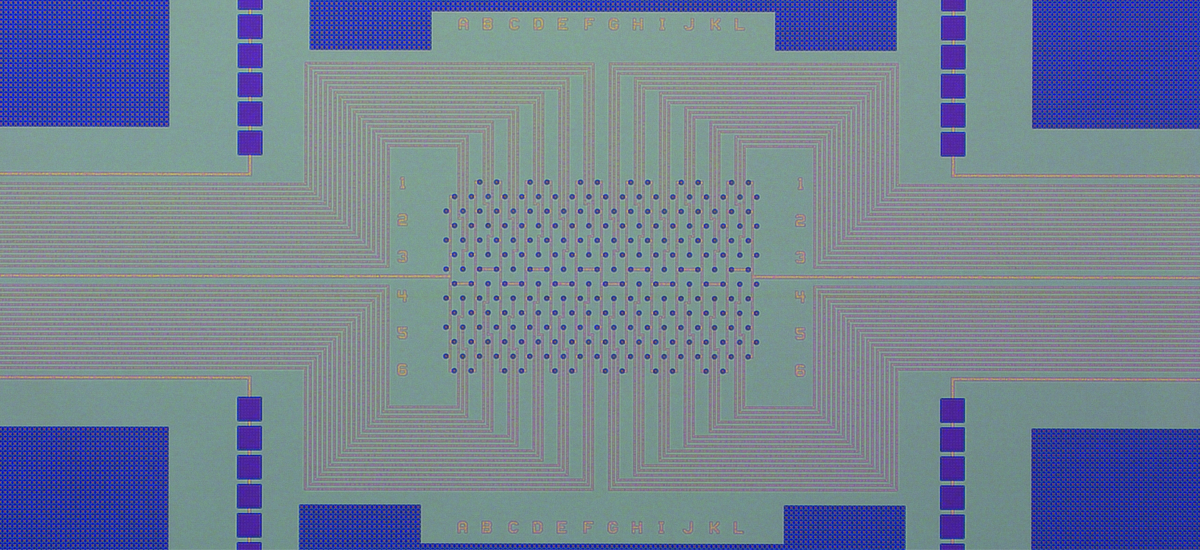
Our research in the field of medical technology should enable new diagnostic and therapeutic options and thus improve the quality of life of those affected.
The team at the Department of Electronic Components and Circuits (EBS) at the University of Duisburg-Essen (UDE) develops innovative technologies for medical technology in close cooperation with the Fraunhofer Institute for Microelectronic Circuits and Systems (IMS). Our research focuses on the development of contactless vital parameter measurements and active electronic implants for the treatment of neurological and ophthalmological diseases.
By combining signal processing, innovative manufacturing processes and machine learning, we are shaping the medical technology of tomorrow. We cover the entire process chain: from design and simulation to production and characterization in clean rooms.

Prof. Karsten Seidl
Research focus
Contactless measurement of vital parameters
We develop high-precision camera systems that record vital parameters such as pulse, respiratory rate, body temperature and oxygen saturation without direct physical contact. These systems minimize the risk of hospital infections and can be used in a variety of ways thanks to the use of AI methods - from acute monitoring to long-term observation.
Active electronic implants
Our work on flexible retinal implants aims to treat degenerative eye diseases such as retinitis pigmentosa. We develop ultra-thin, 3D microelectrode arrays (MEAs) for the targeted stimulation of retinal nerve cells and research cell-specific closed-loop systems for adaptive stimulation.
Projects
InnoRetVision
Together with partners such as RWTH Aachen University, Aachen University Hospital and Forschungszentrum Jülich, we are working on the next generation of retinal implants as part of the Research Training Group GRK 2610 “InnoRetVision”.
Our research includes
- The design of 3D needle electrode arrays that enable more precise stimulation of retinal target cells. A scalable CMOS-compatible process for the production of needle electrodes using galvanic electrodeposition has already been developed, which will be used in the retina and to clarify neuroscientific questions in the further course of the project.
- The development of adaptive closed-loop stimulators that read out neuronal signals in real time and automatically adapt the stimulation strategy. Several application-specific integrated circuits (ASIC) have already been designed and industrially manufactured as the first stimulators. Novel stimulation protocols such as high-frequency sinusoidal stimulation will be made possible and researched in the course of the project. Furthermore, the ASICs enable adaptive stimulation, which measures the neural signal during stimulation and can therefore optimize the stimulation strategy in real time.
NEON
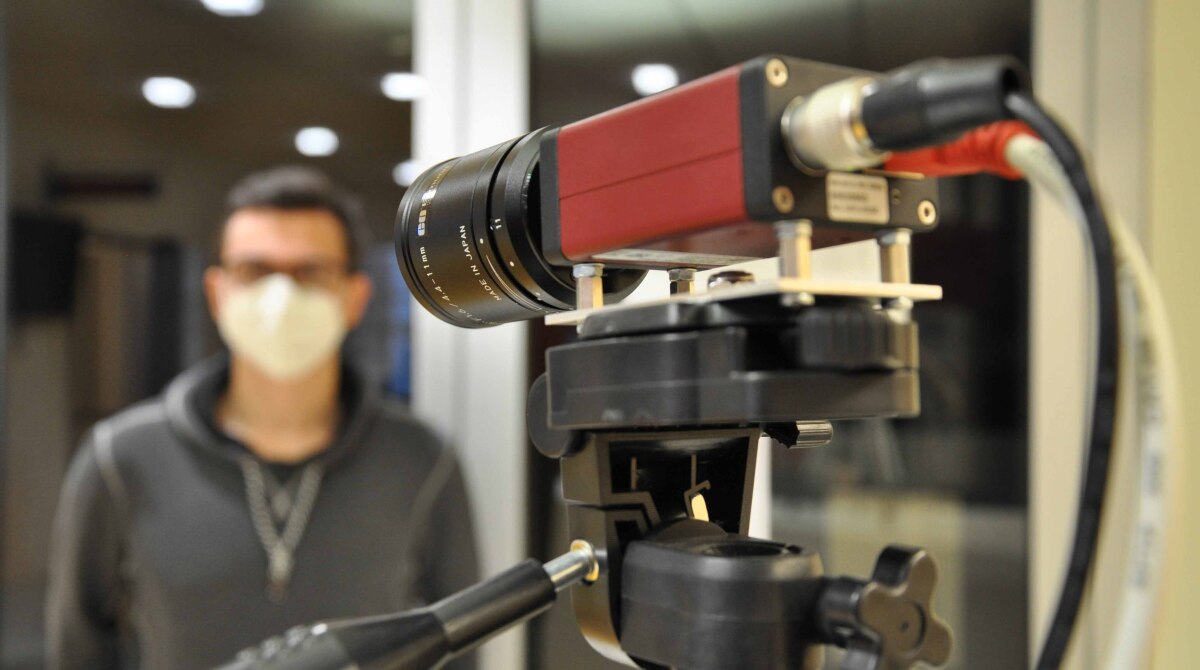
The NEON project, initiated by research teams from the University of Duisburg-Essen, Ilmenau University of Technology and Essen University Hospital, is developing a mobile, contactless measuring device for recording vital parameters such as pulse, respiratory rate, body temperature and oxygen saturation in patients. The aim is to reduce the risk of hospital-acquired infections by eliminating direct physical contact. The device should also automatically assess the patient's state of health and be applicable to other diseases using artificial intelligence methods. The focus is on both acute monitoring and long-term observation of the patient's state of health.
Sp:AI:ke
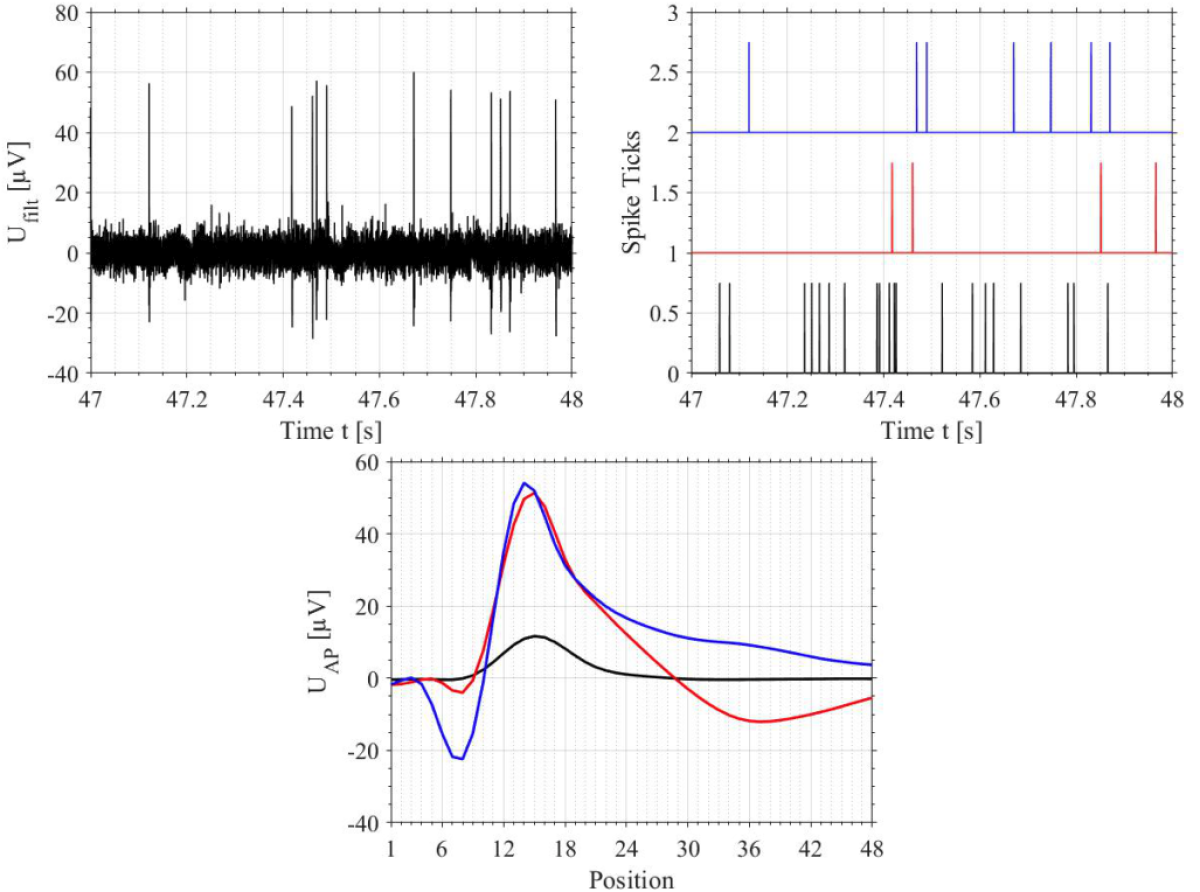
The Sp:AI:ke-funded MERCUR research project aims to develop hardware solutions of an end-to-end neural processing chain for so-called end-to-end Brain Computer Interfaces (BCI) systems that incorporate online algorithms for spike sorting and neural decoding with analog and digital embedded hardware. This pipeline is a fundamental building block for the development of the next generation of neural implants. The system relies on state-of-the-art machine learning algorithms to decode movement intentions from brain activity. Recording and interpreting brain signals requires a solution that is accurate, fast, energy efficient, can be implemented on a small chip footprint and has low heat dissipation. Existing solutions cannot meet these requirements.
Alic, Belmin; Wiede, Christian; Viga, Reinhard; Seidl, Karsten: "Feature-based Detection and Classification of Sleep Apnea and Hypopnea Using Multispectral Imaging," in IEEE Journal of Biomedical and Health Informatics, doi: 10.1109/JBHI.2024.3498956
Löhler, Philipp; Albert, Andreas; Erbslöh, Andreas; Nruthyathi, Nruthyathi; Müller, Frank; Seidl, Karsten A Cell-Type Selective Stimulation and Recording System for Retinal Ganglion Cells In: IEEE Transactions on Biomedical Circuits and Systems (T-BCAS) Jg. 18 (2024) Nr. 3, S. 498 - 510 DOI: 10.1109/TBCAS.2023.3342465
Alić, Belmin; Zauber, Tim; Wiede, Christian; Seidl, Karsten: Current methods for contactless optical patient diagnosis a systematic review. In: BioMedical Engineering OnLine 22 (2023), 12 S. DOI: 10.1186/s12938-023-01125-8
Brechmann, Noah; Michel, Marvin; Doman, Leon; Albert, Andreas; Seidl, Karsten: CMOS-compatible hollow nanoneedles with fluidic connection. In: Journal of microelectromechanical systems (2024), Online First, 8 S. DOI: 10.1109/JMEMS.2024.3376991
Equipment at the chair
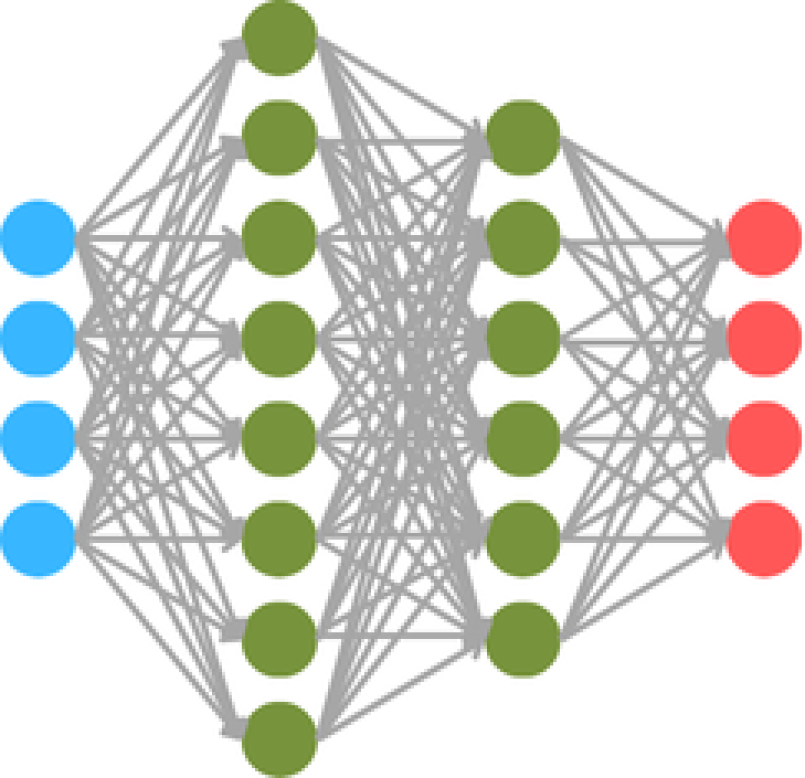
Computing cluster
Two high-performance computing servers for training and testing AI models with hardware components optimized for this purpose (AMD Epyc, 112 threads, 768 GB DDR4 RAM, Nvidia GPU A100)
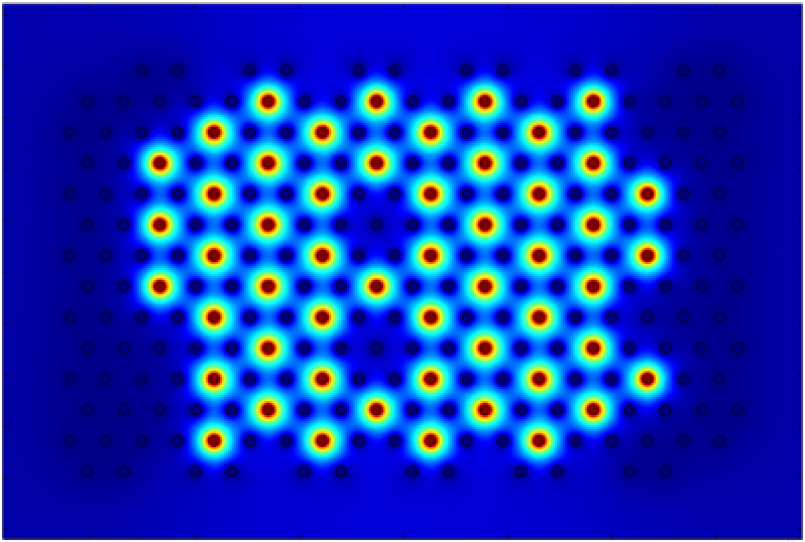
Design- and simulationsoftware
- Cadence Tools for the design and simulation of integrated electrical circuits and the creation of layouts
- COMSOL for multiphysical simulation
- KiCAD & EAGLE for the design of discrete electrical circuits
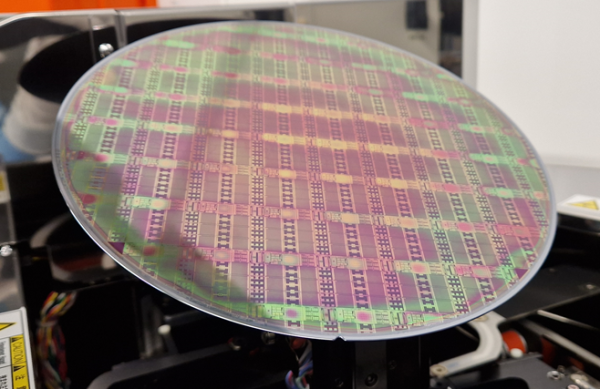
Measuring station Electrochemical electrode characterization
- Potentiostat: Metrohm AUTOLAB FRA2 Type 3 for electrochemical impedance spectroscopy (EIS) and cyclic voltammetry
- Test station for 8-fold contacting of unpackaged custom-made designs
- MEA2100 system for 120 electrodes from Multichannel Systems
- Plasma system type “FEMTO” for cleaning and surface functionalization of nanostructured materials from Diener Electronic