

Centre for Global Cooperation Research
Inter-faculty research centre of the University of Duisburg-Essen

Research Projects
The Centre for Global Cooperation Research serves as an institutional hub for globally oriented research projects at the UDE.
RTG 2951: Cross-border Labour Markets: Transnational Market Makers, Infrastructures, Institutions
Cross-border labour mobility and migration have developed into key issues within globalization research. Remarkably, however, ‘cross-border labour markets’ have not yet been addressed as a phenomenon sui generis in this context. Global structures and dynamics are largely scrutinized as factors impacting national labour markets, and the terms ‘emigration’ and ‘immigration’ that dominate the relevant literature underscore this focus on national labour markets as units of analysis. The Research Training Group (RTG) takes a rather different approach, putting cross-border labour markets centre stage in its research programme. The emergence of cross-border labour markets can be observed in multiple sectors: in low-skilled labour (e.g. in domestic work or logistics) as well as among highly-skilled workers and professionals (e.g. academics, consultants, medical doctors), or in sports, the arts, and the entertainment industry at large. Why do cross-border labour markets emerge in some sectors, but not others? Why do they link particular countries, while others stay outside the network? And to what extent do they display social orders that differ from those of national labour markets. Questions such as these are addressed in the RTG. Its particular focus is on investigating what makes it possible for cross-border labour markets to emerge and be consolidated, i.e., how are the coordination problems that are amplified in border crossing markets ‘solved’? The main research questions to be scrutinized in the projected RTG are: What are the constitutive prerequisites or ‘enablers’ of cross-border labour markets? and How do actors draw upon these ‘enablers’ to enact, fashion and consolidate cross-border labour markets?
Read more
We consider three types of ‘enablers’: transnational market makers, infrastructures, and institutions. They structure the research programme. The RTG aims to make substantial empirical and theoretical contributions to understanding the processes and dynamics underlying the emergence, operation and consolidation of cross-border labour markets. To this end, an interdisciplinary group of Principal Investigators rooted in sociology, economics, and social anthropology teamed up to bring their combined expertise in relevant research areas to bear on the RTG’s research and qualification programme. The RTG builds on preliminary collaborative groundwork of PIs across the participating universities. Offering outstanding doctoral researchers the opportunity to take part in an innovative research programme at the forefront of interdisciplinary labour market research with a global outlook, the RTG is committed to establishing a top-level, research-oriented qualification for early-career researchers, preparing them for outstanding academic and non-academic careers.

Funding
Deutsche Forschungsgemeinschaft (DFG)
Duration:
04/2024 – 03/2029
RTG webseite
Speaker: Prof. Dr. Ursula Mense-Petermann (Bielefeld University)
Co-Speaker: Prof. Karen Shire, Ph.D. (University of Duisburg-Essen)
Academic Coordinator: Dr. Anna Spiegel
Principal Investigators
Prof. Dr. Marcel Erlinghagen (Institute of Sociology, UDE)
Prof. Dr. Ursula Mense-Petermann (Bielefeld University)
Prof. Minh Nguyen (PhD) (Bielefeld University)
Prof. Dr. Sebastian Otten (Institute for Business and Economics. UDE)
Prof. Dr. Sigrid Quack (Institute of Sociology, UDE)
Prof. Dr. Alexandra Scheele (Bielefeld University)
Prof. Dr. Helen Schwenken (Osnabrück University)
Prof. Karen Shire, Ph.D. (University of Duisburg-Essen)
Prof. Dr. Anja Weiß (Institute of Sociology, UDE)
Prof. Dr. Tobias Werron (Bielefeld University)
Prof. Dr. Anna Zaharieva (Bielefeld University)
Postdoctoral Researchers
Sandhya A.S., Ph.D. (Bielefeld University)
Lisa Mansfeld, Ph.D. (University of Duisburg-Essen)
Doctoral Researchers 1st Cohort
Aamir Ali (Bielefeld University)
Karim Ashour (University of Duisburg-Essen)
Ezgi Elmas Uluergüven (University of Duisburg-Essen)
Kadir Engil (University of Duisburg-Essen)
Jonas Feldmann (Bielefeld University)
Mariana Gomes (Bielefeld University)
Benedikt Heckens (Bielefeld University)
Ammar Kakish (University of Duisburg-Essen)
Duaa Kattana (University of Duisburg-Essen)
Ardita Osmani (University of Duisburg-Essen)
Elisabeth Schmidt (Bielefeld University)
Maria Schäfer (Bielefeld University)
Mark Simon (Bielefeld University)
Doctoral Researchers 2nd Cohort
Miral Sherin Fahmy (University of Duisburg-Essen)
Gaëlle Gibon (University of Duisburg-Essen)
Katharina Hauck (Bielefeld University)
Varsha Joshi (Bielefeld University)
Michael Koppel (Bielefeld University)
Mai Chi Nguyen (Bielefeld University)
Güneş Özçoban (University of Duisburg-Essen)
Franziska Schrader (University of Duisburg-Essen)
Davis Weidemann (Bielefeld University)
Greta Wienkamp (Bielefeld University)
Lars Wiersch (Bielefeld University)
Weiyan Xu (University of Duisburg-Essen)

August 2025 - July 2028Kinship Generations: Ethnographic Perspectives from across Africa, Asia, and the Middle East
The project has been funded by the DFG Deutschen Forschungsgemeinschaft since 2025.
Principal Investigators
Dr. Hölzle, Éva Rozália (CGCR)
Dr. Suerbaum, Magdalena (Bielefeld)
Project website
Project Description
Kinship relations have been subject to manifold transformations due to historical, political, and socio-economic restructuring; the translocal stretching of family ties because of migration and shifting national borders; the changing moral contexts in which they are embedded, including the reconfiguration of intergenerational commitments. Kinship, once perceived by anthropologists as a relic of the past, has not lost its significance in our increasingly globalised contemporary world. In fact, for many people, kinship remains the most important way to express how they relate to the world and find their place in it.
At the same time, generation, as a way of talking about historical periods, social movements, differences between ‘young’ and ‘old’, or social change and reproduction, has captured the public’s imagination time and again. Contemporary heated public discussions about generations X, Y, and Z, their world views, and their expectations for the future offer an example of the ongoing social relevance of the term and category of generation. However, such public discussions tend to deploy oversimplified explanations, since they sort people with very different social backgrounds into broad categories that blur the differences along class, gender, or ethnicity. They also exaggerate the transformative and conserving capacities of a given generation as well as the magnitude of differences and intensity of antagonisms between different age groups. Moreover, they disregard and confuse the distinctions between various notions of generation, i.e. the structural (age groups), genealogical (intergenerational relationships within families), and socio-historical (a feeling of commonality between people born roughly in the same period and thus sharing similar experiences) (Alber and Häberlein 2010). This is because public discourses about generations primarily aim at reducing the complexity that characterises large-scale social processes.
Read more
Social anthropology, as a science dedicated to analysing the dynamics of everyday life in different geographical contexts, is attuned to and well-prepared to question how people relate to or make sense of generational categories in their immediate and intimate social fields. While anthropologists have produced rich ethnographies about intergenerational relationships or how generation, in a socio-historical sense, offers insights into large-scale social processes, scholarly works that systematically trace how kinship and the different notions of generations are interrelated remain scarce. This dearth is surprising because other topics, such as the interconnection of gender and kinship (see Ortner 1974) or politics and kinship (see Alber and Thelen 2022), have been thoroughly examined within the discipline nuancing the anthropological understanding of gender, politics, and kinship. By taking a closer look at how kinship and generations mutually constitute each other and how the three notions of generation interact, intersect, and correspond with each other, the proposed network—‘Kinship Generations: Ethnographic Perspectives from across Africa, Asia, and the Middle East’—aims at rectifying this research gap. It strives to achieve not only conceptual clarity as far as generations is concerned, but also to provide fresh insights into social generativity from cross-cultural perspectives.
Adopting a processual approach, the network of scholars involved in this project perceive kinship as ‘a fraught and formative field in which meanings are constantly being made and unmade’ (Jackson 2017, 102). Similarly, in relation to generation, the network favours a dynamic understanding, maintaining that generations are not only about the reproduction of social structures but also about change and social transformations. In tracing how generations are implicated in and at the same time signal change, the network maintains that paying attention to the slow and subtle modifications of normative orders is as relevant as being mindful of sudden changes due to crisis situations (Cole 2011). Moreover, by conceiving the term kinship generations (Hölzle and Suerbaum 2023), the network takes advantage of a productive double connotation: on the one hand, the concept of kinship generations allows for posing questions about how kinship is continually shaped and reshaped under continuously changing social conditions, all the while generating new meanings about the world. On the other hand, with kinship generations the network seeks to explore what constitutes generations within shifting fields of relatedness and how generations contribute to making and remaking kinship in unpredictable ways. In other words, we are interested in social ‘generativity’ (Bear et al. 2015), which emerges through the interrelation of kinship and generations in correspondence with larger historical, social, economic, and political processes.
September 2020 – March 2026Child Labour Opponents and their Campaigns in Global Perspective, 1888-1938.
Funded by the German Research Foundation (DFG), 2020-2026
The project is directed by Dr Nina Schneider.
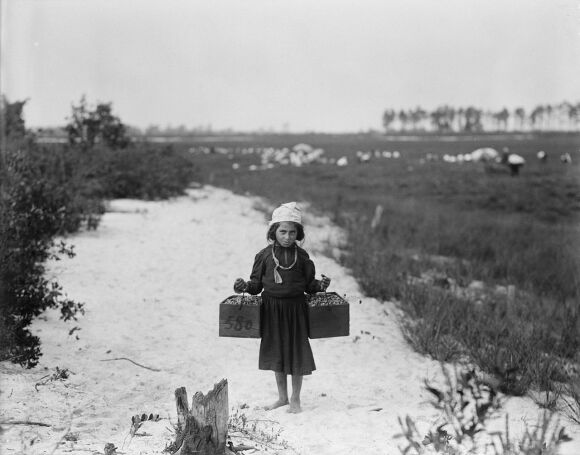
The project’s main objective is to investigate and compare a diverse sample of locally grounded yet nationally and/or often globally entangled child labour opponents, their motivations, and campaigns between 1888 and 1938, when anti child-labour activism was at its peak. While contemporary child labour has received scholarly attention, we lack comprehensive histories of child labour that extend beyond the nation framework and include the “Global South”. Only recently have a few studies contrasted regional and historical contexts or investigated transnational entanglements. In particular, knowledge on the global child labour abolition movement is scarce. Drawing on material gathered from 13 archives worldwide and focusing on Brazil and the United States as globally contextualised yet distinctive case studies, this project asks: Who were the protagonists, and how and why did they oppose child labour in different regions and moments in time? How does anti-child labour activism compare between regions and to what extent was it globally entangled? How did protagonists impact (or were impacted by) international conferences and organisations (e.g. the IACP and ILO), and the globalising anti-child labour discourses and practices they developed? The project aims to address three research gaps: 1) anti-child labour activism in historical context rather than the present; 2) opponents from the “South” rather than just the “West”; and 3) the understudied diverse opponents (from elite philanthropists to the labour movement, from civil society to transnational organisations), their motivations and campaigns (including the role of media and transnational organisations as exchange platforms). Innovatively combining the method of qualitative comparison and entangled history with a biographical and media-focused approach, the project’s main outcome (monograph) will be a first history of early twentieth century anti-child labour activism in the Americas in global perspective narrated through the biographies of 10 diverse localised, yet nationally and globally entangled, protagonists from Rio/São Paulo and New York City. Like a camera, it zooms out from their biographies (private) and local context (city) to the national and global level (child labour abolition as a global movement), making the project workable. Rather than merely accumulating knowledge about two national cases, these exemplar activists are set in a broader context. While the project will advance the history of child labour opposition regionally (in global rather than “Western” terms) and thematically (opponents, motivations, campaigns), it also constructively engages with criticism levelled against global history approaches (including the subfields of labour and social movements) that it risks silencing local or social specificities (diversity). Focusing on global child labour opponents, this project will contribute to a broader history of global child labour abolition.
November 2022 – October 2024Distant Neighbors: Exploring Political Narratives and Visual Culture in Turkish-German Relations

Distant Neighbors: Exploring Political Narratives and Visual Culture in Turkish-German Relations. DAAD-TUBITAK funded bilateral cooperation project between the European Institute at Bilgi University and the KHK/Centre for Global Cooperation Research/Universität at Universität Duisburg-Essen. Project duration: November 2022 – October 2024. PIs Dr. Deniz Güneş Yardımcı (Bilgi Universität) and PD Dr. Frank Gadinger (Universität Duisburg-Essen).
This joint project by the European Institute at Istanbul Bilgi University and the Käte Hamburger Kolleg/Centre for Global Cooperation Research at the University Duisburg-Essen entitled ‘Distant Neighbors: Exploring Political Narratives and Visual Culture in Turkish-German Relations’ aims to explore the development of Turkish- German relations through a detailed empirical analysis of competing and/or shared political narratives in the German and Turkish context in order to show how they have shaped the contemporary perception of befriended, but rather ‘distant neighbors’.
The project that will be conducted between November 2022 and October 2024, is based on previous works and preliminary empirical studies. We use the starting thesis that the various political narratives on the Turkish-German relationship differ between elite and everyday discourses in both countries. Whereas the elite discourses in both countries and their political decision- makers mainly operate with narratives that (re-)produce a distant relationship in terms of pragmatic cooperation and interest-based politics, the everyday discourses and their cultural protagonists (film makers, musicians, artists) share many political narratives and emphasize transnational and culturally hybrid identities in both countries.
The interest in studying both elite and everyday forms of narration derives from the tentative observation that international (i.e. official) relations between Germany and Turkey haven often been strained, while transnational (i.e. society-level) relations may have been much friendlier at the same time. Our loosely comparative study of both arenas will allow us to show 1) how storytelling differs between the elite and public/societal level and 2) whether identities that emerge in these stories may differ between the official and everyday discourse.