

Immunometabolic Virology
Viral infections and cellular metabolism are deeply interconnected, profoundly influencing one another. Many viruses, such as CMV, HCV, and HIV, exploit glycolysis and oxidative phosphorylation, disrupting mitochondrial function to redirect cellular resources for their benefit. Conversely, the host cell’s metabolic state significantly impacts viral entry, replication, and egress. Additionally, both cellular metabolism and viral replication are heavily influenced by external factors, including temperature, oxygenation, paracrine signaling, the local tissue microenvironment, and organismal traits like sex and age.
Our research aims to unravel the complex interplay between viral pathogens, cellular metabolism, and immune regulation. We believe that viral infections are influenced by the host's metabolic and immunologic features, which are collectively shaped by external factors. Similarly, viruses alter cellular metabolism, inducing extensive metabolic reprogramming to enhance viral replication. Our research seeks to dissect how viruses interact with intra- and extracellular metabolic pathways and investigating how external factors such as oxygenation, tissue microenvironments, and sexual dimorphism modulate immune responses and viral behavior. We believe that metabolism is a crucial determinant of viral replication and infection outcomes, and a better understanding of their interplay could reveal new therapeutic and diagnostic opportunities.
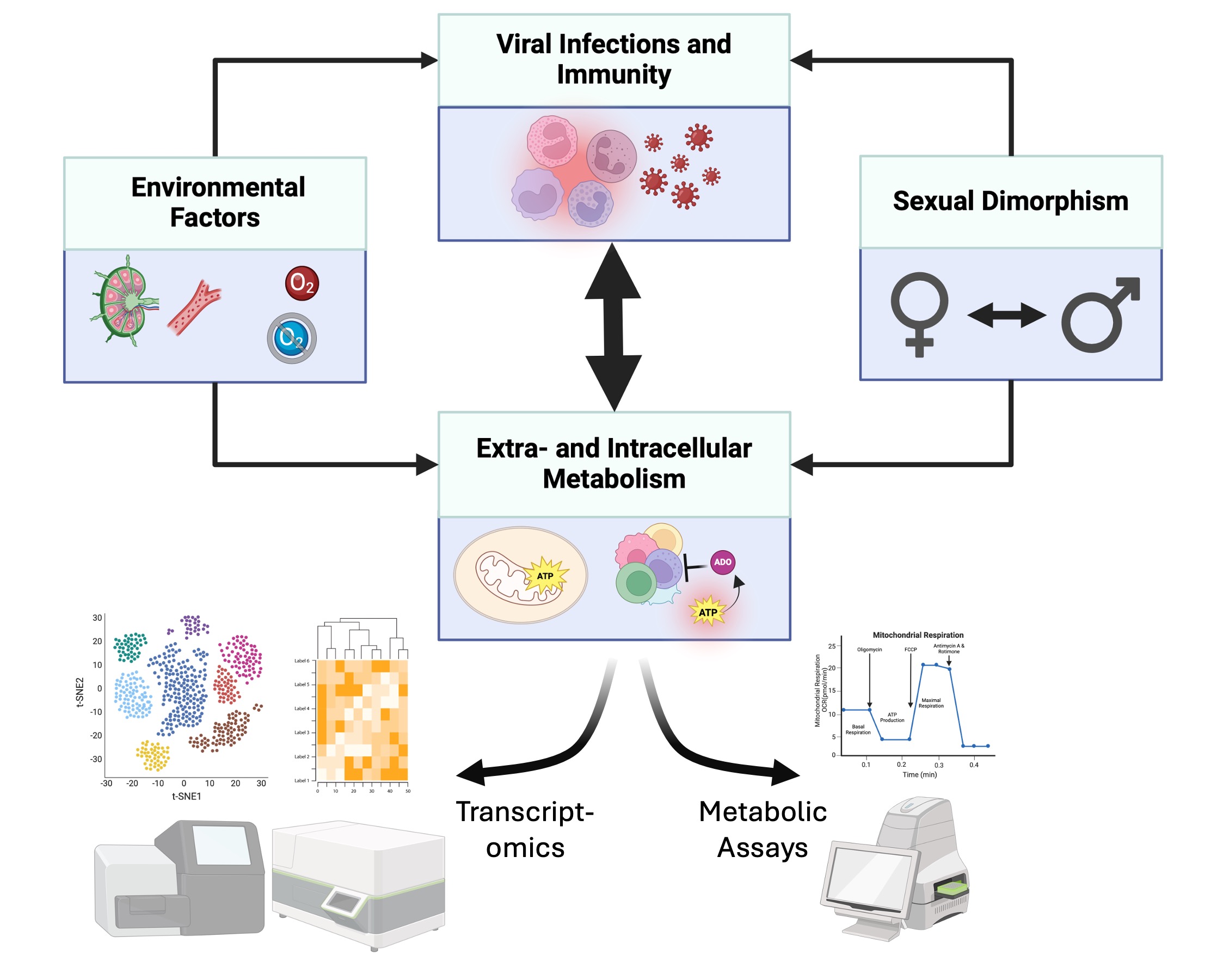
We utilize different transcriptomics and other high-dimensional discovery approaches to comprehensively study viral infections under various microenvironmental conditions and in different host contexts. Moreover, assay such as Seahorse or mass spectrometry are employed to study metablic changes upon virus infection, whereas CRISPR technolgies and pharmacological tools are used to unravel metabolic dependency factors of viral pathogens.