
Microbial Systems Ecology
Microbial Systems Ecology
(formerly Environmental Metagenomics)
Prof. Dr. Alexander Probst
Welcome to ...
... the research unit for
Microbial Systems Ecology
as part of the Research Center One Health Ruhr of the Research Alliance Ruhr.
The Research Alliance Ruhr was founded by the University of Duisburg-Essen, the Ruhr University Bochum, and the Technical University of Dortmund to address pressing scientific issues of the future.
NEWS

Subsurface drilling has begun Successful Domestic Drilling Mission
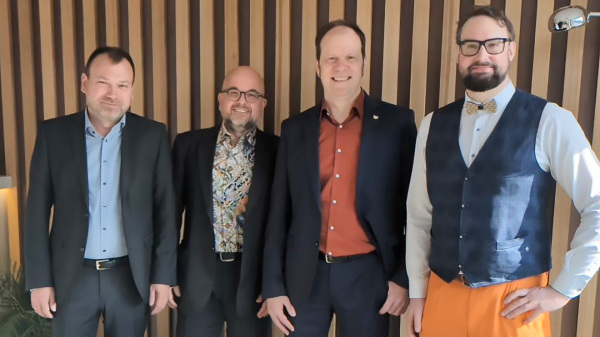
[05–20.03.2026] The 2026 drilling season is still underway with the Archean Park (and DeepH) campaign at Mendig, where numerous high-quality cores were successfully recovered. Led by Jens Kallmeyer, the expedition was joined by six members of our lab and delivered an excellent start to the season.
The freshly recovered cores are now being processed for DNA extraction, bringing us one step closer to uncovering the hidden microbial stories preserved deep underground.

Subsurface comes up in the USA Successful Sampling at Crystal Geyser
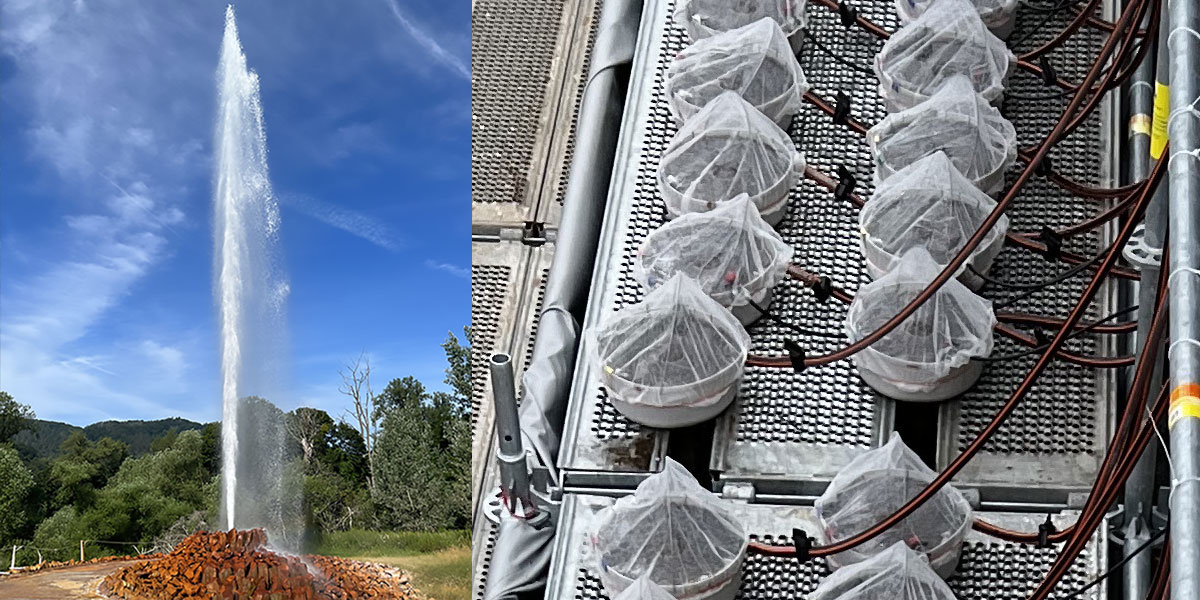
[06–14.04.2026] A team of three senior scientists from our lab (Alex, Till, and André) successfully headed into the Utah desert to sample Crystal Geyser and several surrounding high-CO₂ geysers. Equipped with field gear and scientific curiosity, they returned with a valuable collection of preserved samples.
The material will now support further research within the Archean Park and DeepH projects, helping us explore extreme environments and the microbial life they host.

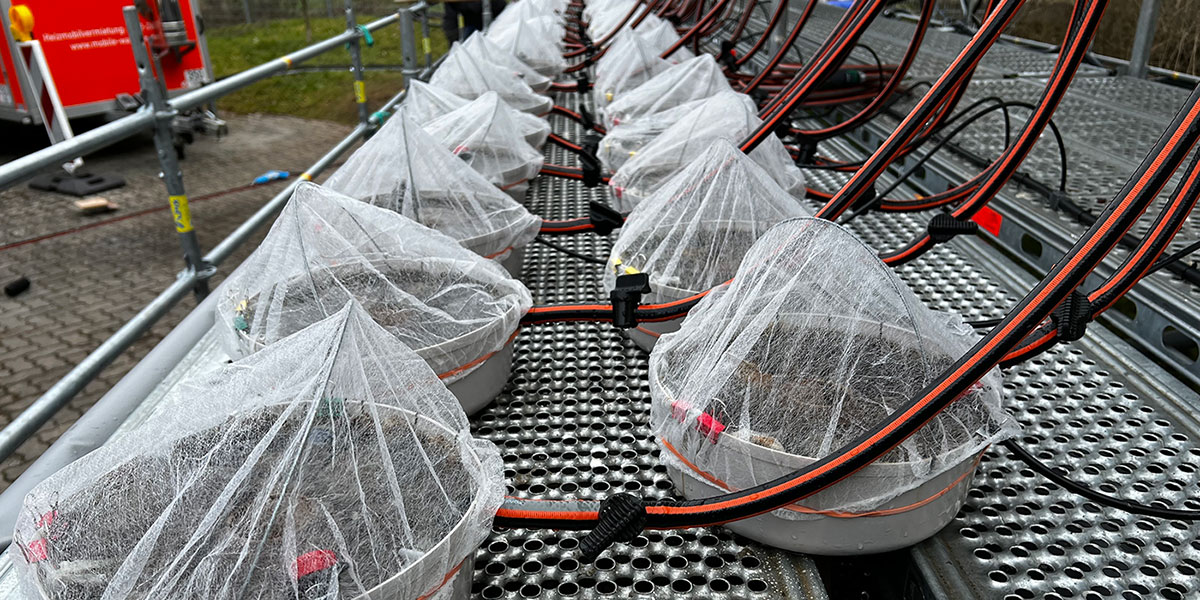
Time to go ExStream Again 2nd Round of the ExStream is Gushes on Now
[July 2026] The second round of the ExStream experiment for the current phase of CRC-RESIST is now underway, with Rena and Hsin-Tung leading the setup and sampling of the mesocosms.
This new experimental phase will provide valuable insights into microbial community dynamics and ecosystem responses, building on the successful foundation of previous ExStream campaigns.
Research Projects
Archean Park Archean Park: Relics of Ancient Cellular Biochemistry in High-CO2 Subsurface Ecosystems
The Archean Park project aims to investigate how microbial life functioned under early Earth conditions, particularly in high-CO₂ and oxygen-free environments. The goal is to uncover ancient metabolic pathways that support carbon cycling in these extreme settings. By integrating deep drilling, genomics, biochemistry, and geochemistry, the project seeks to reconstruct early microbial ecosystems. Insights from this work may inform modern biotechnology and enhance our understanding of Earth's early climate and life.
DFG Funded CRC RESIST: Collaborative Research Centre on multiple stressors affecting streams and rivers
RESIST aims to unravel the interactions of multiple stressors in rivers. With manipulative lab and field experiments, field studies and models we will test why, when and how stressors interact – and develop options for mitigation and restoration.
Project A01
Direct and indirect effects of multiple stressors in freshwater ecosystems on microbial parasites and scavengers
More Info
Project A22
Viral (and host) microdiversity response to multiple stressors in freshwater ecosystems. See project description for information on open Bsc/Msc theses/internship topics for this sub-project
More Info
Project Z-INF
Data management and integration
More Info

IQ-Wasser funded by Federal Ministry of Education and Research (BMBF) Exploring the use of AI in water monitoring
[28-01-2025] Biodiversity and water quality are strongly interconnected. The newly funded IQ-Wasser: KI & Biodiversity project will link artificial intelligence (AI) algorithms to predict biodiversity changes in riverdam-mediated drinking water reservoirs in Germany to evaluate the effects on drinking water quality. As leader of the subproject Microbial diversity and ecology, Julia Nuy from our lab is contributing to this groundbreaking initiative disclosing ecosystem functions and pathogenicity potential of the microbial community.
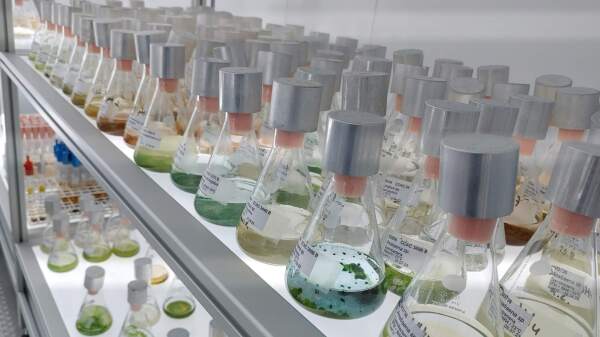
GENIAL funded by US Department of Energy Genomics of Algae and their Interactions in Aquatic Life
Algae are important organisms on planet Earth as they transform carbon dioxide into organic matter fueling the food chain in freshwater ecosystems. With the help of JGI's ( Department of Energy, USA) Community Science Project (CSP), project Gen omics of Algae and their Interactions in Aquatic Life (GENIAL) will aim at unraveling the evolution of carbon turnover modes of algae and their interaction with other organisms like bacteria or viruses for acquiring cellular nitrogen. The basis for our work will be deciphering the DNA and RNA sequences of more than one hundred algae (and their partners) which will be used for predicting their capabilities and their evolution from their genomes. To do this, we will work with the Central Collection of Algal Cultures (CCAC) at the University of Duisburg-Essen (UDE), one of the world's largest freshwater algae collections, along with a large network of collaborators at UDE, Germany and around the world.
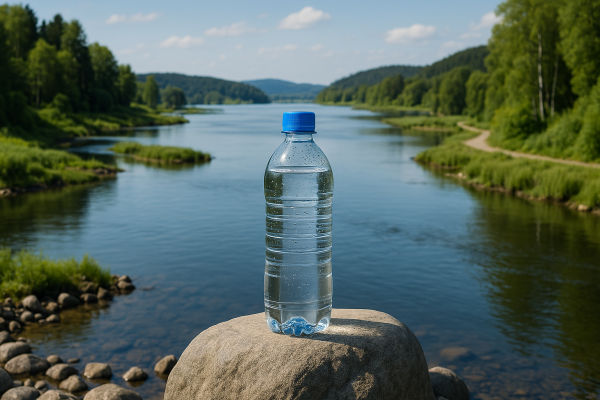
BMBF BIOSTABIL for Water Security
The BIOSTABIL project aims to implement the concept of biologically stable drinking water along the entire distribution path from the water treatment plant to the consumer. The project seeks to create the foundation for a sustainable and resilient water supply under the changing conditions introduced by climate change. As part of this, we contribute microbiome analyzes that support and enhance biological stability. Our mission in this project aims to investigate microbiomes that play a key role in ensuring biological stability.
Selected Publications
-
Diversity and distinctive characteristics of the global RNA virome in urban and peri-urban environmentsIn: Nature Communications, Vol. 17, 2026, Nr. 1, 6397DOI (Open Access)
-
Earth's most needed uncultivated aquatic prokaryotesIn: Water Research, Vol. 273, 2025, 122928DOI (Open Access)
-
A roadmap for equitable reuse of public microbiome dataIn: Nature Microbiology, Vol. 10, 2025, Nr. 10, pp. 2384 – 2395DOI (Open Access)
-
Metagenomic analysis of pristine oil sheds new light on the global distribution of microbial genetic repertoire in hydrocarbon-associated ecosystemsIn: microLife, Vol. 6, 2025, uqae027DOI, Online Full Text (Open Access)
-
The journey to understand previously unknown microbial genesIn: Nature, Vol. 626, 2024, Nr. 7998, pp. 267 – 269