
Research

A Nanobody-Powered Toolbox for Next-Gen Protein Control

ProjectPirh2-PROTAC nanobodies for targeted degradation of survivin as an innovative therapeutic option for head and neck tumors

Funded by: Else Kröner-Fresenius-Stiftung

The small survival protein survivin is overexpressed in head and neck tumours and promotes the survival of malignant cells. This contributes to increased resistance to chemotherapy and radiotherapy and worsens the prognosis for affected patients. Due to its central role in tumor progression, survivin is considered a promising therapeutic target, but it is difficult to attack with small chemical molecules, especially in a clinical context. 
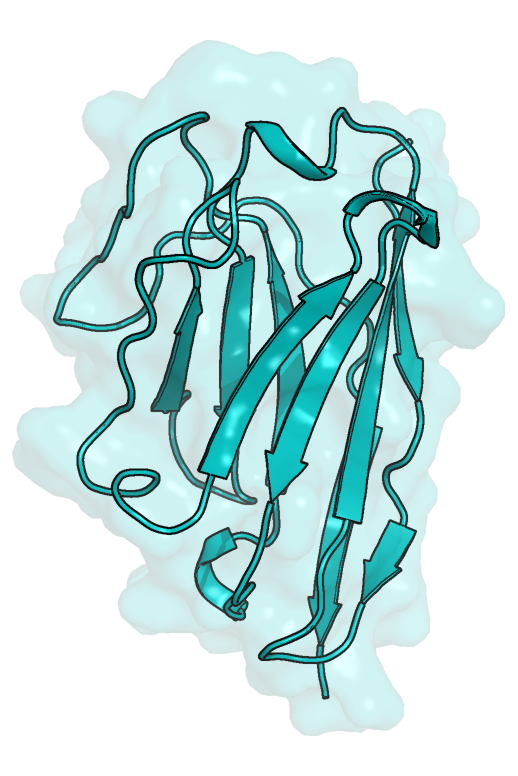
Since survivin mediates its cellular functions primarily via protein-protein interactions, effective inhibitors must be able to efficiently block relevant surface areas. One promising strategy is the use of antibodies – in particular, high-affinity, single-chain nanobodies, which open up innovative biomedical possibilities due to their small size and high specificity. 

​In our current research, we have developed nanobodies (SuN) in alpacas that target survivin, specifically disrupting critical protein interactions and thus impairing the function of survivin. These nanobodies will now be coupled with tumour-specific PROTACs (proteolysis-targeting chimeras) that specifically recruit the cellular E3 ubiquitin ligase Pirh2, an enzyme that is also overexpressed in head and neck tumors. Through the use of SuN-PROTACs, survivin in Pirh2-positive head and neck tumor cells can be specifically degraded via the cellular proteasome. This could break through the resistance mechanisms of the tumour cells and restore their sensitivity to established cancer therapies.

German Version

Pirh2-PROTAC-Nanobodies zur gezielten Degradation von Survivin als innovative Therapieoption für Kopf-Hals-Tumore

Das kleine Überlebensprotein Survivin ist in Tumoren des Kopf-Hals-Bereichs verstärkt exprimiert und fördert das Überleben der malignen Zellen. Dies trägt zu einer erhöhten Resistenz gegen Chemo- und Strahlentherapie und verschlechtert die Prognose für betroffene Patienten. Aufgrund seiner zentralen Rolle in der Tumorprogression gilt Survivin als vielversprechendes therapeutisches Ziel, ist jedoch durch kleine chemische Moleküle, insbesondere im klinischen Kontext, nur schwer angreifbar. Da Survivin seine zellulären Funktionen hauptsächlich über Protein-Protein-Interaktionen vermittelt, müssen wirksame Hemmstoffe in der Lage sein, relevante Oberflächenbereiche effizient zu blockieren. Eine aussichtsreiche Strategie stellt der Einsatz von Antikörpern dar - insbesondere von hochaffinen, einzelkettigen Nanobodies, die aufgrund ihrer geringen Größe und hohen Spezifität innovative biomedizinische Möglichkeiten eröffnen. In unserer aktuellen Forschung haben wir in Alpakas gegen Survivin gerichtete Nanobodies (SuN) entwickelt, die gezielt kritische Protein-Interaktionen stören und somit die Funktion von Survivin beeinträchtigen. Diese Nanobodies sollen nun mit tumorspezifischen PROTAC (Proteolysis-Targeting Chimera) gekoppelt werden, dass gezielt die zelluläre E3-Ubiquitin-Ligase Pirh2 rekrutiert – ein Enzym, das in Kopf-Hals-Tumoren ebenfalls verstärkt exprimiert wird. Durch den Einsatz von SuN-PROTACs kann Survivin in Pirh2-positiven Kopf-Hals-Tumorzellen spezifisch über das zelluläre Proteasom abgebaut werden. Dies könnte die Resistenzmechanismen der Tumorzellen durchbrechen und ihre Empfindlichkeit gegenüber etablierten Krebstherapien wiederherstellen.

ProjectPROTAC nanobodies against Taspase1 as targeted therapeutics in the treatment of childhood leukemias

Funded by: Deutsche José Carreras Leukämie-Stiftung

Not only adults, but also young children often develop life-threatening leukemia out of nowhere, in which a gene encoding the protein MLL (mixed lineage leukemia) represents a hotspot for chromosome breaks. Here, a piece of the MLL gene is fused with parts of other genes. The newly formed proteins thus acquire new functions that result in the unchecked growth of the affected blood cells.

The MLL protein has a high molecular weight and must first be cleaved by the protease Taspase1 before it can perform its function in the cell: preventing this step also prevents leukemia. Unfortunately, there are still no truly effective inhibitors for Taspase1. We therefore want to equip novel, small parts of heavy chain antibodies from alpacas, known as nanobodies, with additional ALL- and AML-specific signals for their cellular degradation in order to specifically target leukemia cells and thus open up new treatment options for patients. 

German Version

PROTAC-Nanobodies gegen Taspase1 als zielgerichtete Therapeutika in der Behandlung von Kleinkind-Leukämien

Nicht nur Erwachsene, sondern auch Kleinkinder entwickeln häufig wie aus dem Nichts lebensbedrohende Leukämien, in welchem ein für das Protein MLL (mixed lineage leukaemia) kodierendes Gen einen Hotspot für Chromosomenbrüche darstellt. Hier wird also ein Stück des MLL-Gens mit Teilen anderer Gene fusioniert. Die neu entstehenden Proteine erhalten so neue Funktionen, die ein ungebremstes Wachstum der betroffenen Blutzellen zur Folge haben. Das MLL-Protein hat ein hohes Molekulargewicht und muss zunächst von der Protease Taspase1 zerschnitten werden, bevor es in der Zelle seine Funktion ausüben kann: Verhindert man diesen Schritt, verhindert man auch die Leukämie. Da es für Taspase1 leider bis heute keine wirklich guten Hemmstoffe gibt, möchten wir nun neuartige, kleine Teile der Schwerkettenantikörper aus Alpakas, sogenannte Nanobodies gegen Taspase1 mit zusätzlichen ALL- und AML-spezifischen Signalen zu deren zellulären Abbau ausstatten, um Leukämiezellen gezielt in die Knie zu zwingen und so den Patienten neue Therapieoptionen zu eröffnen.

ProjectDyMaNet – AI-supported mapping of dynamic signaling and interaction networks in cancer

Funded by:

Cooperation partner: Dr. Stefan Düsterhöft (AG Düsterhöft, RWTH Aachen)

The aim of the joint research project DyMaNet is to comprehensively analyze dynamic signal and interaction networks underlying the function of the endopeptidase Taspase1 in tumor cells. Taspase1 is an atypical, non-lysosomal protease whose proteolytic activity does not serve to break down proteins, but rather to specifically modulate functional substrates with a defined cleavage sequence. The protease is overexpressed in various tumor entities and plays a crucial role in maintaining the malignant phenotype, which is why it is considered a “non-oncogene addiction factor.” In addition, Taspase1 is involved in cellular processes such as transcription regulation, cell cycle control, RNA processing, and chromatin organization, which makes its function particularly relevant in pathological contexts.

In the DyMaNet project, Taspase1 is used as a central model protein to systematically reconstruct interaction networks using Dr. Stefan Düsterhöft's bioinformatic MaPIN pipeline. MaPIN combines AI-supported structural predictions of protein complexes with multi-omics data, including transcriptomics, proteomics, and mutation catalogs. This creates a precise, dynamic picture of the molecular networks in which Taspase1 is active. These networks are used to identify context-dependent regulatory mechanisms, including hormonal control, cell cycle-dependent dynamics, and pathological signaling pathways.

German Version

DyMaNet – KI-gestützte Kartierung dynamischer Signal- und Interaktionsnetzwerke bei Krebs

Ziel des gemeinsamen Forschungsprojekts DyMaNet ist die umfassende Analyse dynamischer Signal- und Interaktionsnetzwerke, die der Funktion der Endopeptidase Taspase1 in Tumorzellen zugrunde liegen. Taspase1 stellt eine atypische, nicht-lysomale Protease dar, deren proteolytische Aktivität nicht dem Proteinabbau dient, sondern der gezielten Modulation funktioneller Substrate mit definierter Schnittsequenz. Die Protease ist in verschiedenen Tumorentitäten überexprimiert und spielt eine entscheidende Rolle bei der Aufrechterhaltung des malignen Phänotyps, weshalb sie als „non-oncogene addiction factor“ gilt. Darüber hinaus ist Taspase1 an zellulären Prozessen wie Transkriptionsregulation, Zellzyklussteuerung, RNA-Prozessierung und Chromatinorganisation beteiligt, was ihre Funktion in pathologischen Kontexten besonders relevant macht.

Im Projekt DyMaNet wird Taspase1 als zentrales Modellprotein genutzt, um mit Hilfe der bioinformatischen MaPIN-Pipeline von Dr. Stefan Düsterhöft Interaktionsnetzwerke systematisch zu rekonstruieren. MaPIN kombiniert KI-gestützte Strukturvorhersagen von Proteinkomplexen mit Multi-Omics-Daten, darunter Transkriptomik, Proteomik und Mutationskataloge. Dadurch entsteht ein präzises, dynamisches Abbild der molekularen Netzwerke, in denen Taspase1 aktiv ist. Anhand dieser Netzwerke werden kontextabhängige Regulationsmechanismen identifiziert, darunter hormonelle Steuerung, zellzyklusabhängige Dynamiken und pathologische Signalwege. 

ProjectNanoImmunoStrike – Targeted macrophage modulation to combat intracellular Leishmania infections

Funded by:

Cooperation partner: PhD Luca Galluzzi (University of Urbino)

NanoImmunoStrike is developing a novel host-directed therapy approach against Leishmania tropica and Leishmania major. These parasites are transmitted by sand flies and cause leishmaniasis, which is classified as a neglected tropical disease (NTD). Due to climate change, habitats are increasingly shifting, making it possible for sand flies to spread to more northern regions and for leishmaniasis to occur in new areas.

In this project, specific nanobodies are designed to block the metalloprotease GP63, thereby preventing immune escape by the parasites, and are combined with ultra-small iron nanoparticles (usFeNP) for targeted macrophage activation. Through the integration of LYTAC modules, intracellular parasite structures are directed into the lysosomal degradation pathway. This combined approach of enzyme inhibition, immune stimulation, and targeted degradation is intended to enable the effective elimination of intracellular Leishmania parasites.


German Version

NanoImmunoStrike – Gezielte Makrophagenmodulation zur Bekämpfung intrazellzulärer Leishmanien-Infektionen

NanoImmunoStrike entwickelt einen neuartigen Host-Directed-Therapy-Ansatz gegen Leishmania tropica und Leishmania major. Diese Parasiten werden durch Sandmücken übertagen und verursachen Leishmaniose, welche als vernachlässigte tropische Krankheit (engl. neglected tropical disease, NTD) eingestuft wird. Aufgrund klimatischer Veränderungen verschieben sich zunehmend die Lebensräume, sodass auch eine Ausbreitung der Sandmücke in nördlichere Regionen möglich ist und Leishmaniose auch in neuen Regionen auftreten kann.

In diesem Projekt sollen spezifische Nanobodies die Metalloprotease GP63 blockieren, verhindern dadurch den Immune Escape der Parasiten und werden mit ultra small Eisen-Nanopartikeln (usFeNP) zur gezielten Makrophagenaktivierung kombiniert. Durch die Integration von LYTAC-Modulen werden intrazelluläre Parasitenstrukturen in den lysosomalen Abbauweg geleitet. Dieser kombinierte Ansatz aus Enzyminhibition, Immunstimulation und gezieltem Abbau soll eine effektive Eliminierung intrazellulärer Leishmanien ermöglichen.

Research Support and Grants

Pirh2-PROTAC-Nanobodies zur gezielten Degradation von Survivin als innovative Therapieoption für Kopf-Hals-Tumore

Principal Investigator: Dr. Mike Blüggel

Project-ID: 2025_EKEA.66

Funding agency: Else Kröner-Fresenius-Stiftung 

Funding period: 10/2025-09/2027

€ 168.678


PROTAC-Nanobodies gegen Taspase1 als zielgerichtete Therapeutika in der Behandlung von Kleinkind-Leukämien

Principal Investigator: Prof. Dr. Shirley Knauer

Co-PI: Dr. Mike Blüggel

Project-ID: DJCLS 15 R/2025

Funding agency: Deutsche José-Carreras Leukämie-Stiftung 

Funding period: 01/2026-12/2028

€ 143.740


Targeted protein degradation with photoswitchable Nanobody-PHOTACs

Principal Investigator: Dr. Mike Blüggel

Add-on Fellowship for Interdisciplinary Life Science

Funding agency: Joachim-Herz Stiftung

Funding period: 11/2024-01/2027

€ 12.500


SuNdowner: Targeted protein degradation of Survivin with Survivin-Nanobody-PROTACs

Principal Investigator: Dr. Mike Blüggel

Funding agency: Förderverein Universität Duisburg-Essen

Funding period: 06/2025-12/2025

3.000 €


Postdoc Seed Funding

Funding agency: University of Duisburg-Essen

Funding period: 06/2024-05/2025

€ 30.000