

Functional Biochemistry
Blüggel Lab

Dr. Mike Blueggel
Center of Medical Biotechnology
Faculty of Biology
University of Duisburg-Essen
The Blüggel lab of Functional Biochemistry for protein modulation was established within the Faculty of Biology in 2025. We focus on understanding how each protein interacts in several dynamic complexes and how we can manipulate the function in time and space. For this, we use specifically designed nanobodies (VHH) in different organisms: cancer cell lines, parasites, and patient material.
Read more
Modern Characterization and Manipulation of Protein Interactions

Our Vision
Our vision is to establish a versatile nanobody-based platform for the precise control of protein function in complex biological systems. This modular toolbox will integrate nanobody technology with complementary strategies such as targeted protein degradation and spatially or temporally switchable modules.
By combining structural specificity with adaptable functional elements, the system will enable selective modulation, visualization and tracking of protein-protein interactions in health and disease.
Our Approach
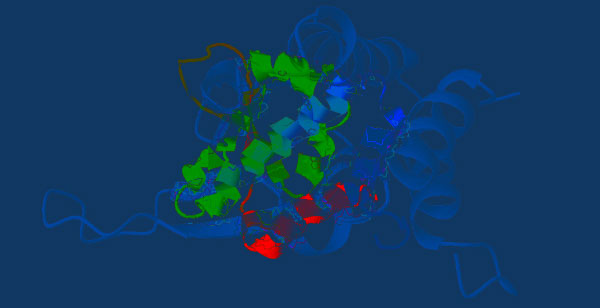
We are using an interdisciplinary strategy that combines protein biochemistry, cell biology, structural biology and multi-omics techniques to understand how highly complex and dynamic protein networks work together to perform their most important functions.
Our workflow often begins with the in vitro reconstitution of protein complexes to investigate their structure-function relationships. Using advanced proteomics in combination with bioinformatics, we explore dynamic protein networks and assess their involvement in specific cellular pathways. This system-level perspective allows us to identify critical nodes within interaction networks and design molecular tools for their modulation.
To translate our network insights into actionable tools, we validate the functional effects of our nanobody constructs through a combination of in vitro reconstitution experiments and cell-based assays. Recombinant expression of the modified nanobodies enables biochemical and biophysical assays, while cellular models allow us to probe their regulatory effects in a physiologically relevant context. These studies confirm target engagement, functional modulation, and downstream biological outcomes.