
Welcome to ZMB
Welcome to ZMB
The Center of Medical Biotechnology (ZMB) is an interdisciplinary scientific center of the University of Duisburg-Essen, integrating medical research at the University Hospital and natural sciences at the Campus.
News & Events
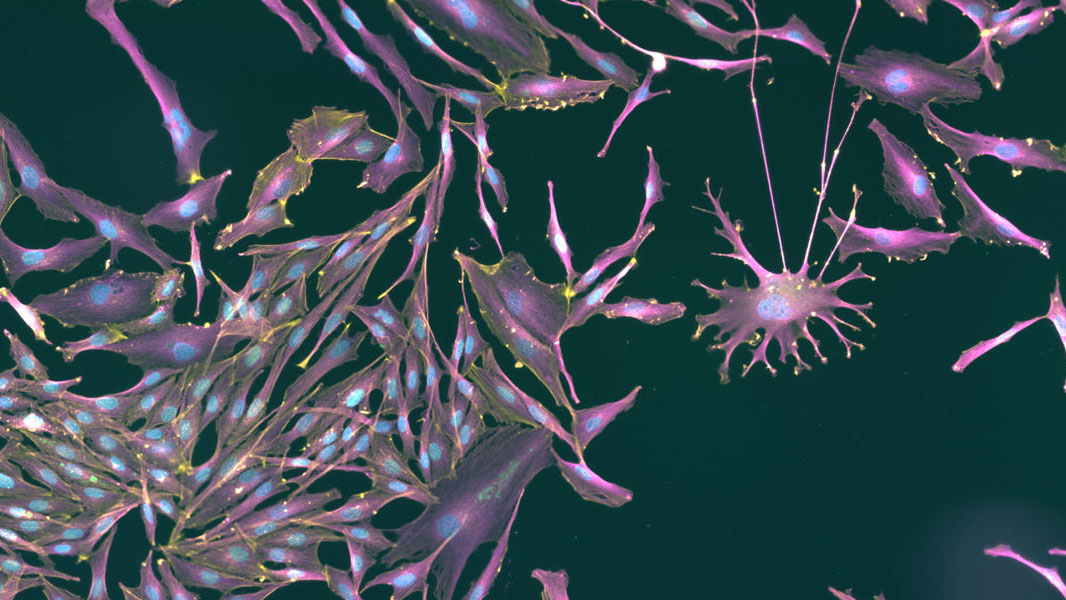
New CRC 1752 is recruiting Join DYNAMO
CRC/SFB 1752 DYNAMO (Immediate Tumor Dynamics
in Melanoma Therapy) is recruiting for multiple positions in research, research support and coordination.
They offer exciting opportunities for doctoral researchers, postdoctoral researchers, bioinformaticians, and research management professionals.
Save the date IMCES Day 2026
November 18th 2026, between 9 a.m. - 4 p.m.
The event primarily adresses local researchers who are already IMCES users, students, postdocs, and PIs from UDE, UME, and ISAS who are interested in exploring our service portfolio.
The aim of this event is to showcase the full range of imaging and analysis services available at IMCES, while fostering discussions on potential applications and collaborative opportunities.

Upcoming Talks
07.10.2026
Simon B. Eickhoff
Institut für Systemische Neurowissenschaften, HHU Düsseldorf
13.10.2026
Helle Ulrich
Institute of Molecular Biology (IMB), IMB Mainz
Press Releases 2026


Förderung der Deutschen Krebshilfe TaNGo gegen Brustkrebs
[21.09.2026]
Ein Protein, das Brustkrebszellen beim Wachstum hilft, einfach ausschalten? Das reicht Forschenden der Universität Duisburg-Essen nicht. Sie wollen es ganz verschwinden lassen. Im Forschungsprojekt TaNGo, das die Deutsche Krebshilfe mit rund 290.000 Euro fördert, entwickeln Molekularbiologin Prof. Dr. Shirley Knauer und Chemiker Prof. Dr. Jens Voskuhl gemeinsam eine Strategie, mit der das krebsrelevante Protein Taspase1 aus Tumorzellen entfernt werden soll.
ZMB Member: Prof. Dr. Shirley Knauer
ZMB Member: Prof. Dr. Jens Voskuhl

32,5 Mio. Euro für vernetzte Krebsforschung gehen nach Essen Auftakt von AI4CancerCure.NRW
[04.09.2026]
Am 4. September 2026 gaben NRW-Ministerpräsident Hendrik Wüst und NRW-Wissenschaftsministerin Ina Brandes in Düsseldorf den Startschuss für das Netzwerk „Artificial Intelligence for Cancer Cure NRW” (AI4CancerCure.NRW) und überreichten die Förderzusage. Der Forschungscluster will Nordrhein-Westfalen zu einem international führenden Standort für KI-gestützte Krebsforschung, personalisierte Onkologie und translationale Gesundheitsinnovation entwickeln. Dafür stehen 200 Millionen Euro aus dem Nordrhein-Westfalen-Plan für gute Infrastruktur zur Verfügung. 32,5 Millionen Euro davon fließen an den universitätsmedizinischen Standort Essen.
ZMB Member: Prof. Dr. Martin Schuler

Forschung zu Strahlentherapie gefördert Gesundes Gewebe besser schützen
[12.08.2026]
Die Strahlentherapie gehört zu den wichtigsten Behandlungen gegen Krebs. Sie zerstört Tumorzellen, kann aber auch gesundes Gewebe schädigen. Forschende der Medizinischen Fakultät der Universität Duisburg-Essen und des Universitätsklinikums Essen möchten deshalb besser verstehen, was nach einer Bestrahlung in den Zellen genau geschieht. Sie koordinieren das Verbundprojekt MetaC(h)roSS, welches durch das Bundesministerium für Forschung, Technologie und Raumfahrt über drei Jahre mit rund einer Million Euro unterstützt wird.
ZMB Member: PD. Dr. Dr. Johann Matschke

Lisa Becker in Emmy Noether-Programm aufgenommen Blutgefäße als Wächter gegen Hautkrebs
[05.08.2026]
Die Deutsche Forschungsgemeinschaft hat Jun.-Prof. Dr. Lisa Becker von der Medizinischen Fakultät der Universität Duisburg-Essen in ihr Emmy Noether-Programm aufgenommen. Mit dem Programm unterstützt die größte deutsche Forschungsfördereinrichtung herausragende Nachwuchswissenschaftler:innen, eine Forschungsgruppe aufzubauen und sich zu etablieren. Für ihr Projekt erhält Becker von August 2026 bis Juli 2032 rund 1,4 Millionen Euro. Die Fördermittel fließen an ihr Labor in der Klinik für Dermatologie am Universitätsklinikum Essen.
ZMB Member: Jun.-Prof. Dr. Lisa Becker

Was Promovierende an der UDE antreibt Felix Maximilian Gerach
[29.07.2026]
„Mein Herz schlägt fürs Gehirn!“
Felix Gerach studiert Medizin und promoviert in der Translationalen Neuroonkologie, am Westdeutschen Tumorzentrum der Universitätsmedizin Essen.
Eigentlich wollte Felix Gerach vor allem Arzt werden. Heute steht er neben dem Medizinstudium oft bis spätabends im Labor und erforscht einen der aggressivsten Hirntumoren, das Glioblastom. Im Interview erzählt er, warum ihn gerade die Verbindung aus Klinik und Wissenschaft so begeistert...
ZMB Member: Prof. Dr. Björn Scheffler

New at UDE/UK Essen: Lisa Becker How do blood vessels influence the success of immunotherapies?
[14.07.2026] Cancer biologist Dr Lisa Becker is taking up the junior professorship in ‘Tumour Microenvironment and Vascular Metabolism’ at the Faculty of Medicine at the University of Duisburg-Essen. She is investigating the importance of blood vessels in tumors, particularly in melanoma.
ZMB Member: Jun.-Prof. Dr. Lisa Becker
ZMB Research Programs
Oncology
The concept of this research program is to understand fundamental processes in tumor biology in order to develop novel molecularly defined and rationally applied cancer treatments.
Participating researchers from biology, experimental and clinical medicine study tumors as “biological systems" and so called “neo-organs”.
A large variety of approaches, experimental systems and methodologies are in place to analyse many aspects of tumor development, growth, progression and tumor cell migration.
Immunology, Infectious Diseases and Transplantation
The immune system responds to various pathogens including viruses and bacteria in different ways to prevent severe disease and persistence in the host. Many pathogens, however, have developed mechanisms to evade immune defence.
The molecular and cellular interactions of pathogens with the immune system are studied within this program.
Molecular and Chemical Cell Biology
Molecular and chemical cell biology is an interdisciplinary research program connecting molecular cell biology and genetics with chemistry and structural biology. Scientists of the participating disciplines collaborate to advance the understanding of basic molecular mechanisms of important biological processes.
The analysis of regulation and deregulation of key pathways is linking basic biology with pathophysiology.
Latest Publications
-
Activated ATF6α is a hepatic tumour driver restricting immunosurveillanceIn: Nature, Vol. 651, 2026, Nr. 8106, pp. 796 – 807DOI (Open Access)
-
Adjuvant Imatinib or Observation in Patients with Gastrointestinal Stromal Tumors with KIT Exon 9 MutationsIn: JAMA Oncology, Vol. 12, 2026, Nr. 4, pp. 407 – 412
-
Advanced Molecular Tweezers Effectively Target Membranes Lacking Choline Headgroups for Broad-Spectrum Antiviral EfficacyIn: Journal of the American Chemical Society: JACS, Vol. 148, 2026, Nr. 3, pp. 3626 – 3637DOI (Open Access)
-
Ancient co-option of LTR retrotransposons as yeast centromeresIn: Nature, Vol. 651, 2026, Nr. 8107, pp. 1004 – 1011DOI (Open Access)
-
Atomic-Scale Understanding of Selectivity Control in Nitrate Reduction on Cu(100) Under Acidic and Alkaline ConditionsIn: Angewandte Chemie International Edition, 2026, in pressDOI (Open Access)
-
CCL3 is produced by aged neutrophils across cancers and promotes tumor growthIn: Cancer Cell, Vol. 44, 2026, Nr. 3, pp. 624 – 640.e12DOI (Open Access)
-
CUL4A-DDB1-DCAF10 is an N-recognin for N-terminally acetylated Src kinasesIn: Nature Communications, Vol. 17, 2026, Nr. 1, 132DOI (Open Access)
-
Combined targeted and epigenetic-based therapy enhances antitumor immunity by stabilizing GATA6-dependent MHCI expression in pancreatic ductal adenocarcinomaIn: Nature Communications, Vol. 17, 2026, Nr. 1, 1476DOI (Open Access)
-
Combined transcatheter mitral and tricuspid edge-to-edge repair or tricuspid edge-to-edge repair alone in moderate mitral regurgitation : a propensity-matched analysisIn: European Heart Journal, Vol. 47, 2026, Nr. 30, pp. 4113 – 4128DOI (Open Access)
-
Condensins regulate resection-dependent DNA double-strand break repair pathways in replicated chromatinIn: Nucleic Acids Research, Vol. 54, 2026, Nr. 4, gkag076DOI (Open Access)
-
Covalent modification of a glutamic acid inspired by HaloTag technologyIn: Nature Communications, Vol. 17, 2026, Nr. 1, 1257DOI (Open Access)
-
Deep Learning-Derived Sarcopenia Marker Predicts Benefit from Anti-EGFR Therapy in Patients with RAS Wild-type Metastatic Colorectal CancerIn: Clinical Cancer Research, Vol. 32, 2026, Nr. 5, pp. 938 – 946
-
Direct observation of ATP-driven ubiquitin chain handling by Cdc48In: Nature Communications, Vol. 17, 2026, Nr. 1, 6014DOI (Open Access)
-
Discovery of an Endonuclease G-inhibitory Ku80-peptide protecting against leukemogenic rearrangements at the MLL breakpoint clusterIn: Nature Communications, Vol. 17, 2026, Nr. 1, 3562DOI (Open Access)
-
Diversity and distinctive characteristics of the global RNA virome in urban and peri-urban environmentsIn: Nature Communications, Vol. 17, 2026, Nr. 1, 6397DOI (Open Access)
-
Exploratory Analysis of Biomarkers and Treatment Outcomes from the COLUMBUS Study in BRAF V600E/K–Mutant Advanced or Metastatic MelanomaIn: Clinical Cancer Research, Vol. 32, 2026, Nr. 7, pp. 1266 – 1276DOI (Open Access)
-
Expression of cFLIP in B cells is essential for diffuse large B-cell lymphoma pathogenesisIn: Blood, 2026, in pressDOI (Open Access)
-
Genome-wide histone humanization in yeast disrupts genome organization, replication, and rDNA stabilityIn: Cell Reports, Vol. 45, 2026, Nr. 6, 117484DOI (Open Access)
-
Heart failure therapy in patients with advanced cancer receiving specialized palliative care (EMPATICC trial)In: European Heart Journal, Vol. 47, 2026, Nr. 9, pp. 1034 – 1046DOI (Open Access)
-
IO102-IO103 immune-modulatory cancer vaccine and pembrolizumab in melanomaIn: Annals of Oncology, Vol. 37, 2026, Nr. 7, pp. 999 – 1010DOI (Open Access)
-
Immune Checkpoint Inhibitor–Associated Cardiovascular Toxic Effects: International Cardio-Oncology Society Position StatementIn: JAMA Oncology, Vol. 12, 2026, Nr. 1, pp. 90 – 99
-
Interplay of SLC33A1-dependent and -independent Golgi sialic acid O-acetylation in CASD1 catalysisIn: Nature Communications, Vol. 17, 2026, Nr. 1, 3156DOI, Online Full Text (Open Access)
-
Lymph node environment drives FSP1 targetability in metastasizing melanomaIn: Nature, Vol. 649, 2026, Nr. 8096, pp. 477 – 486DOI (Open Access)
-
M18BP1 valency and a distributed interaction footprint determine epigenetic centromere specification in humansIn: The EMBO Journal, Vol. 45, 2026, Nr. 5, pp. 1537 – 1572DOI (Open Access)
-
Mechanical circulatory support center volume and outcomes in infarct-related cardiogenic shock : the ECLS-SHOCK trialIn: European Heart Journal, 2026, ehag152 , in press
-
Molecular anatomy of PLK1 master docking motifsIn: Nature Communications, Vol. 17, 2026, Nr. 1, 4228DOI (Open Access)
-
Molecular requirements for PLK1 activation by T-loop phosphorylationIn: The EMBO Journal, Vol. 45, 2026, Nr. 5, pp. 1496 – 1536DOI (Open Access)
-
Multi-layered molecular profiling informs the diagnosis and targeted therapy of desmoplastic small round cell tumorIn: Nature Communications, Vol. 17, 2026, Nr. 1, 3397DOI (Open Access)
-
Mutated FGFR1 is an oncogenic driver and therapeutic target in high-risk neuroblastomaIn: The Journal of Clinical Investigation (JCI), Vol. 136, 2026, Nr. 7, 189152DOI (Open Access)
-
New prostate cancer risk groups by PSMA-PET (PPP3) : An international, retrospective, registry-based cohort studyIn: The Lancet Oncology, Vol. 27, 2026, Nr. 4, pp. 480 – 490DOI (Open Access)
-
PDS5 proteins control genome architecture by limiting the lifetime of cohesin-NIPBL complexesIn: Molecular Cell, 2026, in pressDOI (Open Access)
-
PET/CT-guided management of immune checkpoint blockade and multi-modal profiling following treatment in long-term responders with metastatic lung cancer in the National Network Genomic Medicine Lung Cancer Germany (nNGM)In: Annals of Oncology, Vol. 37, 2026, Nr. 5, pp. 686 – 700DOI (Open Access)
-
Probing a Reactive Alkyne Center Aligned via a Triphenylmethane Tripod on Au(111) for Electric Field-Induced Chemistry by STM and TERSIn: Small, Vol. 22, 2026, Nr. 7, e09467DOI (Open Access)
-
Pulsed-Laser Ablation for the Synthesis of High-Entropy Alloy Aerogels Toward H2O2 Production and Water DecolorizationIn: Angewandte Chemie International Edition, 2026, e2026722 , in pressDOI (Open Access)
-
Reverse engineering of BNIP3 identifies a mitochondrial protective peptideIn: Nature Communications, Vol. 17, 2026, Nr. 1, 5359DOI (Open Access)
-
SPEN Loss Drives Extrafollicular Diffuse Large B-cell Lymphoma with Female-Specific Lethality and Therapeutic VulnerabilitiesIn: Cancer Discovery, Vol. 16, 2026, Nr. 8, pp. 1666 – 1690DOI, Online Full Text (Open Access)
-
Structure-based scaffold hopping reveals strategies to overcome oncogenic KIT and PDGFRA mutation-driven drug-resistance in GISTIn: Nature Communications, Vol. 17, 2026, Nr. 1, 7932DOI (Open Access)
-
Sulfated glycosaminoglycans inhibit LCMV entry and modulate antiviral immunity and pathologyIn: EMBO Molecular Medicine, Vol. 18, 2026, Nr. 4, pp. 1235 – 1264DOI (Open Access)
-
Targeted Radiation, Unintended EvolutionIn: Clinical Cancer Research, Vol. 32, 2026, Nr. 13, pp. 2527 – 2529
-
Targeted degradation of USP7 in solid cancer cells reveals distinct effects of deubiquitinase degraders and inhibitorsIn: Nature Communications, Vol. 17, 2026, Nr. 1, 4331DOI (Open Access)
-
The accessory adapters FAF1, FAF2, and UBXN7 accelerate proteasomal degradation by increasing prior p97-mediated substrate unfoldingIn: Science Advances, Vol. 12, 2026, Nr. 10, eaea7381DOI, Online Full Text (Open Access)
-
Thyrotropin-releasing hormone neurons of different hypothalamic nuclei increase energy expenditureIn: Nature Communications, Vol. 17, 2026, Nr. 1, 3499DOI (Open Access)
-
Tumor-initiating stem cells fine-tune the plasticity of neutrophils to sculpt a protective nicheIn: Cancer Cell, Vol. 44, 2026, Nr. 1, pp. 94 – 111.e11DOI (Open Access)
-
Type I IFN-dependent FcγRIV signaling in murine monocytes promotes lethal anaphylaxis during viral infectionsIn: The Journal of Clinical Investigation (JCI), Vol. 136, 2026, Nr. 4, e192371DOI, Online Full Text (Open Access)
-
Unifying Scaling Relations and Multiple Reaction Mechanisms for Screening Transition Metal-Doped Co3O4 for Oxygen Evolution ReactionIn: Angewandte Chemie International Edition, 2026, e24523 , in pressDOI (Open Access)
-
Vibostolimab coformulated with pembrolizumab versus pembrolizumab alone as adjuvant therapy for high-risk stage IIB–IV melanoma (KEYVIBE-010) : A randomised, double-blind, phase 3 studyIn: The Lancet Oncology, Vol. 27, 2026, Nr. 3, pp. 327 – 339DOI (Open Access)
-
Virus-Specific T Cells and Response to Checkpoint Inhibitors in Progressive Multifocal LeukoencephalopathyIn: JAMA Neurology, Vol. 83, 2026, Nr. 3, pp. 280 – 289DOI (Open Access)
-
Years of life lost in patients with a false-negative diagnosis of primary melanoma : A prospective study of the German Central Malignant Melanoma Registry involving 9063 patients over 28 yearsIn: Nature Communications, Vol. 17, 2026, Nr. 1, 5790DOI (Open Access)
-
l-2-Hydroxyglutarate impairs neuronal differentiation through epigenetic activation of MYC expressionIn: The Journal of Clinical Investigation (JCI), Vol. 136, 2026, Nr. 9, e197010DOI (Open Access)