
Doctoral Research Projects
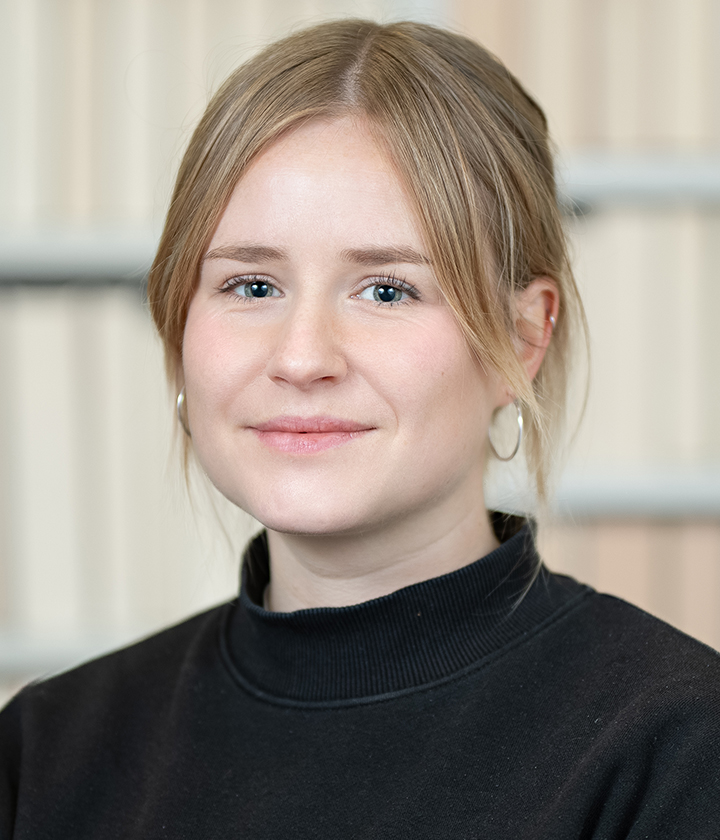
Isabel Kratz, M.Ed.
Working Title
"(Selbst-)Positionierungen von Schulbegleiter:innen in Schule und Träger"
((Self-)positioning of school assistants in schools and institutions)
Primary examiner: Prof Dr Dr Matthias Martens
Secondary examiner: Prof Dr Nina Thieme
Contact
Universität zu Köln
Aachener Straße 201
50931 Köln
Phone: 0221 470 76991
E-Mail: isabel.kratz@uni-koeln.de
Abstract
With the increase in their use, the occupational group of school assistants is becoming more and more of a real factor in inclusive schools. At the same time, this social law measure, which was introduced to promote the participation of pupils with disabilities, represents a relatively new field of research in school and inclusive education and has so far been critically discussed primarily in terms of its differentiation-enhancing effects (e.g. Ehrenberg & Lindmeier, 2020) and the deprofessionalisation of inclusive education (e.g. Lübeck, 2022). While there is agreement on the urgent need for professionalisation among those involved, school assistance is considered a ‘vague group’ in terms of professional theory (Arndt et al., 2017, p. 227). Previous professional theory perspectives on the professional activities of school assistants have been primarily based on teacher-related paradigms (cf. Lübeck & Heinrich, 2019) and rarely take into account the dual organisational affiliation of the actors in schools and institutions. The doctoral thesis will therefore examine how school assistants experience and negotiate their professional position in schools and educational institutions. From a praxeological-sociological perspective (Bohnsack, 2017), the project aims to reconstruct the inherent tensions between norms and practices in the actions of the actors. The dual membership of school assistants is taken into account in that both the school and the provider are empirically examined as organisational spaces of experience. To this end, a total of 12 group discussions with school assistants and team meetings organised for them by the provider were recorded in two inclusive primary schools and two inclusive comprehensive schools and evaluated using the documentary method (Przyborski, 2004; Asbrand & Martens, 2018). The data evaluated so far show that the participants develop pedagogical agency depending on the reconstructed framework conditions (Kratz & Martens, 2024). The actions of the school assistants are embedded in interprofessional power relations and seem to depend on the inclusion and exclusion of the group of actors in pedagogical reflection spaces in schools and providers.
References
Arndt, A.-K., Blasse, N., Budde, J., Heinrich, M., Lübeck, A., Rohrmann, A. (2017). Schulbegleitung als Forschungsfeld. In J. Budde, A. Duglosch & T. Sturm (Eds.), (Re-)Konstruktive Inklusionsforschung. Differenzlinien – Handlungsfelder – Empirische Zugänge (pp. 225-239). Verlag Barbara Budrich.
Asbrand, B. & Martens, M. (2018). Dokumentarische Unterrichtsforschung. Springer VS.
Bohnsack, R. (2017). Praxeologische Wissenssoziologie. Verlag Barbara Budrich.
Ehrenberg, K. & Lindmeier, B. (2020). Differenzpraktiken und Otheringprozesse in inklusiven Unterrichtssettings mit Schulassistenz. In H. Leontiy & M. Schulz (Eds.), Ethnographie und Diversität. Wissensproduktion an den Grenzen und die Grenzen der Wissensproduktion (pp. 139-158). Springer VS.
Kratz, I. & Martens, M. (2024). Professionalisierung zwischen Zumutung und Begrenzung – Zum pädagogisch-didaktischen Handeln von Schulbegleiter:innen in multiprofessionellen Settings. Zeitschrift für Inklusion, 19(5), 43-64. https://www.inklusion-online.net/index.php/inklusion-online/article/view/813.
Lübeck, A. (2022). Außen vor und doch dabei? Zur Einbindung der Schulbegleitung im schulischen Kollegium. In M. Laubner, B. Lindmeier & A. Lübeck (Eds.), Schulbegleitung in der inklusiven Schule: Grundlagen und Praxis (pp. 69-76). Beltz.
Lübeck, A. & Heinrich, M. (2019). Schulbegleitung im Professionalisierungsdilemma. Rekonstruktionen zur inklusiven Beschulung. epubli.
Przyborski, A. (2004). Gesprächsanalyse und dokumentarische Methode: qualitative Auswertung von Gesprächen, Gruppendiskussionen und anderen Diskursen. VS Verlag für Sozialwissenschaften.