

Project KEIKO
Cognitive and Emphatic Intelligent Collaborative Robots
“Cognitively and Emphatically Intelligent Collaborating Robots - KEIKO” is a research project that started in 2023. The team consisting of researchers from the TU Clausthal, the University of Göttingen and the University of Duisburg-Essen, represented by Interactive Systems, has set itself the goal of developing an artificial emphatic intelligence (KEI) model. Robots should be able to work flexibly, proactively and safely with people because these systems can recognize people's intentions to act. This ability will play an important role in the future as the spatial distance between working people and machines becomes ever smaller in the future.

Cognitive and Emphatic Intelligent Collaborative Robots
“Cognitively and Emphatically Intelligent Collaborating Robots - KEIKO” is a research project that started in 2023. The team consisting of researchers from the TU Clausthal, the University of Göttingen and the University of Duisburg-Essen, represented by Interactive Systems, has set itself the goal of developing an artificial emphatic intelligence (KEI) model. Robots should be able to work flexibly, proactively and safely with people because these systems can recognize people's intentions to act. This ability will play an important role in the future as the spatial distance between working people and machines becomes ever smaller in the future.
Project Goal
In the future, cobots should be able to recognize human attention and control abilities. In order to achieve this, the KEIKO project consists of a wide variety of disciplines, such as computer science, electrical engineering, physics, and psychology. In addition to sensors and robot control, human psychological behavior is also crucial for the human-centered design of cobots.
Task and Role of Interactive Systems
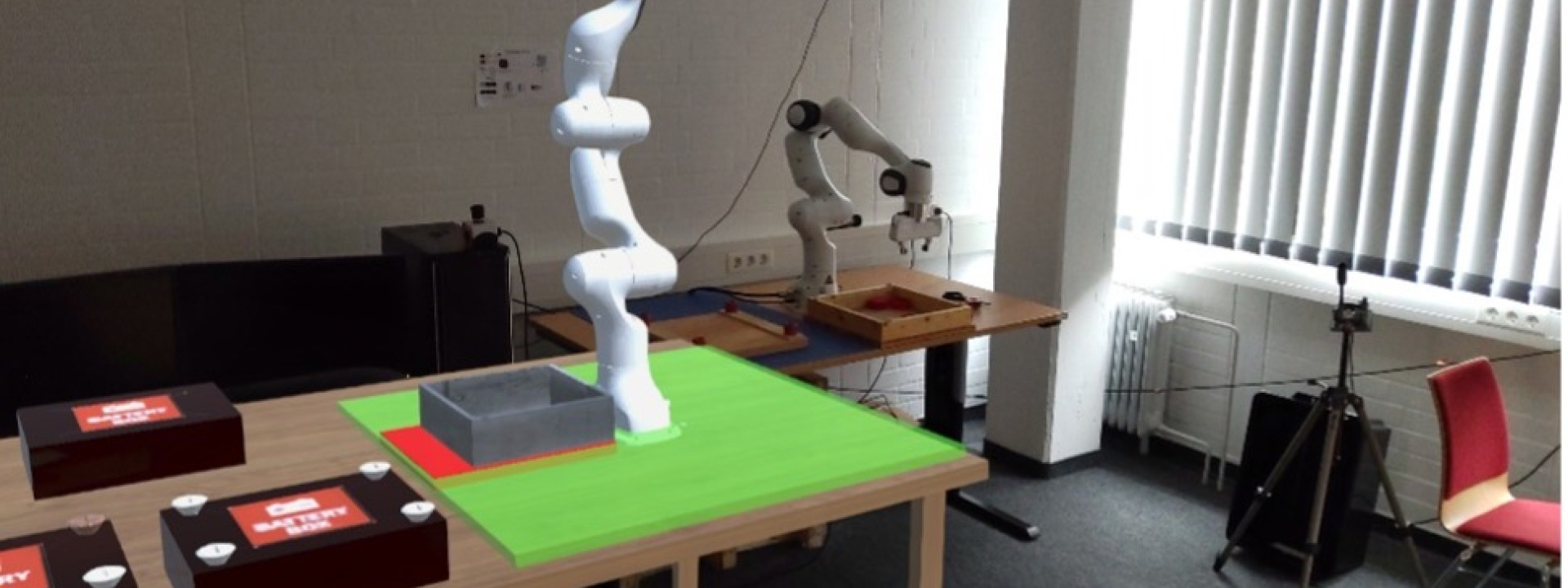
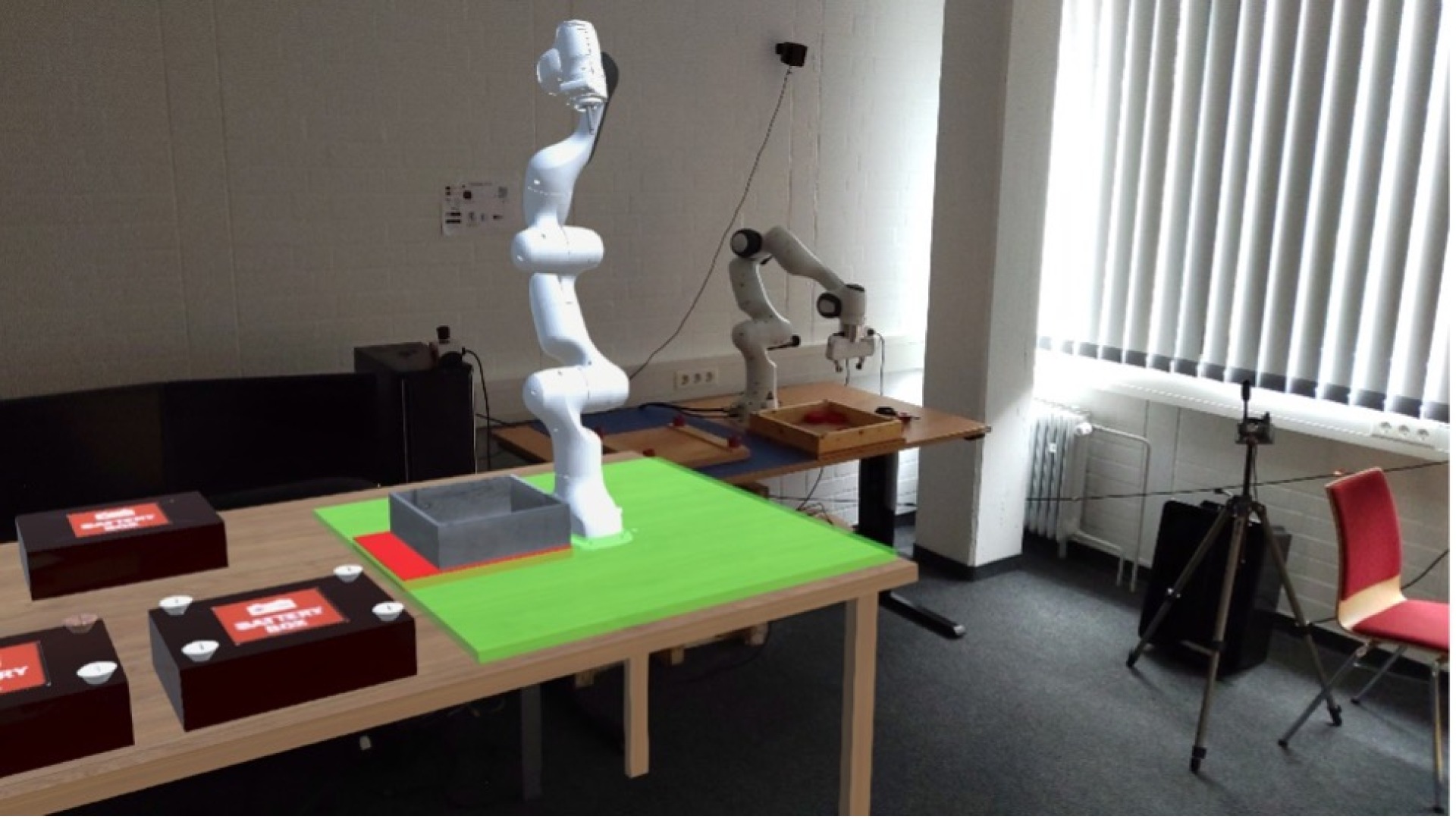
In order to ensure that development and research on this topic is safe, Interactive Systems will develop an augmented reality simulation for interaction and cooperation with robots. For this purpose, existing simulation environments are used and the simulated movements are implemented in augmented reality, whereby digital content such as simulated robots or planned trajectories are integrated into the real environment. This enables safe and easy testing of human-robot collaboration in different environments and at different workplaces, whereby any behavior and movements of the robot can be used. The environment serves to test safety-critical interactions such as the distance between the robot and people or emotional and cognitive tasks such as the adaptation of humans and robots when working together. The robot's behavior is specified and executed in virtual space with its command set.