
Deciphering the signal transduction
Deciphering the signal transduction
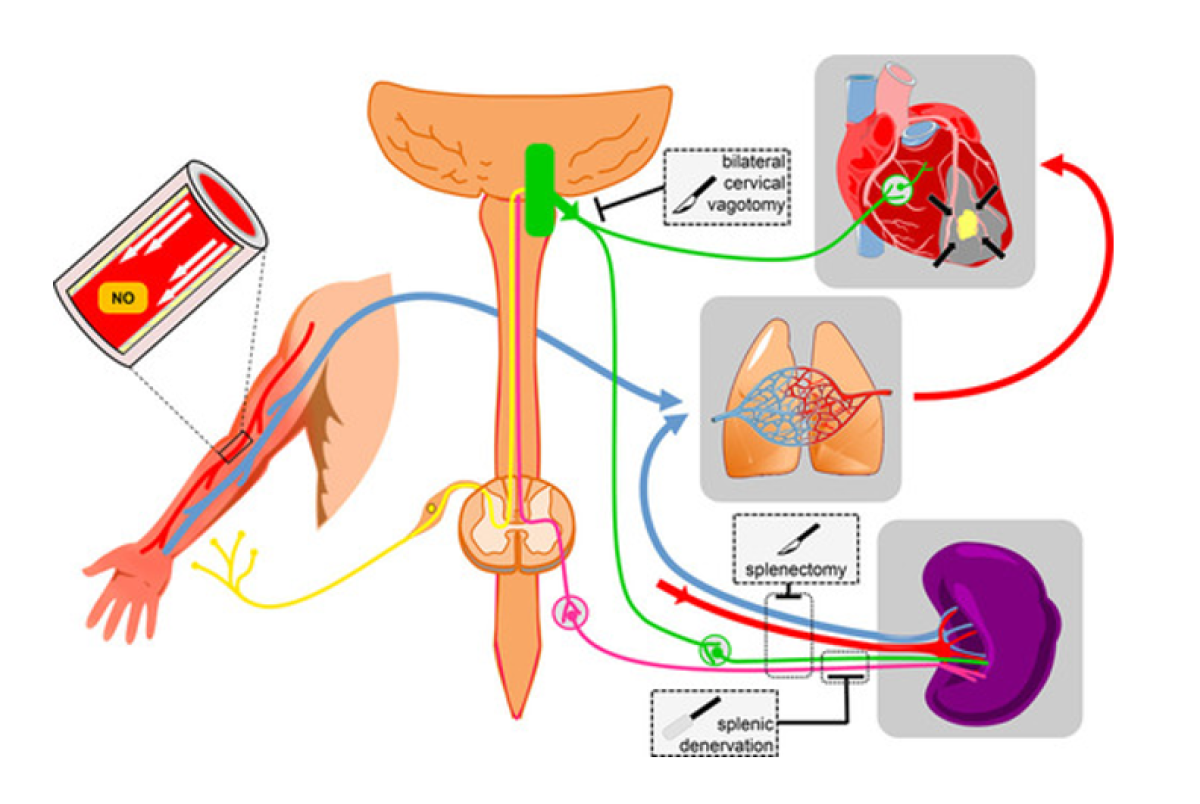
Cardioprotection has been shown to be effective in experimental models and has also been clearly demonstrated in humans. Only through detailed analysis can mechanisms be identified that may also provide cardiac protection in patients and thus be translated into clinical application. In a study published in the European Heart Journal (Eur Heart J 45:3164–3177), we were able to show that, in the context of remote cardioprotection, the spleen plays a central role as a regulatory organ in humans as well. Both brief interruptions of blood flow to a volunteer’s arm and electrical stimulation of the vagus nerve at the tragus of the ear lead to the release of a cardioprotective substance into the bloodstream. In volunteers who had undergone splenectomy following trauma, this release did not occur. The study highlights the complex nature of signal transduction and underscores the close connection between the heart and the immune system in the setting of acute myocardial infarction.
Questions about the Project?
Request information about this project here!