

In-line nanoparticle and gas phase analysis
In-situ FTIR spectroscopy
In-situ techniques for detailed and fast analysis are often based on spectroscopic approaches. One technique that has been successfully employed at our group is Fourier Transform Infrared Absorption Spectroscopy (FTIR). It allows to optically monitor gas‑phase compositions in the effluent of particle synthesis reactors and to identify qualitative and quantitative changes of chemical components. For such measurements, an infrared light beam of a suitable light source is guided by special infrared optics into the reactor, measured and monitored.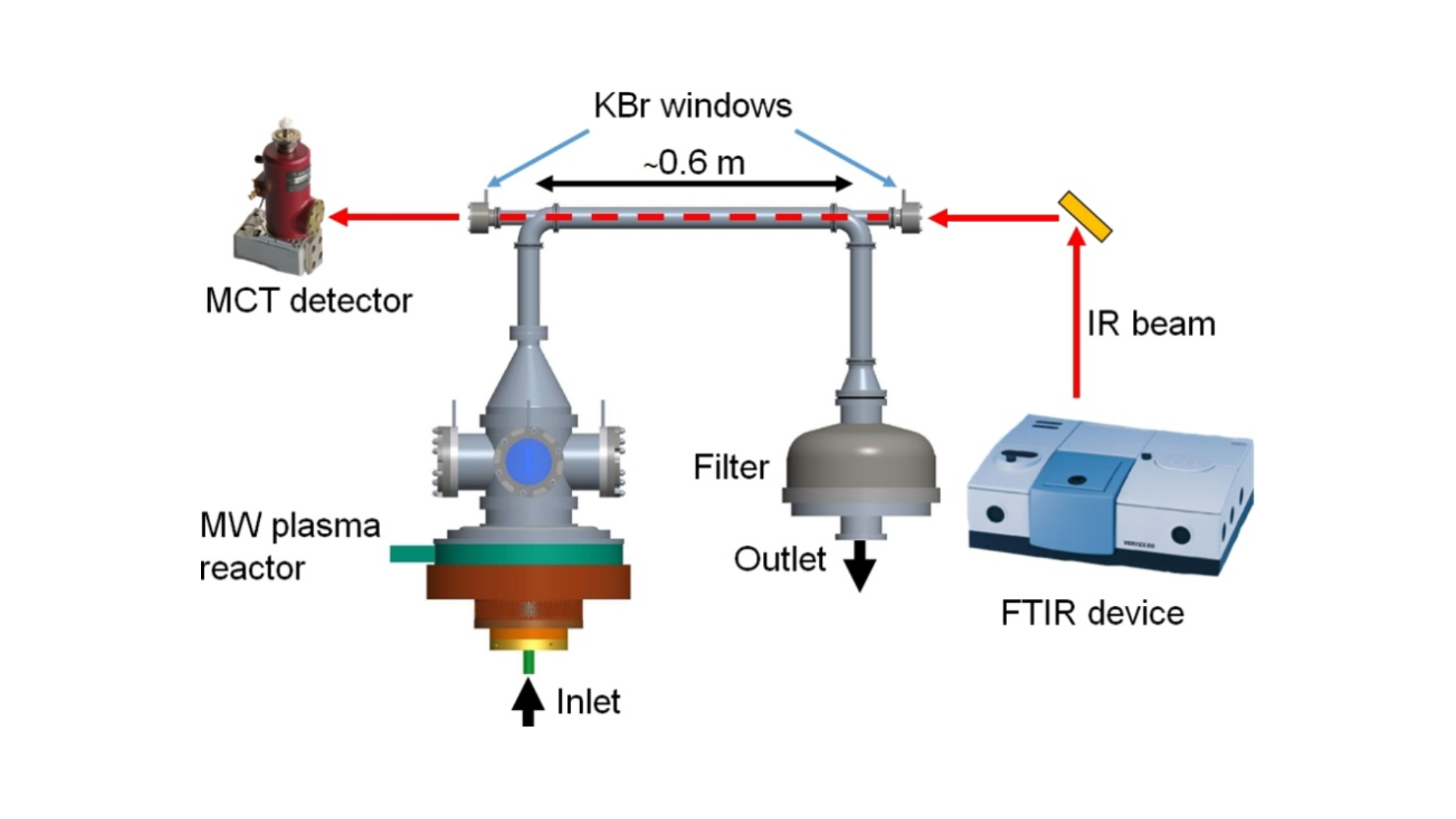
Figure 1: In-situ FTIR spectroscopy setup.
Literature:
Musikhin S, Fortugno P, Endres T, Dreier T, Daun KJ, Schulz C. Elemental carbon and hydrogen concentrations as the main factors in gas-phase graphene synthesis: quantitative Fourier-transform infrared spectroscopy study. Carbon 2023;202: 47–60. doi.org/10.1016/j.carbon.2022.11.024
Gas Chromatography (GC) and Quadrupol Mass Spectrometry (QMS) analysis
Due to often limited optical access and high particle loading in nanoparticle synthesis reactors, information regarding changes in the gas composition during the course of the reaction can often only be investigated by spatially resolved measurements using sampling probes. In our lab we are using gas quadrupole mass spectroscopy (QMS) and gas chromatography (GC) for inline gas phase analysis. With these measurements, important information can be gathered about the reactions taking place. Furthermore, by repetitive measurements, the process can be monitored continuously.