UDE alumnus portrait: Dr Markus Kamieth
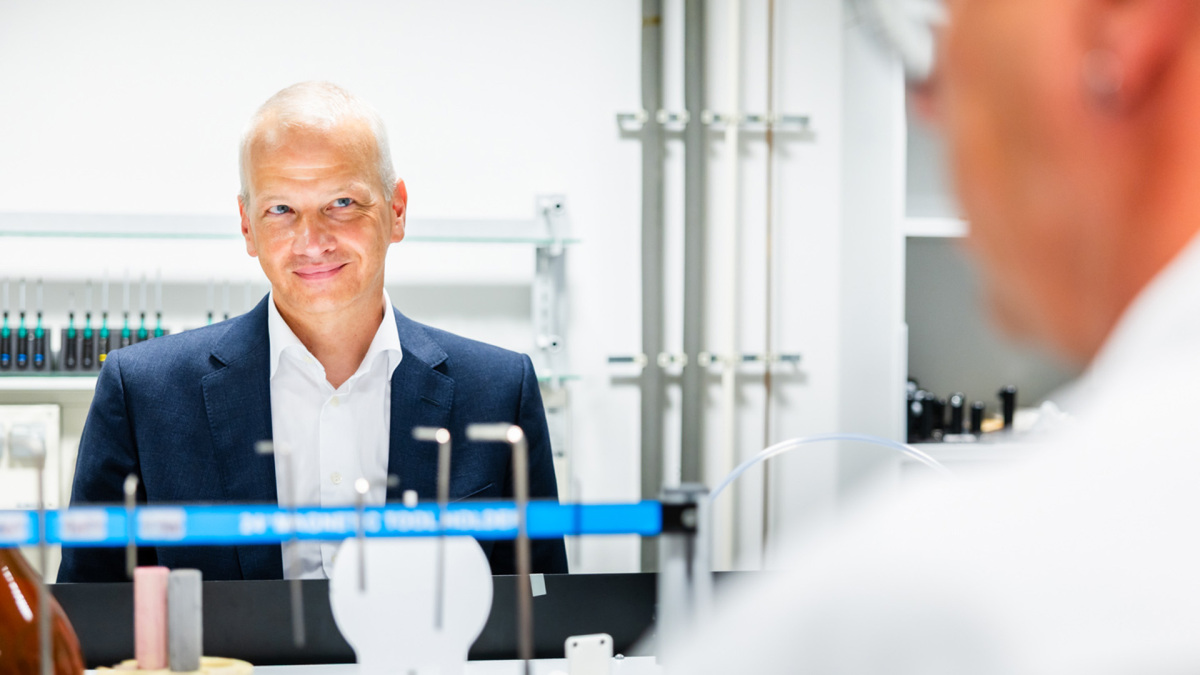
Dr. Markus Kamieth
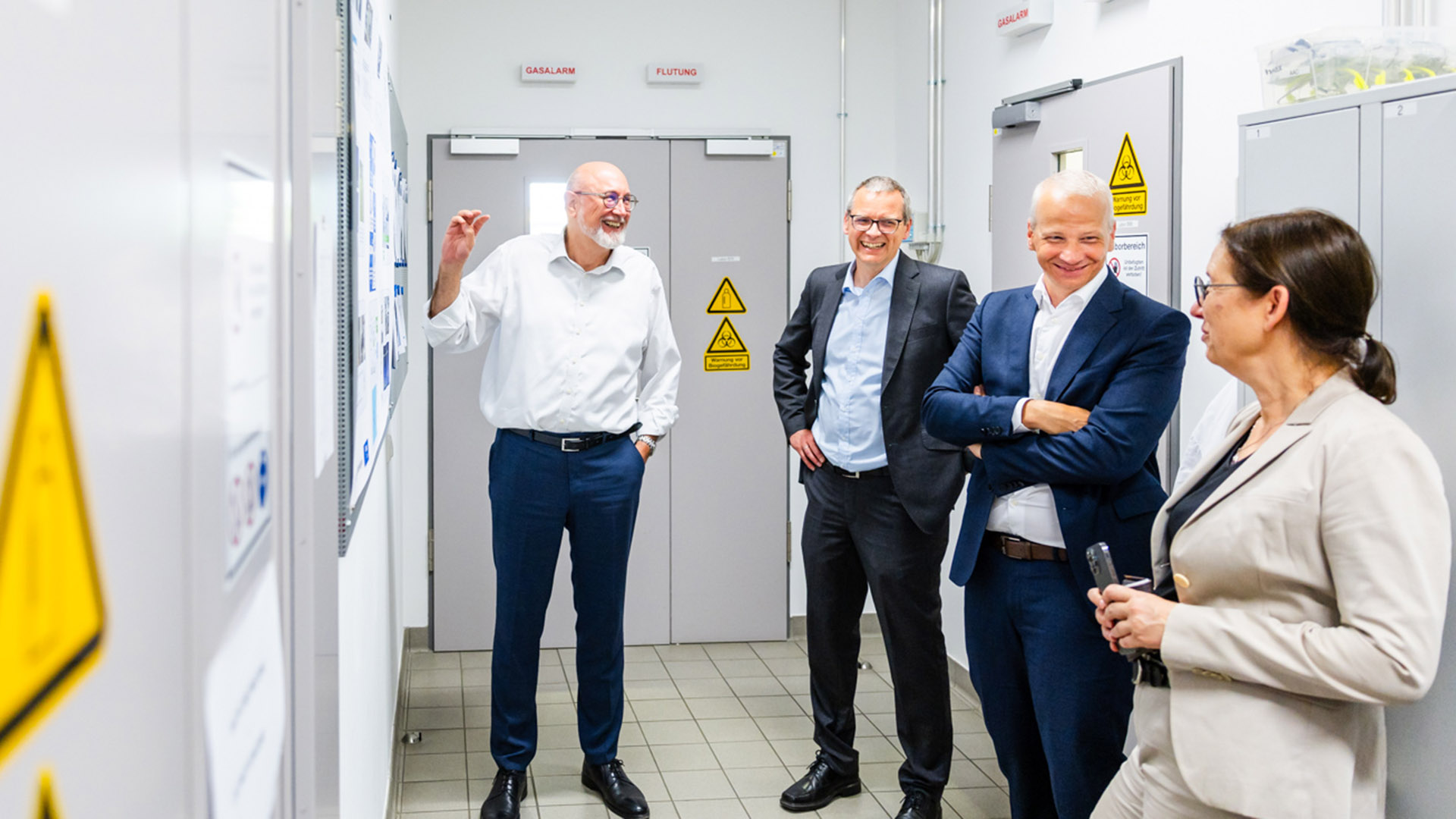
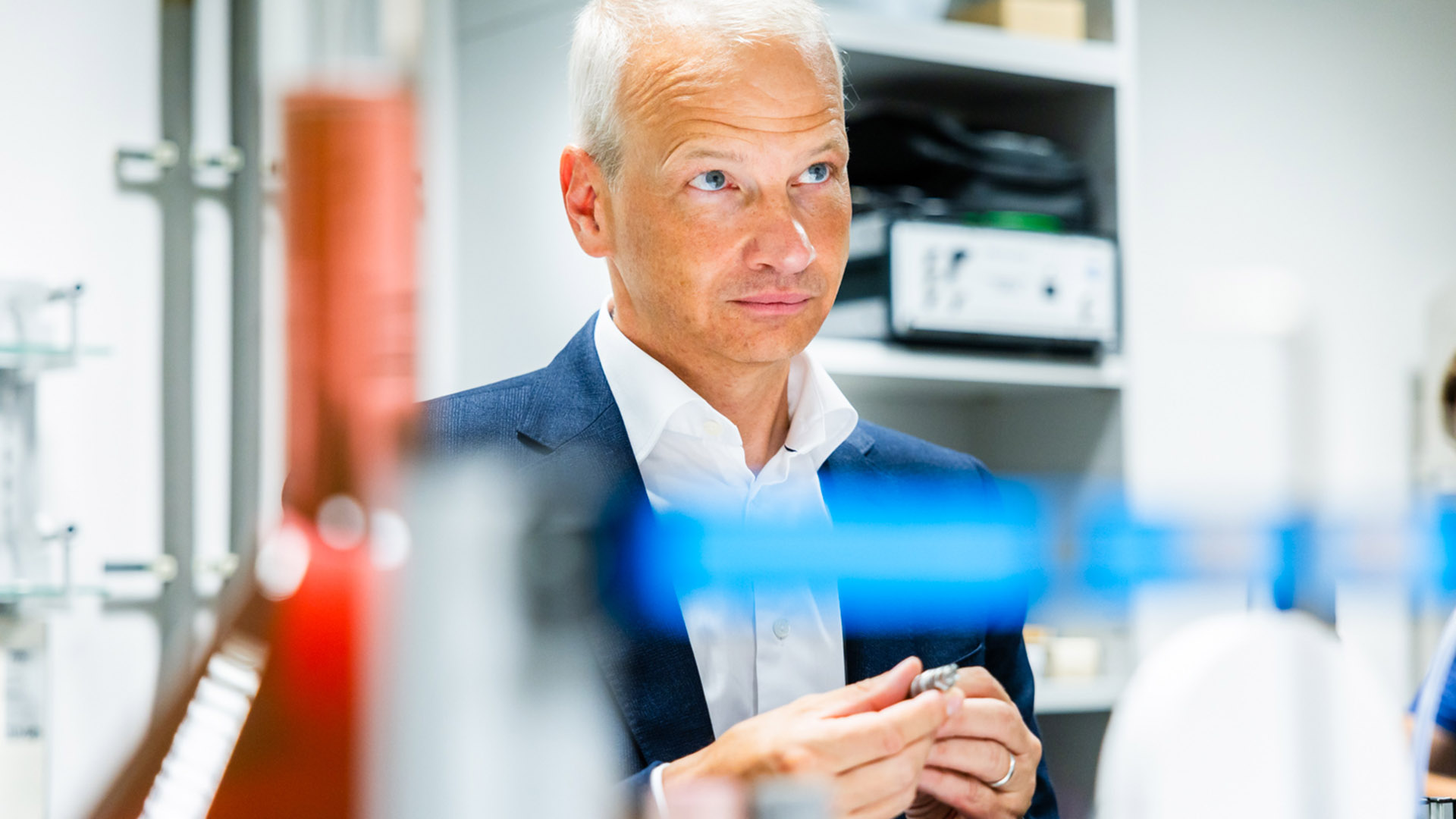
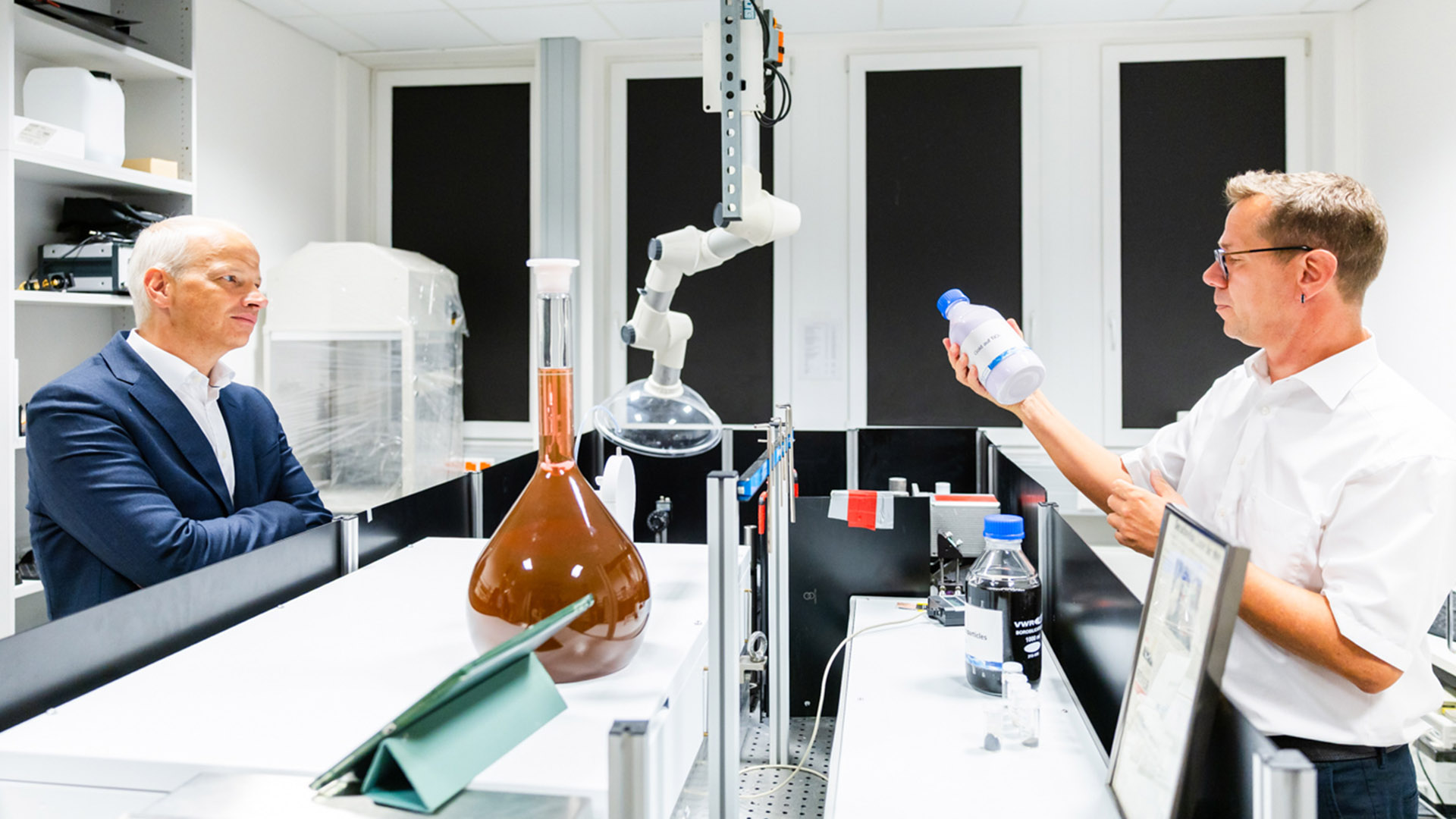
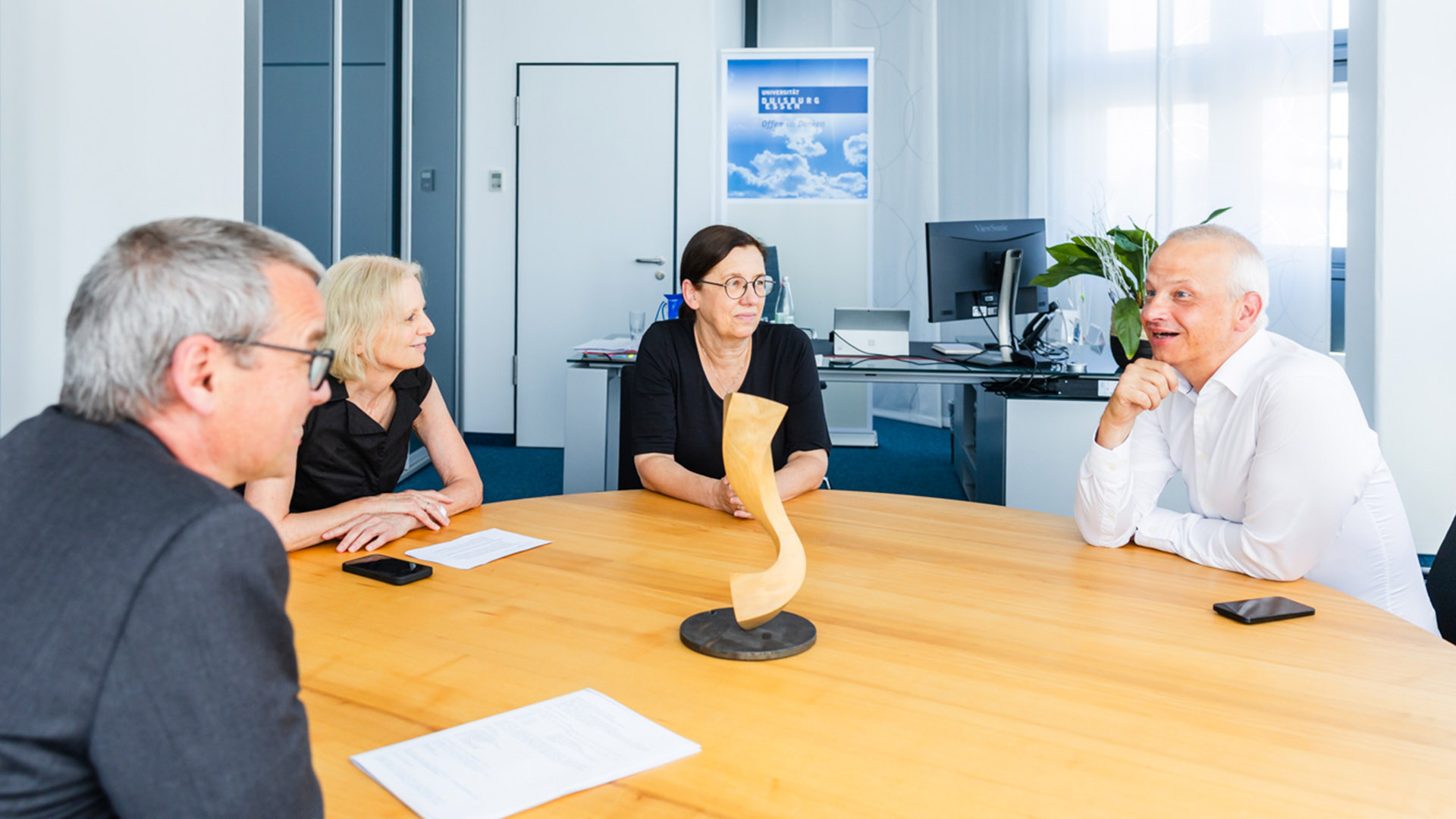
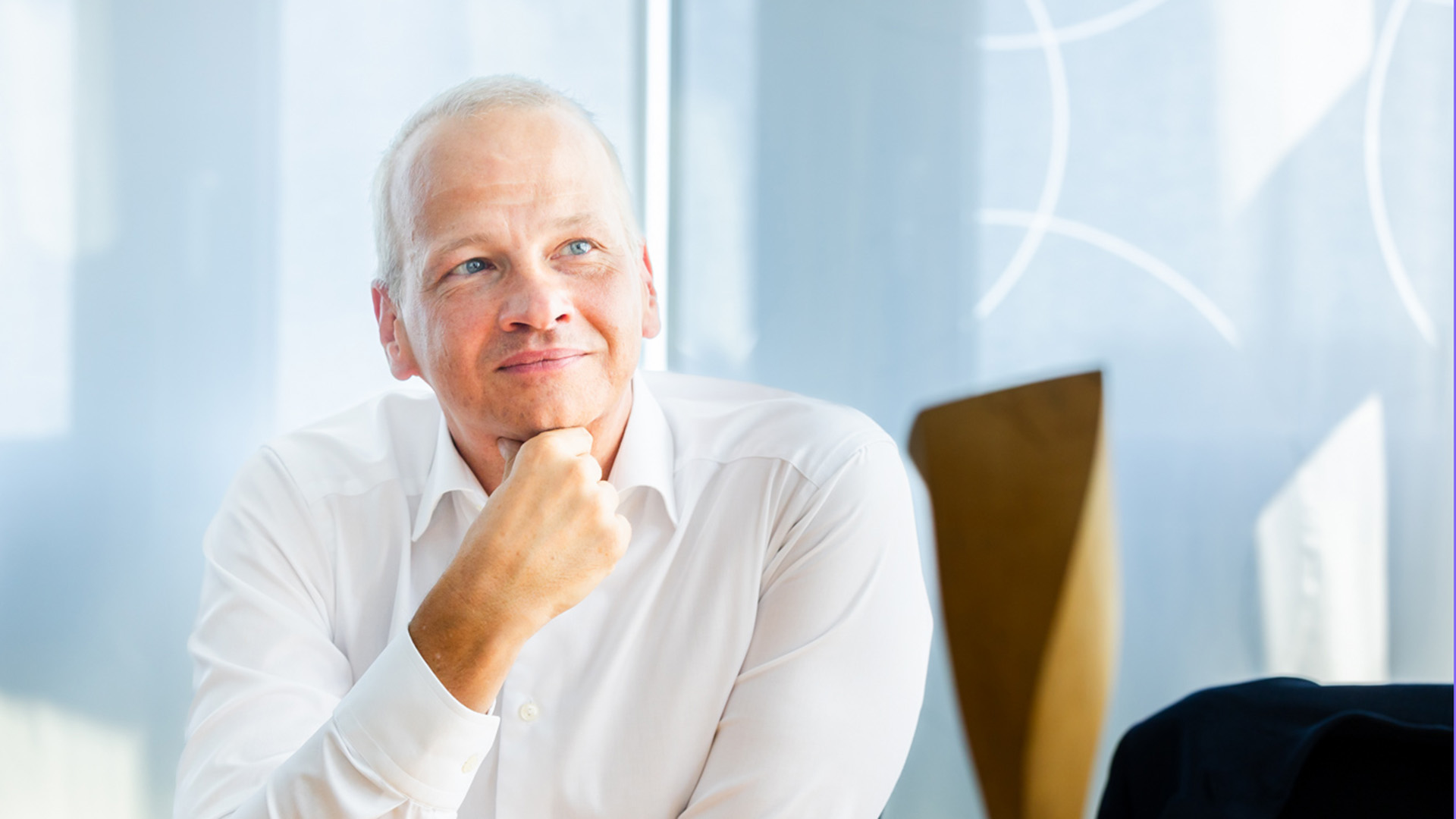
UDE alumnus Markus Kamieth began studying chemistry at the University of Essen in 1990 and received his doctorate in 1998 with a thesis on ‘tweezer molecules’, molecular tweezers. He then joined BASF, the leading chemical company in Ludwigshafen, where he began in research and quickly moved into various management and executive positions in Germany and abroad. Today, he is the Chief Executive Officer (CEO). During a visit to the University of Duisburg-Essen, Astrid Bergmeister spoke with him about Dinslaken, Essen, Ludwigshafen and much more.
Working-class child. Chemist. Chief Executive Officer.
Astrid Bergmeister: Mr Kamieth, you studied in Essen and are now CEO of BASF, a very large chemical company. Naturally, we are interested in what you have done so far. One does not simply become a CEO.
Markus Kamieth: Yes, that's right. My journey since leaving the University of Essen has been quite varied. In 1999, I started working in research at BASF straight after completing my doctorate. However, I didn't exactly have the best time during my first two years there, as I wasn't really enthusiastic about my research projects. But then I was given the opportunity to move into business development. It involved combining scientific and technical knowledge with business activities. That meant that when new products were developed, I might not have been the one doing the research, but I was the one who decided which research projects should be carried out to ensure we were truly successful. In the process, I discovered that I enjoyed being creative and having the opportunity to positively influence the fortunes of the company. And that worked out quite well.
In 2004, I received a crucial phone call from my division manager, offering me the opportunity to move to the United States. What was supposed to be a two-year assignment ended up lasting almost eight years. I developed my skills in a wide variety of operational roles in the United States and then returned to Germany in 2012, to Münster, where I took over the global coatings division – which is still a major division for BASF today. In 2017, I was appointed to the Board of Executive Directors and then took over as Chairman last year. So, all in all, a lot of change. I would say about a dozen jobs, eight moves, living in the USA, four years in Hong Kong. This has allowed me to see the world and the chemical industry and get to know many, many customer industries.
Astrid Bergmeister: Would you describe that as classic educational advancement? You have said elsewhere that you see yourself as a child of mining.
Markus Kamieth: Yes, I come from a mining area, from a family in Dinslaken in the Ruhr region. My father worked underground for about 35 years. And no one in my family had ever taken their A-levels or gone to university before me. The opportunity to study here at the University of Essen was an amazing chance for me. For my parents, it was an adventure. They were uncertain and worried whether it would work out. But I can only be extremely grateful that they trusted me. The education system, with all its opportunities, opened doors for me. That, combined with my love of science, was my chance.
I was already a chemistry nerd at school. Chemistry has always fascinated me, this combination of creativity and intellectual challenge. You can make something, ‘cook’ something. It actually changes something in the real world, and at the same time, it challenges you intellectually. Understanding how electrons work has always fascinated me. That was the motivation to say to myself: if you like it so much, maybe you can study chemistry. And that's all it took. It's easy to do that when your parents have confidence in you and encourage you to go for it: give it a try, have a go.
And then I found an environment here at university that allowed me to develop myself, with a lot of independence in my studies and plenty of choices. I always felt that I was largely able to choose what I enjoyed and what I focused on in my studies. I never felt that my studies were school-like, but rather an opportunity to shape my own path. And that has benefited me greatly. But of course, my values and my personality are always based on my roots, where I come from.
Astrid Bergmeister: This determination that comes across in your words, or your fascination with what you do: is it that you still have a scientific perspective?
Markus Kamieth: Yes, I am still a very curious person. Whenever I have the opportunity to learn something new, I am immediately very excited.
I don't like routines. Things that just work don't inspire me as much as things that don't work or where it's not clear why that's the case. New things fascinate me. Sometimes I hear in the company that I'm a little too curious about technical details here and there. The fact is that in a company, information is often simplified so that management can understand it. But I'm always interested in the background, because I want to know: how does it actually work, and can you write down a molecular formula so that I can remember it? I think some people find that irritating, but you can't really dismiss it. I'm still a scientist at heart and fascinated by new technologies. I believe that a passionate scientist can learn about management, business administration, finance and everything else that needs to be learned. The reverse is difficult.
Astrid Bergmeister: What is ultimately crucial to the success of your work? You are very much in favour of this connection between industry and science. What are the prerequisites for innovation and a sustainable business location?
Markus Kamieth: For BASF, there are an incredible number of things that are critical to success. The most important thing is to offer the most innovative products that the market wants in the areas in which you operate. For us, that means technologies: process technologies – i.e. how to produce chemicals or chemical products – or product technologies. We ask ourselves: What properties of products can be extracted from molecules that have application value, and do we have the necessary expertise within the company? This applies to the development of products and processes as well as to marketing, application and customer consulting. That's what matters. And that's with a broad product portfolio. From steam crackers to vegetable seeds, there is no single criterion for success. But being at the forefront of innovation, constantly offering customers and the market something new and improved, has been in our company's DNA for 160 years. The only thing is, what constitutes ‘better’ is changing rapidly. Many years ago, it was almost exclusively physical product properties or costs. Today, it is increasingly about CO2 content and recyclability. Many new characteristics are being added that have market value today. It is critical to our success that we, as a company, change course and focus our research and development activities on these new challenges and new market requirements. This means that we have set ourselves the goal of always offering our customers the preferred product, even in the green transformation. That is our mission. ‘Just cheap’ or ‘just the best feature’ is no longer enough today. We have to innovate differently than in the past; today, we have to innovate in a greener way. And we have to offer solutions that society will hopefully accept and use positively.
Astrid Bergmeister: What are your plans in this regard?
Markus Kamieth: We have ambitious plans. We are still a very research-intensive company today. Our research budget exceeds two billion euros every year, we employ almost 10,000 people in research and development worldwide, and the majority of our research and development activities today are focused on sustainability.
The aim is either to close material cycles or to decarbonise entire processes and value chains. This is the main focus of our research and development activities, and as a company we want to enable the green transformation of our customer industries. That is our mission. To put it a little bluntly, decarbonising BASF is a huge task. We have a global carbon footprint of around 17 million tonnes. On the other hand, that's not even the carbon emissions of a single coal-fired power plant. Seen in this light, our mission is much more: we want to positively influence the carbon footprint and circularity of our entire customer industries. We want to be enablers of green transformation for all manufacturing industries. Today, no matter which manufacturing industry you look at, you can find a BASF product everywhere in the world.
Whether it's a semiconductor or an agricultural product, a machine or a car, we will contribute to making this product greener, more sustainable and more circular everywhere. That is our claim.
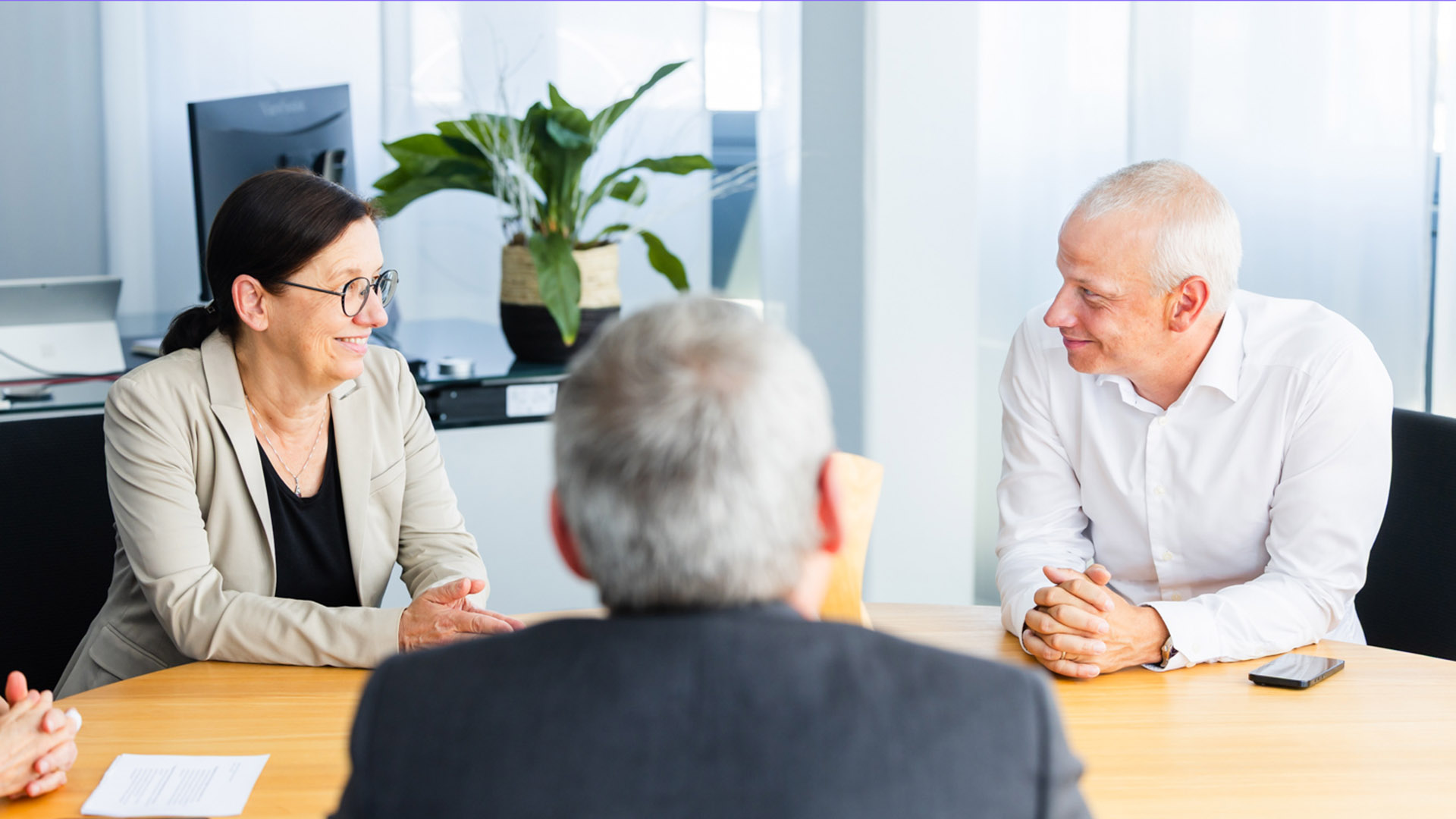
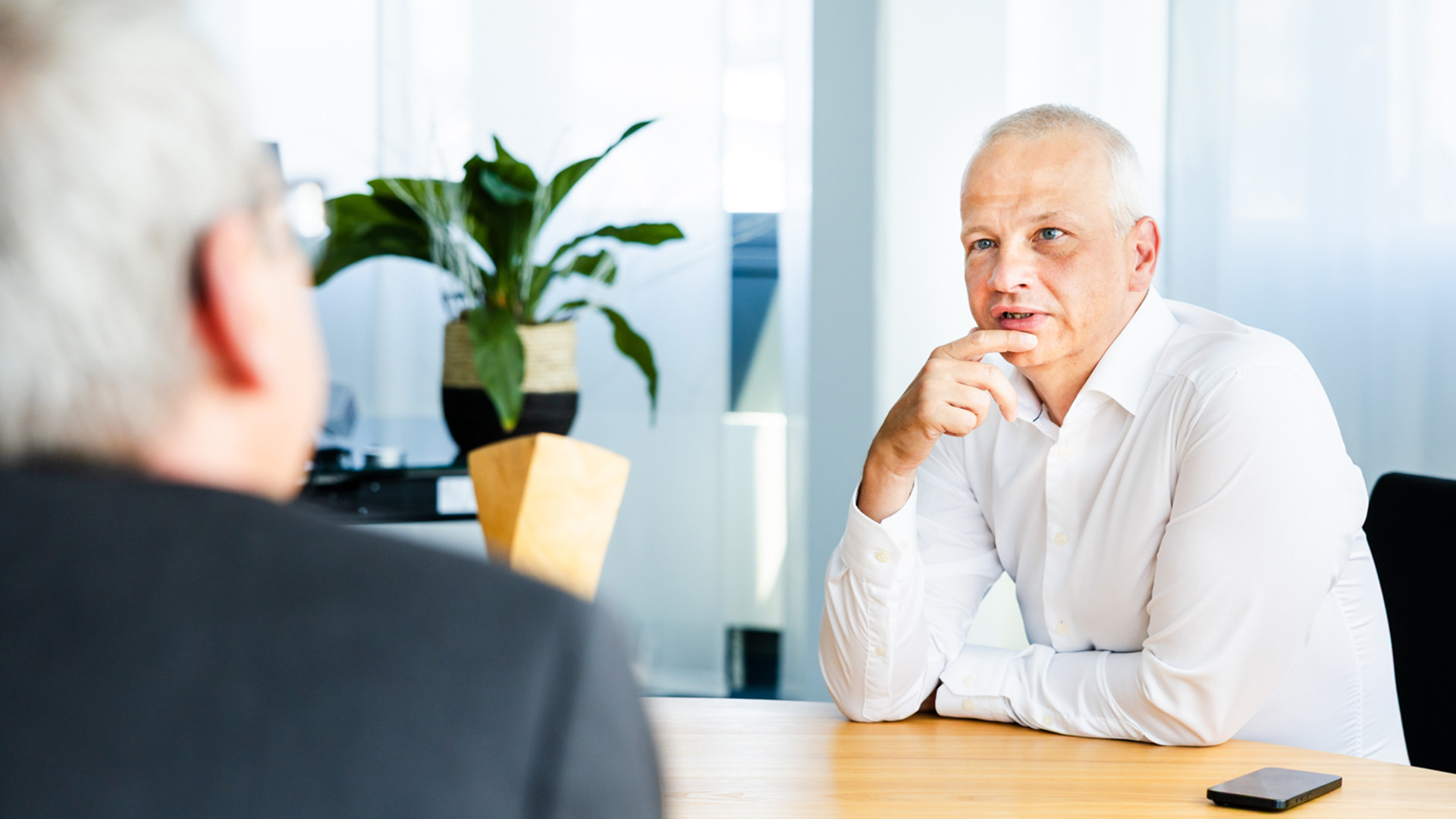
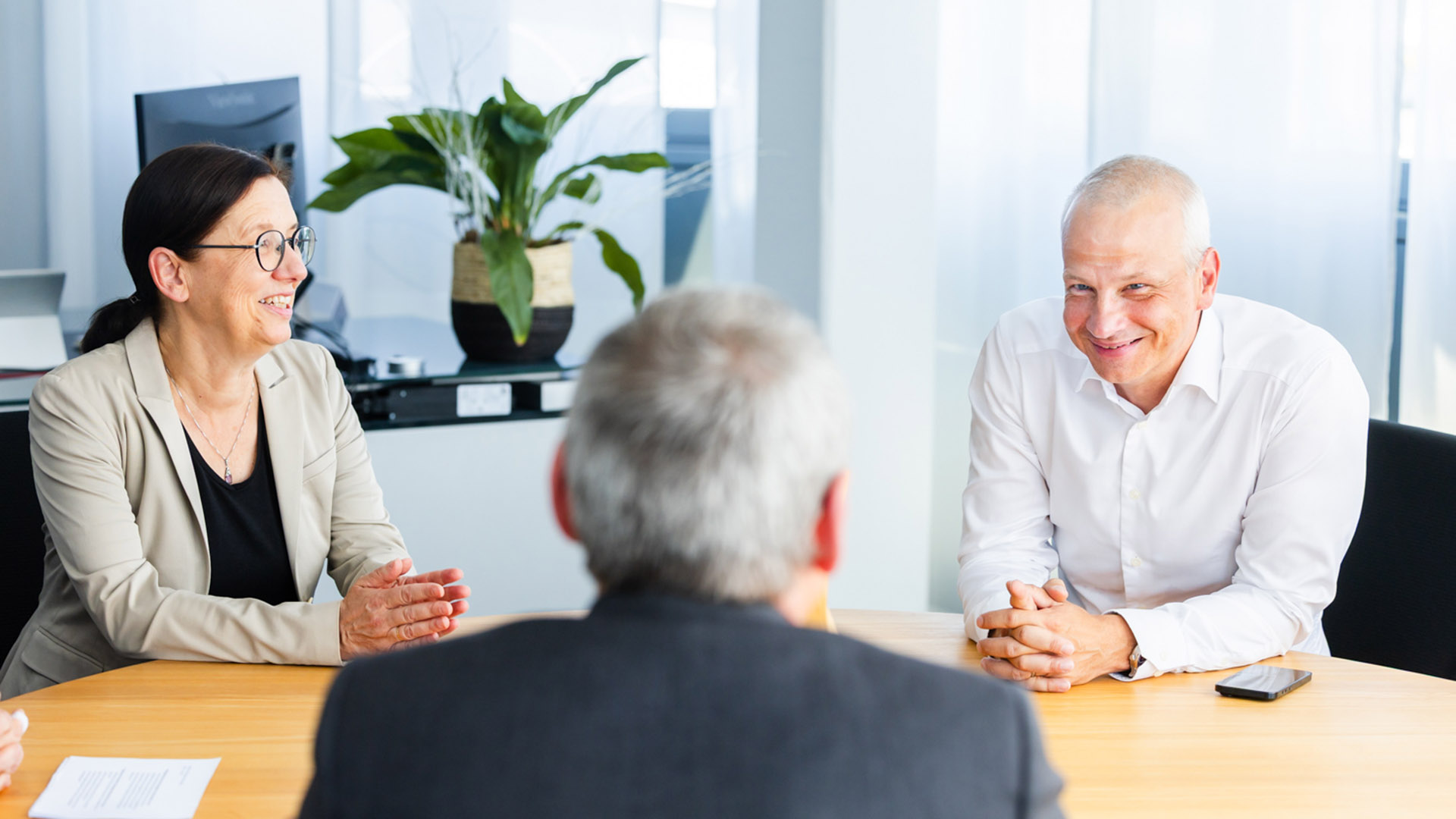
Astrid Bergmeister: Do you see ways in which companies and universities could potentially take joint responsibility?
Markus Kamieth: Responsibility is a big word. I believe that we all have a responsibility as a society to bring about this transformation. And we need to do so in a way that does not lose sight of society as a whole – that is the difficulty at the moment.
There is a tension between, on the one hand, the overambitious dream that setting goals will somehow magically transform society and industry, and, on the other hand, ignoring the fact that this transformation is necessary. Neither approach is helpful. We need to find pragmatic ways forward. On the one hand, we need to scale up things that are already possible today as quickly as possible and create a regulatory framework that makes this possible. On the other hand, I am convinced that not all the technologies we need to decarbonise our economy have been invented yet. We must continue to rely on engineers, chemists, physicists and all other scientists to invent things that we do not yet have today. And that is why I believe that cooperation between academia and industry will continue to be extremely important. From our point of view, there is perhaps a slightly different approach to industrial research today. The search for completely new inventions, for moonshots, which used to be so important, is, I believe, no longer so important for us today. The primary goal is no longer to develop a completely new plastic, but rather we are guided by the question of how we can change and decarbonise the plastics value chain. But even here, we will continue to need a lot of technical and scientific fundamentals in order to develop new solutions for application. That is why I am optimistic about the transformation. We just mustn't nip it in the bud with overly narrow definitions. I am opposed to politicians trying to regulate everything through targets. Ultimately, we need scientists and engineers with new ideas. And people who can achieve great things.
Astrid Bergmeister: Global interaction is important to the University of Duisburg-Essen, including with China. How do you assess the opportunities and risks of exchange for companies and universities?
Markus Kamieth: They are in a very similar boat to us. I believe that the art of finding the right balance is probably similar for science as it is for industry.
China has become so relevant in science, as it has in many technologies and markets. I find it hard to imagine that the world will be a better place if we disconnect from China. We need to find a way to achieve the best for humanity and for Europe by working with China in a smart way, not naively or blindly, of course. It is important to have expertise on China and to know what works in China and what doesn't. I believe it is expedient to enter into cooperation with China with self-confidence and openness. I believe that China will become a leader in many scientific fields relatively quickly, and we should not cut ourselves off from that. Ultimately, we must always ensure that we move forward as humanity and do not divide the world. Perhaps the economy and science can contribute to this. In politics, it is always easier to draw boundaries than in the world of business and science. That is why I advocate standing by our commitment to Asia, even if it is sometimes critically discussed in public. Our position is that we will, of course, also collaborate with Chinese scientists.
Astrid Bergmeister: One final question – our university is a leader in water research. Rivers are also a major issue for you. Your company is located on the Rhine and feels the effects of low water levels. We are conducting research into the ‘reinvention’ of rivers, and BASF has worked with our scientists to develop special boats for logistics in low water conditions. Do you have any other ideas for making us resilient to climate change?
We have a huge chemical site on the Rhine in Ludwigshafen. The Rhine is the lifeline of this site. We transport an incredible number of products in and out via the Rhine. And it is a source of cooling water, which we naturally need in large quantities. To be completely honest, we would not build the site there today, but somewhere on the coast. But Ludwigshafen is one of the largest chemical sites in the world, so we have to come to terms with the circumstances. And I think we need to put all the options on the table. We could build shallower ships, but that doesn't solve the problem fundamentally. We are also in discussions with the state of Rhineland-Palatinate about deepening the shipping channels, which is a very complex and lengthy issue. The big issue, however, is how to keep the water level of the Rhine at a level that is suitable for shipping in view of the weather phenomena. I am not an expert on waterways, but the importance of having an infrastructure in Germany that is navigable all year round is underestimated. Disruptions in supply chains will have an increasingly significant impact in the future. The Rhine is actually just a proxy for the bigger issue of water. This is also becoming increasingly interesting from an investor's perspective. You wouldn't believe how many investors ask us how we will deal with changes in water availability in the future. So, rivers are an important issue for us and others, and there are many unresolved challenges.
Astrid Bergmeister is Head of Press Relations and Press Officer at the University of Duisburg-Essen.