Research Projects
Coordinated Collaborative Research Centres
CRC 1430
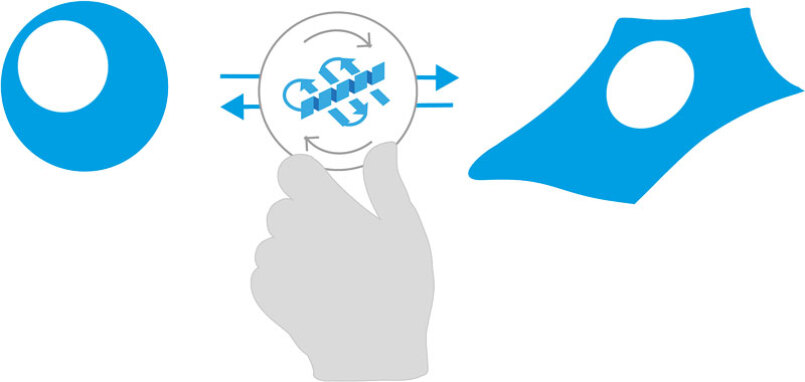
Molecular Mechanisms of Cell State Transitions
Speaker: Prof. Dr. Hemmo Meyer
The DFG-funded CRC 1430 ‘Molecular Mechanisms of Cell State Transitions’ investigates fundamental molecular mechanisms underlying the regulation of cell proliferation. Cell proliferation must be tightly controlled in order to ensure the development of the organism and tissue regeneration while preventing neoplastic disorders. An essential feature of this control is the establishment of different, biochemically or epigenetically defined cell states and the regulated transitions between these states.
Recent Publications
-
Molecular requirements for PLK1 activation by T-loop phosphorylationIn: The EMBO Journal, Vol. 45, 2026, Nr. 5, pp. 1496 – 1536DOI (Open Access)
-
Discovery of an Endonuclease G-inhibitory Ku80-peptide protecting against leukemogenic rearrangements at the MLL breakpoint clusterIn: Nature Communications, Vol. 17, 2026, Nr. 1, 3562DOI (Open Access)
-
Decoding the language of PLK1 docking motifs and activation mechanismsIn: Trends in Cell Biology, Vol. 36, 2026, Nr. 3, pp. 214 – 229DOI (Open Access)
-
Stress-induced proteome remodeling at the Golgi-endosome interfaceIn: Journal of Cell Science, Vol. 139, 2026, Nr. 9, jcs264535DOI (Open Access)
CRC 1439

Multilevel response to stressor increase and release in stream ecosystems (RESIST)
Speaker: Prof. Dr. Bernd Sures
The Collaborative ResearchCentre RESIST is investigating how flowing waters recover after environmental stress. In Phase I, the "Asymmetric Response Concept" (ARC) was developed, which shows that recovery processes occur differently than the original degradation. Important findings are that ecological functions recover faster than species compositions and that biotic interactions and environmental factors influence regeneration differently. In Phase II, the focus will be expanded to include recovery processes after moderate and severe stress, including drought. The research combines laboratory experiments, field studies and modeling to gain transferable knowledge for river restoration.
Recent Publications
-
A Proof-of-Principle Study for δ¹⁵N Measurements of Aqueous Dissolved Nitrate With a Modified LC-IRMS InterfaceIn: Rapid Communications in Mass Spectrometry, Vol. 39, 2025, Nr. 3, e9950DOI (Open Access)
-
Earth's most needed uncultivated aquatic prokaryotesIn: Water Research, Vol. 273, 2025, 122928DOI (Open Access)
-
Recovery and Degradation Drive Changes in the Dispersal Capacity of Stream Macroinvertebrate CommunitiesIn: Global Change Biology, Vol. 31, 2025, Nr. 1, e70054DOI (Open Access)
-
Successes and failures of conservation actions to halt global river biodiversity lossIn: Nature Reviews Biodiversity, Vol. 1, 2025, Nr. 2, pp. 104 – 118
-
Drivers of recovery and degradation of riverine benthic invertebrate communities : a Germany-wide analysisIn: Ecological Processes, Vol. 14, 2025, 30DOI, Online Full Text (Open Access)
European Programmes
MERLiN

Horizon-2020 Project MERLiN
Project coordination: Prof. Dr. Daniel Hering
Europe's environment is in an alarming state, with climate change expected to further aggravate the situation. This poses severe threats to economic prosperity, human wellbeing and social peace – our society needs systemic transformative change.
Ecosystem restoration is key to this change, and freshwaters play an important role: the restoration of streams, rivers, peatlands and wetlands has a long tradition and offers an extensive knowledge base – freshwaters are ideal demonstrators of the necessary change.
The MERLIN project commits to transformative ecosystem restoration, mainstreaming Nature-based Solutions for the urgent systemic change of our society.

Horizon Europe - Mission Ocean
eDNAqua-plan

eDNA-based approach for the EU Mission Ocean strategy
Prof. Dr. Florian Leese
Funded by the EU Horizon Europe programme, eDNAqua-Plan is a €1.9 million, 3-year project that will focus on the development of a digital ecosystem for eDNA reference libraries for aquatic ecosystems (marine and freshwater).
EFRE/JTF-Programm NRW 2021–2027
ClearView

New strategies to combat AMD
Prof. Dr. Michael Ehrmann
Prof. Dr. Markus Kaiser
The aim of the project is to optimize HTRA1 inhibitors as a strategy for the treatment of age-related macular degeneration (AMD). AMD is an incurable disease and the most common cause of blindness in people over the age of 60. In the ClearView project, the HTRA1 inhibitors developed by us will be optimized in terms of medicinal chemistry and their efficacy will be validated in various models (in vitro / ex vivo / in vivo) (proof of concept). The ClearView project is carried out in collaboration with the partners Lead Discovery Center GmbH, University of Duisburg-Essen and University Hospital Tübingen.