

Willkommen
auf der Seite der AG Aquatische Ökosystemforschung
Unsere Arbeitsgruppe untersucht die Biodiversität aquatischer Ökosysteme. Uns interessiert
insbesondere, wie anthropogene Stressfaktoren die Biodiversität verändern. Ein Schwerpunkt
unserer Arbeit stellt die Entwicklung moderner genomischer Methoden zur Erfassung der
Biodiversität dar.
Willkommen
auf der Seite der AG Aquatische Ökosystemforschung
Unsere Arbeitsgruppe untersucht die Biodiversität aquatischer Ökosysteme. Uns interessiert
insbesondere, wie anthropogene Stressfaktoren die Biodiversität verändern. Ein Schwerpunkt
unserer Arbeit stellt die Entwicklung moderner genomischer Methoden zur Erfassung der
Biodiversität dar.
Current Activities

16-19 September 2026 Successful DGL+WRHC Combined Conference 2026
The annual meetings of the Water Science Alliance (WRHC) and the German Limnological Society (DGL) have concluded, hosted by the Leibniz Institute of Freshwater Ecology and Inland Fisheries (IGB). Florian Leese helped organize the WRHC and led a workshop on eDNA.
Our group was represented with several contributions: Marie-Thérèse Werner presented the "DNA macht Schule" (DNA in Schools) project, Ann-Christin Lenz and Florian Leese presented data from the TrendDNA project, Lara Moreno Sanchez shared results from her master's thesis on biodiversity from 1 L of water, Jannis Budke reported on the development of reference materials for metabarcoding, and Philipp M. Rehsen presented automated image recognition as a complement to taxonomic and genetic data in multiple-stressor research. Iris Madge Pimentel gave two presentations.
Two awards went to our team: Iris Madge Pimentel received the DGL's 2026 Schwoerbel-Benndorf Early Career Award for a joint study conducted within DFG Collaborative Research Centre SFB 1439 RESIST (with Ralf Schäfer), and Lara Moreno Sanchez won the best poster award for the "DNA macht Schule" poster.

30 - 31 July 2026 Jetzt anmelden: Insekten-Exkursion mit dem entomologischen Verein Krefeld
Tag 1: Entomologische Methoden im Feld: Insekten finden, sammeln, fotografieren
Tag 2: Führung durch die Sammlung des entomologschen Vereins Krefeld, Insekten bestimmen
Beide Termine finden ganztägig in Krefeld statt, gemeinsame Anreise ab Campus Essen ist möglich.
Weitere Infos und Anmeldung unter lisa.wolany@uni-due.de

11 - 12 July 2026 „Tag der lebendigen Lippe“
At a sunny weekend in July, the “DNA macht Schule” team participated in the “Tag der lebendigen Lippe” in Datteln. For the first time, the EGLV invited researchers to the Lippe river (instead of the Emscher river) for assessing its biodiversity and offering participatory activities for interested citizens. We are happy about the many visitors that played pairs, tried out the field and lab work, and got first insights into the Lippe river biodiversity with our DNA macht Schule App. We are looking forward to new registration for the next school year.
Research Themes

Multiple Stressor Research
Our working group analyzes the effects of single and multiple stress factors on aquatic ecosystems.
Biodiversity Monitoring
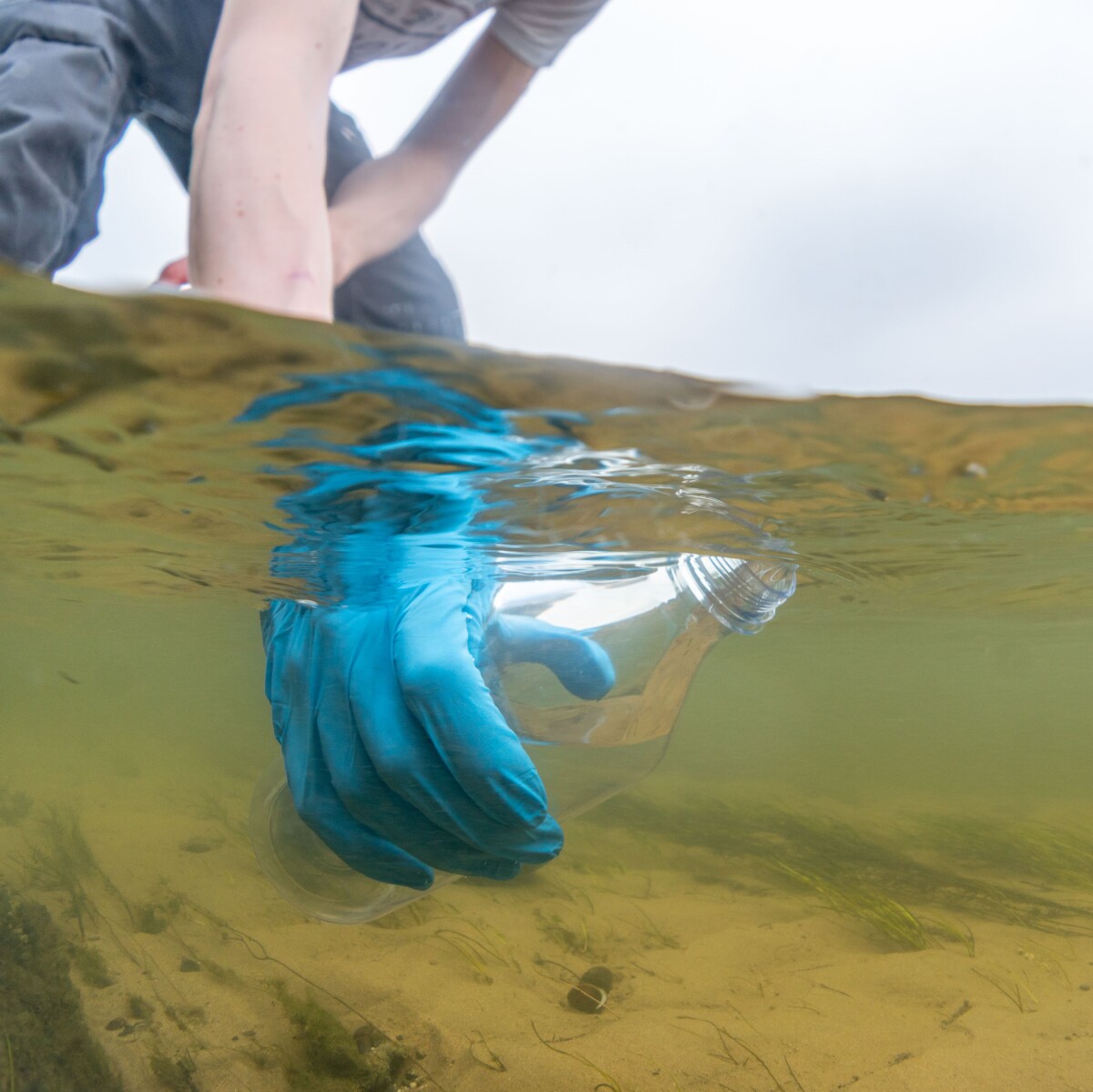
We are developing modern genetic tools to assess aquatic biodiversity at much higher resolution.

Genomic Methods Development
One of our focuses is the development of state-of-the-art genomic techniques for the standardized recording of biodiversity.
Population Genetics
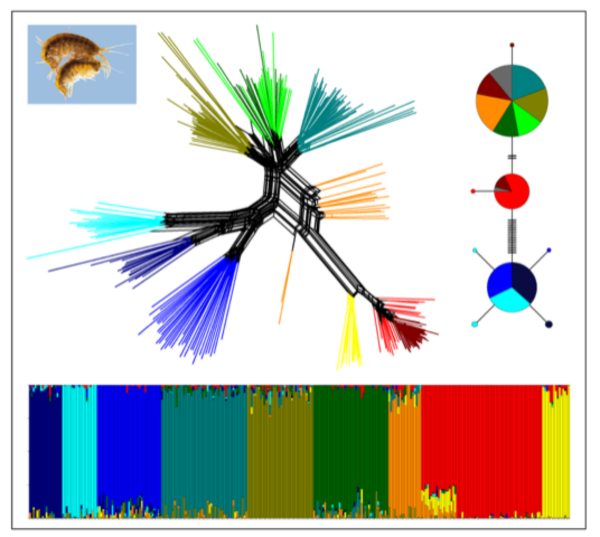
We use molecular markers to analyze the genetic diversity and fragmentation of invertebrate populations in rivers.
Recent Publications
-
Multiple stressors in river networks : local and downstream effects on freshwater macroinvertebratesIn: Ecography, Jg. 2026, 2026, Nr. 1, e07758DOI (Open Access)
-
eDNA metabarcoding : a non-invasive method to track temporal community dynamics in temporary riversIn: Limnetica, Jg. 45, 2026, Nr. 1, S. 75 – 90DOI (Open Access)
-
The detection of butterflies with DNA metabarcoding in Malaise trap bulk samplesIn: Journal of Insect Conservation, Jg. 30, 2026, Nr. 2, 31DOI (Open Access)
-
Integrated Reanalysis of Global Riverine Fish eDNA Datasets Shows Robustness and Congruence of Biodiversity ConclusionsIn: Molecular Ecology, Jg. 35, 2026, Nr. 8, e70340DOI (Open Access)
-
Organism-group-specific sensitivity to hydrologically relevant environmental gradients in perennial lowland streamsIn: Limnologica: Ecology and Management of Inland Waters, Jg. 120, 2026, 126365DOI (Open Access)