News
March 27, 2026International Conference "Globalizing Political Philosophy" (Ghana)

Universtiy of Ghana, Cedi Conference Centre, Seminar Room 2
9:00–16:00 Uhr
This international conference is an opportunity to do comparative political theorizing in the interest of moving beyond artificial boundaries. Crossing such boundaries is necessary because current political reality makes it abundantly clear that there is a lot to learn from contexts like Africa where political theorists have had to contend for a very long time with the consequences of the deficits of democracy. The lessons we can learn from this context would not mean much, however, if opportunities are not created to enable scholars from the so-called global north to engage with African political thinkers. With this conference, we offer
such an opportunity by bringing together African and European political theorists to explore how current political developments call for reimagination of political philosophy. The conference will focus on philosophical texts by members of the ‘Legon Tradition of Philosophers’ as the springboard for this comparative political theorizing.
The conference is organized by Richmond Kwesi (University of Ghana), Uchenna Okeja (Nelson Mandela University) and Andreas Niederberger (University of Duisburg-Essen).
See the Program
March 23–24, 2026International Conference "Globalizing Political Philosophy" (South Africa)

Nelson Mandela University, Ocean Sciences Campus, Gqeberha/South Africa
Increasingly, the humanities must respond to complex questions that cannot be reduced to a specific context. This is especially true for political theorizing. Paradigmatic cases include issues like climate change, the problems related to the outsized influence of social media
on social interaction and politics, but also more generally the current geopolitical reconfigurations. This conference will explore how these developments call for reimagination of political philosophy and theory. Speakers and commentators will consider questions related to the nature, impediments, and prospects of globalizing political theorizing – considering the methodological and other substantive challenges that must be resolved.
Speakers and commentators include: Martin Ajei (University of Ghana), Eva Buddeberg (Marburg University), Christine Hobden (Witwatersrand University), Motlatsi Khosi (UNISA), Richmond Kwesi (University of Ghana), Karabo Maiyane (Nelson Mandela University), Ongama Mtimka (Nelson Mandela University), Andreas Niederberger (University of Duisburg-Essen), Uchenna Okeja (Nelson Mandela University), Anthony Oyowe (University of Western Cape), Christian Scheper (University of Duisburg-Essen), Lemohang Tebeli (Nelson Mandela University), Mpho Tsedu (Nelson Mandela University), and Eva Weiler (University of Duisburg-Essen)
The conference is organized by Uchenna Okeja (Nelson Mandela University) and Andreas Niederberger (University of Duisburg-Essen).
It is co-sponsored by the Centre for Philosophy in Africa, Nelson Mandela University, Gqeberha/South Africa (https://cfpa.mandela.ac.za/) and the Centre for Global Cooperation Research, University of Duisburg-Essen/Germany (https://www.uni-due.de/cgcr/index_en.php).
Book Publication August 2025Philosophie der Menschenrechte
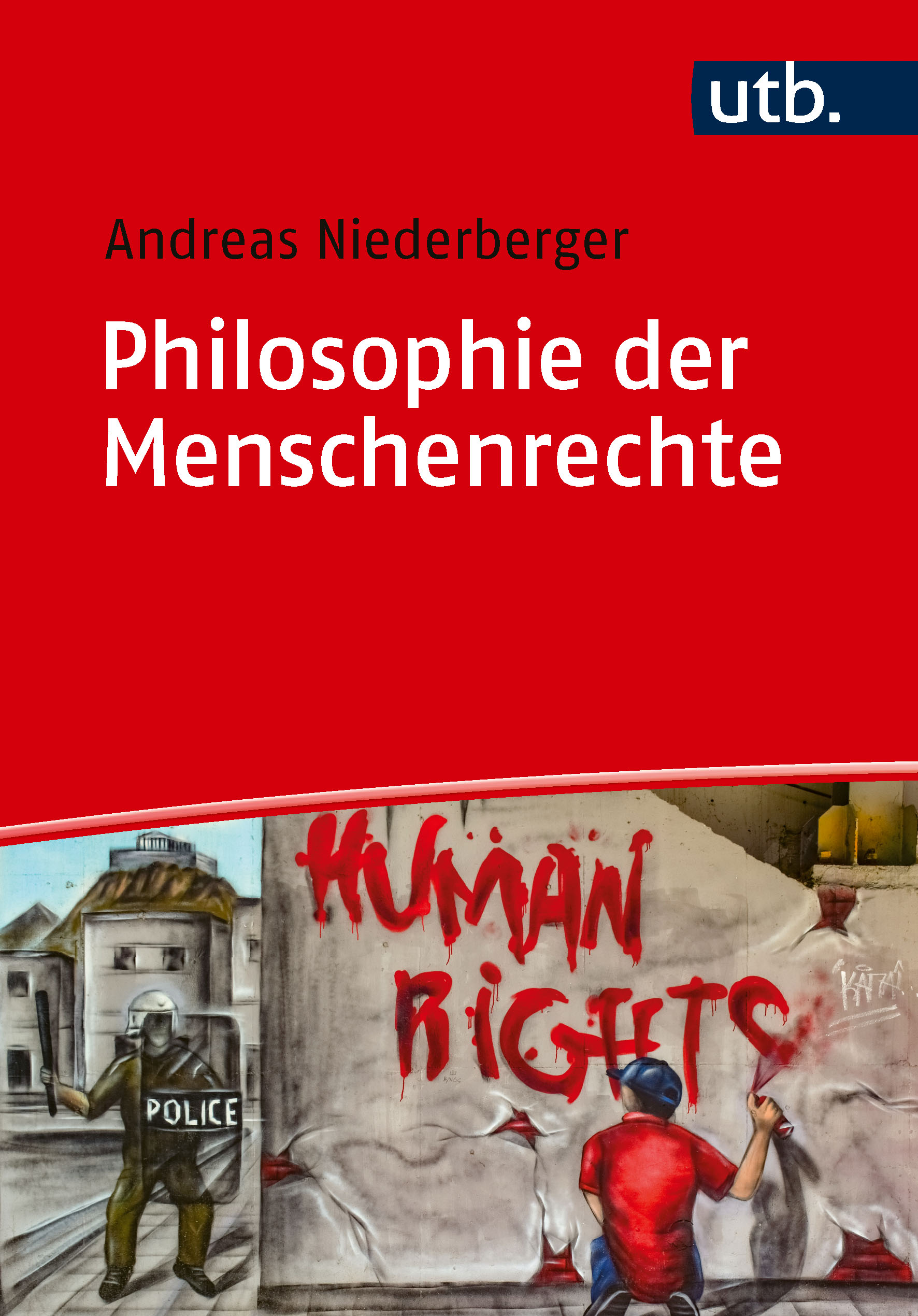
von Andreas Niederberger (Universität Duisburg-Essen)
Seit gut 50 Jahren stehen die Menschenrechte im Zentrum der Politik. Aber warum gibt es sie eigentlich und wie lassen sie sich begründen? Der Philosophie kommt bei diesen Fragen eine besondere Bedeutung zu und sie hat unterschiedliche Theorien des »Wesens« und der Reichweite der Menschenrechte hervorgebracht. Andreas Niederberger führt in wesentliche Kontroversen der Philosophie der Menschenrechte ein und thematisiert ihre Geschichte, die Frage nach dem Universalismus, das Verhältnis von Recht und Moral, aber auch postkoloniale Kritiken und die Bedeutung der Menschenrechte für Flucht und Klimawandel. Die Einführung eignet sich nicht nur für Studierende des Fachs, sondern eröffnet neue Blickwinkel für alle, die sich für die Anwendung, Geltung und Begründung der Menschenrechte interessieren.
November 22, 2025Ethik Konkret: Migration
with Presentation by Andreas Niederberger (University Duisburg-Essen)
"Migrationsethik im Post-Liberalismus"
University Paderborn – Stehcafé in the Foyer L-Gebäude in L 1.202
Saturday, November 22, 2025
10:15 AM
ABOUT
Migrationsethische Fragen bewegen sich im Spannungsfeld zwischen dem Recht eines jeden Menschen auf globale Bewegungsfreiheit und dem Recht von Staaten, über Zuwanderung zu bestimmen. Derzeit befördern Rechtspopulist*innen xenophobe, islamfeindliche, antisemitische sowie rassistische Haltungen. Immigrationsfeindlichkeit dominiert den gesellschaftlichen Diskurs sowie die asyl- und migrationspolitische Praxis in Europa und darüber hinaus.
Im Rahmen der Tagung sollen Möglichkeiten diskutiert werden, wie immigrationsfeindlichen Haltungen mittels Philosophischer Bildung entgegengetreten werden kann. Durch einen in die Migrationsethik einführenden Vortrag von Andreas Niederberger und einen Vortrag von Michael Kaup über eine moralphilosophische Betrachtung von Migration in theatral-präsentativen Ausdrucksformen steht der theoretische Zugriff am Vormittag im Zentrum, während in Workshops am Nachmittag die konkrete unterrichtspraktische Umsetzung fokussiert wird.
September 2–3, 2024Workshop: Human Rights in Times of Insecurity

with a presentation by Andreas Niederberger (Universität Duisburg-Essen): "Protecting Human Rights by not Protecting Human Rights? On a Different Future for European Migration Policy",
a presentation by Christopher Tölle (Universität Duisburg-Essen): "Is there a political problem to which Human Rights (in their positive normative vision) are an answer?"
and a presentation by Ibrahim Orha (Universität Duisburg-Essen): "Rule of Law and Terrorism in Times of the Crisis of Human Rights"
Venue:
Senatssaal der JLU
Ludwigsstraße 23
JLU Gießen
February 27, 2024How much universality do universal human rights need?
Public Lecture by Andreas Niederberger (University Duisburg-Essen)
University of New Brunswick, Department of Philosophy, Fredericton
Tuesday, February 27, 2024
04:00 PM - 05:30 PM
Toole Hall Room 03
Universality is considered an essential characteristic of human rights. But how exactly should we understand this characteristic? And which are its implications for the theory or philosophy of human rights: must it itself be universalistic and, if so, in what sense?
This lecture takes the Universal Declaration of Human Rights (1948) as its starting point and distinguishes between two dimensions of the universality of human rights: their validity everywhere and their applicability to all human beings. It first examines some philosophical approaches that argue that universal validity does not necessarily require a universalist theory to justify it. Against this background, it then considers the majority of views in the philosophical human rights debate that claim that an adequate understanding and explanation of the universal validity of human rights and, more generally, of the idea and function of human rights requires their justification by a universalist theory. However, the analysis of these arguments shows that their aim to justify the need for a universalist foundation of human rights is often based on additional assumptions about the role of rights, which in turn require justification. In conclusion, this lecture argues that the supposed opposition between universalism and relativism in the field of human rights, which has been at the center of political debates in recent decades, can be better discussed if the universality of human rights is not tied to their justification in a universalist theory.
Oktober 27, 2023The State. On the Nature and Norms of the Modern Polity
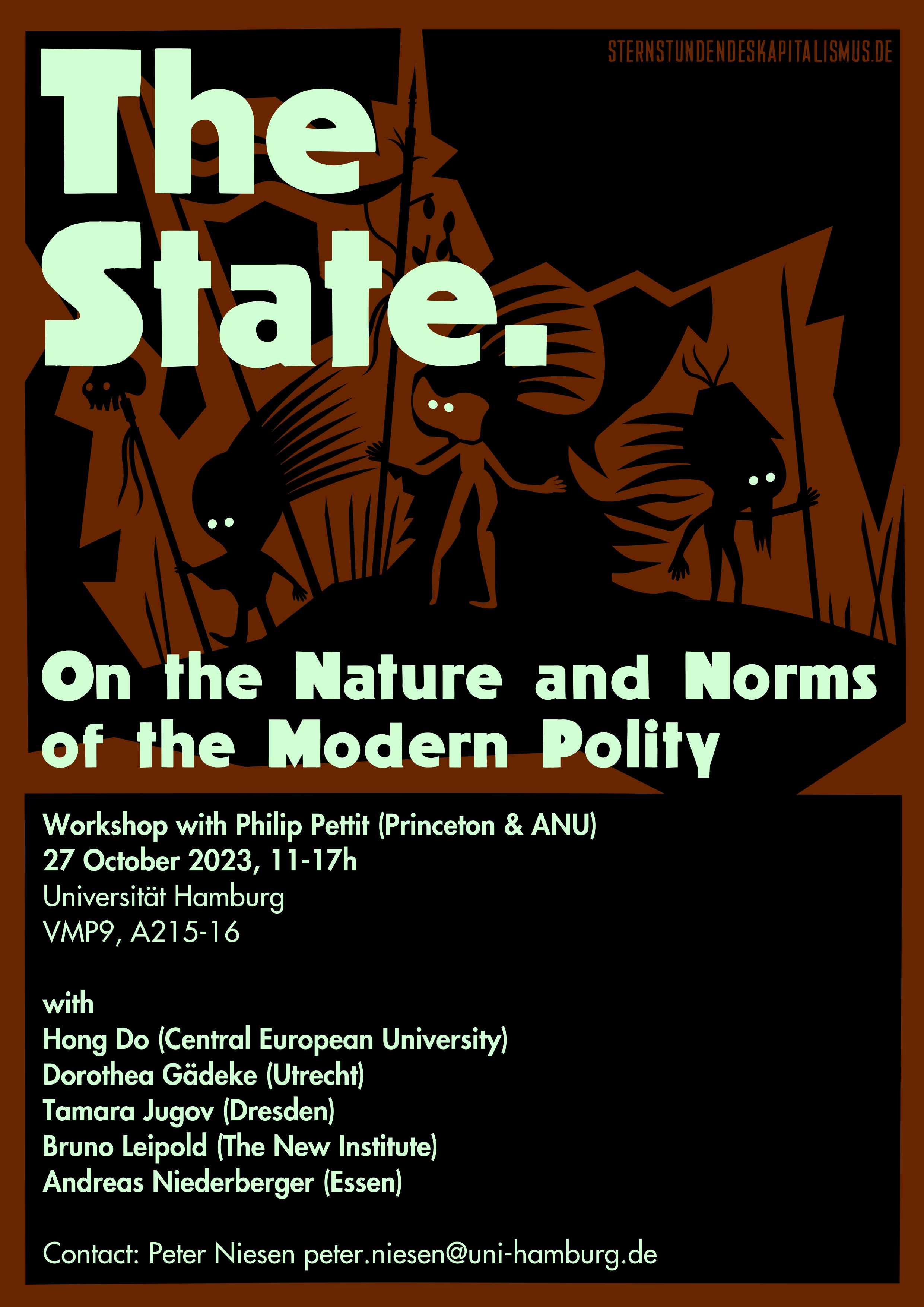
Workshop with Philip Pettit (Princeton & ANU)
University Hamburg
VMP9, A215-16
with: Hong Do (Central European University), Dorothea Gädeke (Utrecht), Tamara Jugov (Dresden), Bruno Leipold (The New Institute), Andreas Niederberger (Essen)
Book-Publication August 3, 2023Cosmopolitan Norms and European Values. Ethical Perspectives on Europe's Refugee Policy
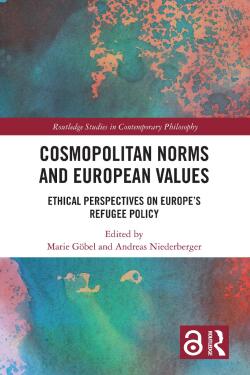
Ed. by Marie Göbel und Andreas Niederberger
This volume offers a systematic philosophical analysis of the normative challenges facing European refugee policy, focusing on whether the response to it can be based on European values. By considering the refugee policy through the lens of European values, cosmopolitan norms and universal human rights, the contributions expose the weaknesses and limitations of existing regulations and make proposals on how to improve them.
The EU is often seen as a cosmopolitan project. Europe is supposed to be a community of states that aspires to be guided by cosmopolitan norms. However, the idea of a cosmopolitan Europe has never been unanimously shared, and in recent years, it has come under increasing scrutiny, particularly with regard to the EU’s refugee policy. The guiding idea of this book is that a deeper philosophical understanding of the normative issues at stake can foster greater conceptual clarity and enrich political debates on the future of European refugee policy. The first part of the book revolves around the question of whether the rise in refugee numbers over the past decade has led to a crisis in the EU and, if so, how this crisis relates to or impacts European values. The second part traces the history of the discourse on “European values” and examines from a philosophical perspective how we can plausibly understand these values in terms of their moral grammar, their normative content and their implications for the behaviour of the EU and its member states. Finally, the third part puts forth recommendations for a feasible and normatively more compelling European refugee policy based on human rights, human dignity, justice and democratic self-determination as the decisive normative requirements.
Cosmopolitan Norms and European Values: Ethical Perspectives on Europe’s Refugee Policy will be of interest to researchers and advanced students working in ethics, political philosophy, political science, social sciences and law.
The Open Access version of this book, available at www.taylorfrancis.com, has been made available under a Creative Commons Attribution-Non Commercial-No Derivatives 4.0 license.