

ZWU News
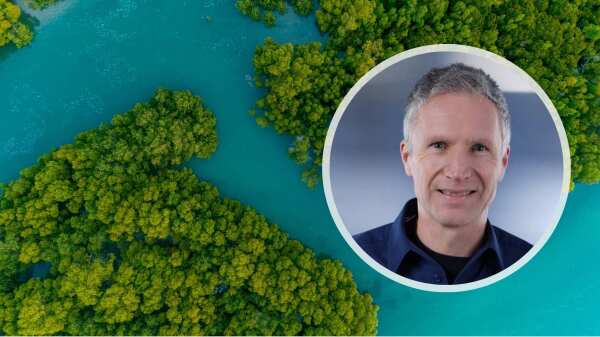
Frontiers Planet Prize UDE researcher Peter Haase honoured as International Champion
26.06.2024
The aquatic ecologist Prof Dr Peter Haase was today (26 June) awarded the Frontiers Planet Prize of the Frontiers Research Foundation as "International Champion" for his work. With an endowment of one million Swiss francs - the equivalent of around 1.05 million euros - this is one of the world's most highly endowed awards for pioneering environmental research. Haase conducts research at the Centre for Water and Environmental Research at the UDE and at the Senckenberg Research Institute and Nature Museum in Frankfurt.
The prize honours a study* by Prof. Dr Peter Haase and his team on the biodiversity of streams and rivers throughout Europe. The analyses of the researchers at the UDE and the Senckenberg Research Institute revealed that the diversity of species and ecological functions in rivers has increased on average over the last 50 years, but that this positive development has come to a standstill since 2010. Based on the research results, measures for the recovery of freshwater biodiversity can be identified in order to improve the important functions of river ecosystems.
"In order to track the development of biotic communities in rivers, an international team under my leadership has compiled and evaluated time series on the biodiversity of streams and rivers throughout Europe," explains Prof. Dr Peter Haase and continues: "Our analyses showed that, starting from a very low level as a result of earlier very high pressures, the diversity of species and ecological functions in rivers has increased on average over the last 50 years. However, this positive trend has come to a standstill since 2010." Using invertebrates such as mussels, crayfish and mayflies from 1,816 sites from rivers in 22 European countries, the team was able to demonstrate improvements through measures such as the construction of wastewater treatment plants. At the same time, new and persistent pressures in streams and rivers have halted the positive trend since 2010. The scientists outline additional measures to promote the recovery of freshwater biodiversity and improve the important functions of river ecosystems.
"The research work of Prof. Dr Peter Haase is an important part of making rivers fit for the future through scientific solutions," emphasises Prof. Dr Astrid Westendorf, Vice-Rector for Research and Young Scientists at UDE. "His award underlines the success of our excellent water research at the Centre for Water and Environmental Research."
"This excellent and socially highly relevant scientific work has now been recognised by Peter Haase being named an 'International Champion' in the Frontiers Planet Prize. Hundreds of researchers, 20 national science academies and 475 leading universities and research institutes have so far applied for this prize - we are therefore incredibly proud of Peter Haase's success," says a delighted Prof Dr Klement Tockner, Director General of the Senckenberg Gesellschaft für Naturforschung.
The Frontiers Research Foundation is a non-profit organisation based in Switzerland that supports programmes that advance scientific solutions for a healthy life on a healthy planet. On Earth Day 2022, the foundation established the Frontiers Planet Prize, which recognises scientific breakthroughs that contribute to stabilising the planet's ecosystem. The aim is to stimulate international competition and promote scientific collaboration to accelerate solution-oriented research for the benefit of the ecosystem worldwide and to respond to the planet's crisis with sustainable solutions. The prize will be awarded for the second time in 2024.
A jury of 100 experts led by Prof Dr Johan Rockström from the Potsdam Institute for Climate Impact Research will initially select one "National Champion" from each of the nominees. The three "International Champions" will be named from their ranks and honoured in a ceremony. The institutions of the three chosen individuals will each receive one million Swiss francs to support the research of the "International Champions" and publicise their research findings worldwide.
* To the results of the study in Nature: https://www.nature.com/articles/s41586-023-06400-1