

5. Ceramics manufacturing methods
Freeze casting
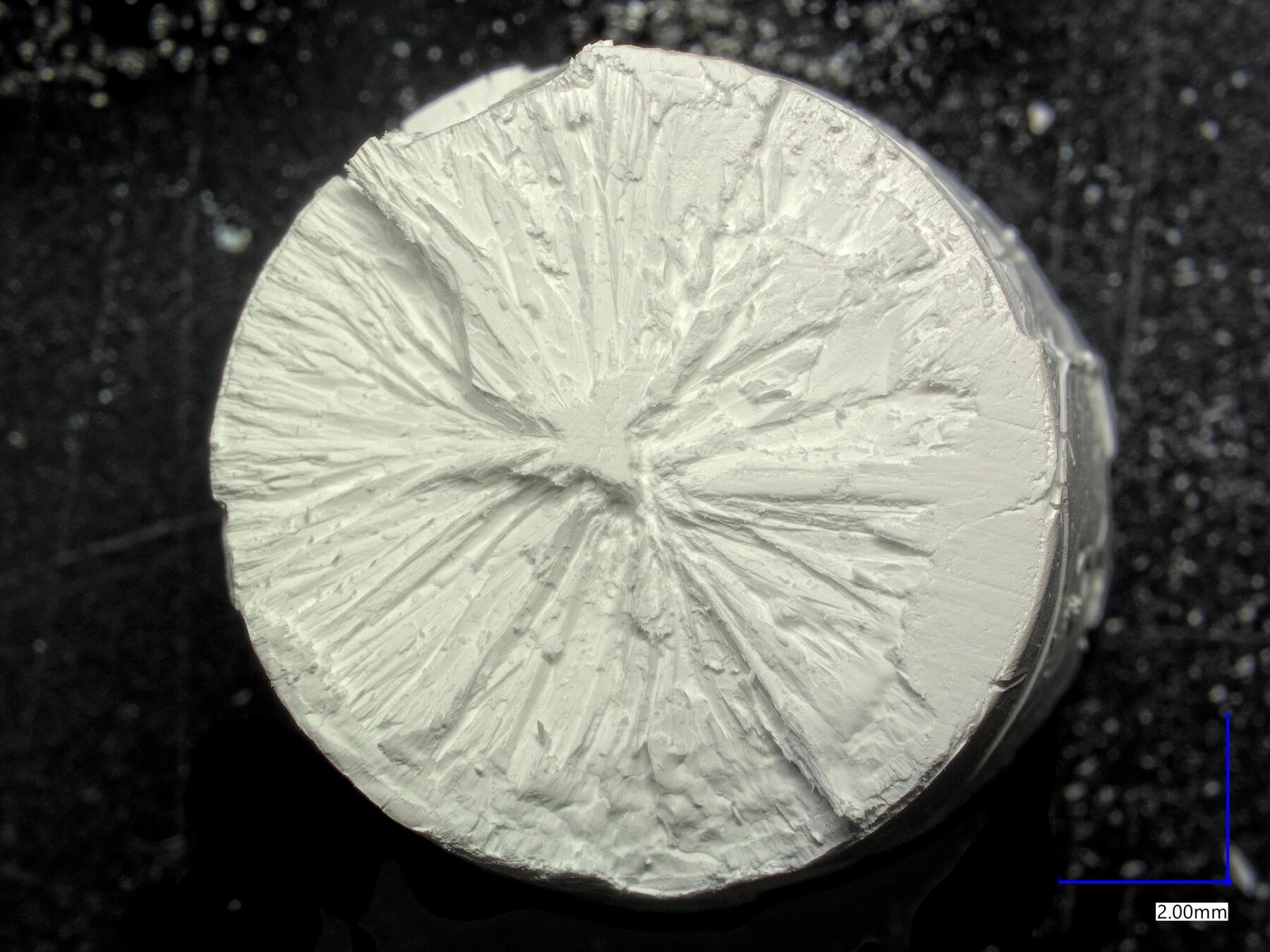
Freeze casting, also known as freeze structuring, is a process for producing porous materials with a controlled microstructure. A suspension is frozen, with the solvent (typically water or organic liquids) acting as a template. During the freezing process, ice crystals grow and displace the solid particles into the interstitial regions. After complete freezing, the solvent is removed by sublimation (freeze-drying), yielding a porous "green body" whose pore structure mirrors the morphology of the original ice crystals. Porosity, pore size, and orientation can be deliberately controlled through parameters such as cooling rate, temperature gradient, and the type of solvent. Subsequent sintering imparts mechanical strength to the material. Freeze casting is primarily used in biomedical engineering, filtration, energy technology, and lightweight structural materials. The major advantage of this process lies in its ability to produce hierarchically structured, anisotropic pore networks without the need for complex molds or additives.
Contacts: Dr. Miriana Vadalà, Prof. Doru C. Lupascu

Field-assisted sintering
Traditional sintering of ceramics (also referred to as "firing" in certain contexts) is most commonly carried out at high temperatures (>1000 °C) over extended periods (>4 hours). The energy consumption of this step is therefore typically very high, with the majority of the energy being consumed as heat. In industrial practice, a fossil fuel is almost always used as the energy source, meaning that ceramic production accounts for approximately 1 % of industrial CO₂ emissions in the EU. Globally, estimates suggest that it contributes several percent to total worldwide emissions.
Field-assisted sintering encompasses a family of sintering methods that can drastically reduce energy consumption and are primarily powered by (renewable) electricity. At our institute, we are researching two methods from this family:
"Flash sintering" is a method that deliberately drives an electric current through the sample, rapidly heating it from within via Joule heating. The advantages of this method are very high heating rates of up to one thousand degrees Celsius per minute and short holding times: depending on the material, a simple ceramic can be fully sintered within a few minutes. Despite its high potential, the method has so far been limited to very simple and small geometries: successful scale-up remains the most important open challenge for this technique.
"Ultrafast high-temperature sintering (UHS)" is the second method investigated and applied at our institute: here, the current is not passed through the sample itself but through a very lightweight graphite fiber mat surrounding the sample. The graphite fiber mat can achieve extreme heating rates of tens of thousands of degrees Celsius per minute, enabling the entire sintering process to be completed within a few seconds.
Contacts: Dr. Daniil Lewin, Prof. Doru C. Lupascu