
Dr. Christine Beuck

Forschung
Nuclear Magnetic Resonance (NMR) spectroscopy
NMR spectroscopy is a versatile tool to study proteins and their molecular interactions. As part of the CRC 1093, I investigate both the interactions of proteins with their natural binding partners and synthetic ligands designed to target protein surfaces. NMR is a powerful method that can directly determine the protein residues involved in interactions with other biomolecules or synthetic ligands. I established the use of side chain specific NMR experiments for lysine and arginine residues to precisely monitor supramolecular ligand binding, which, in contrast to the standard amide 15N-HSQC experiment, allows to rank multiple binding sites within one protein. For larger proteins, fast-acquisition (BEST-TROSY; SOFAST) as well as Methyl-TROSY experiments are employed. Furthermore, NMR is used to determine the structures of proteins or isolated domains and probe their size, oligomerization status and dynamics or reaction kinetics.
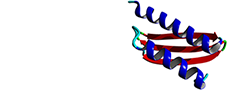
Protein Structure Determination
I elucidate the structures of proteins with both solution NMR spectroscopy and X-Ray crystallography.
NMR structures:
- 2MXT: Acidic Domain of the human splicing factor SYNCRIP (24-107), BMRB # 25970.
- Acidic Domain of the human splicing factor SYNCRIP (24-140) (pdb 2NBB, NMR structure), BMRB # 25428.
X-Ray structures:
- 4DNN: Qua1 Homdimerization domain of the human splicing factor Quaking
- 3K6T: Qua1 homdimerization domain of the C. elegans translational regulator GLD1.
- 3KBL: Qua1 domain N169A mutant of the C. elegans translational regulator GLD1
Biochemical Characterization of Protein Complexes
To perform their task within the cell, proteins are interacting with a multitude of other biomolecules like other proteins, nu
Curriculum Vitae
Professional career
| Seit 2014 | Assistenzprofessorin(Habilitandin) bei Prof. Peter Bayer, Institut für Strukturelle und Medizinische Biochemie |
| 2012 - 2014 | Postdoktorandin und wissenschaftliche Mitarbeiterin, bei Prof. Dr. J. R. Williamson, The Scripps Research Institute, La Jolla, USA |
| 2005 | Gastwissenschaftlerin bei Prof. Dr. M. Shionoya, Tokyo University, Tokyo, Japan, im Rahmen des GDCh/DFG Japan Austauschprogramms 2005 |
| 2003 | Gastwissenschaftlerin bei Dr. habil. S. Klimašauskas, Institute of Biotechnology, Vilnius, Lithuania |
Wissenschaftliche Ausbildung
| 2001 - 2005 | Promotion in Chemie bei Prof. Dr. E. Weinhold, RWTH Aachen |
| 1996 - 2001 | Chemiestudium (Dipl.) an der Technischen Universität Dortmund, Diplomarbeit bei Prof. Dr. E. Weinhold, Max Planck Institut für Molekulare Physiologie
|
-
Modulation of Epigenetic Control by Advanced Molecular TweezersIn: Chemistry - A European Journal, 2026, in pressDOI (Open Access)
-
Reverse engineering of BNIP3 identifies a mitochondrial protective peptideIn: Nature Communications, Jg. 17, 2026, Nr. 1, 5359DOI (Open Access)
-
Highly Preorganized Calixarene Tweezers for Protein Recognition.In: Biomacromolecules, Jg. 26, 2025, Nr. 8, S. 5310 – 5319
-
Molecular Tweezers Block the Functional Pore of a Protein MachineIn: Journal of the American Chemical Society: JACS, Jg. 147, 2025, Nr. 20, S. 16836 – 16849DOI (Open Access)
-
Molecular Tweezers with Built-in Photoswitches Modulate Protein ActivityIn: RSC Chemical Biology, Jg. 6, 2025, Nr. 12, S. 1837 – 1847DOI (Open Access)
-
Molecular tweezer–peptide conjugates disrupt the protein–protein interaction between survivin and histone H3 essential in mitosisIn: Beilstein Journal of Organic Chemistry, Jg. 22, 2025, Nr. 1, S. 557 – 567DOI (Open Access)
-
Photoresponsive molecular tweezers modulate Taspase 1 activityIn: RSC Chemical Biology, Jg. 6, 2025, Nr. 12, S. 1837 – 1847DOI (Open Access)
-
Synthesis and characterization of dodecylamine-capped ultrasmall metallic palladium nanoparticles (2 nm)In: Nanoscale Advances, Jg. 7, 2025, Nr. 23, S. 7547 – 7558DOI (Open Access)
-
Synthesis and characterization of ultrasmall rhenium nanoparticles (1.5 nm)In: Journal of Nanoparticle Research, Jg. 27, 2025, Nr. 8, 218DOI (Open Access)
-
Temperature‐Resolved Fluorescence Quenching on Ultrasmall Gold Nanoparticles Conjugated with Dye‐Labeled PeptidesIn: Nano Select, Jg. 6, 2025, Nr. 12, e70041DOI (Open Access)
-
The Actin‐Binding Prolyl‐Isomerase Par17 Sustains Its Substrate Selectivity by Interdomain AllosteryIn: Proteins: Structure, Function and Genetics, Jg. 93, 2025, Nr. 9, S. 1481 – 1497DOI (Open Access)
-
Ultrasmall Gold Nanoparticles (2 nm) Decorated with a High Density of Photochemically Switchable LigandsIn: Chemistry - A European Journal, 2025DOI (Open Access)
-
Functional Linkers Support Targeting of Multivalent Tweezers to Taspase1In: Chemistry - A European Journal, Jg. 30, 2024, Nr. 56, e202401542DOI (Open Access)
-
High resolution analysis of proteolytic substrate processingIn: The Journal of Biological Chemistry (JBC), Jg. 300, 2024, Nr. 11, 107812DOI, Online Volltext (Open Access)
-
Increased Cytotoxicity of Bimetallic Ultrasmall Silver–Platinum Nanoparticles (2 nm) on Cells and Bacteria in Comparison to Silver Nanoparticles of the Same SizeIn: Materials, Jg. 17, 2024, Nr. 15, 3702DOI (Open Access)
-
Possibilities and limitations of solution-state NMR spectroscopy to analyze the ligand shell of ultrasmall metal nanoparticlesIn: Nanoscale Advances, Jg. 6, 2024, Nr. 13, S. 3285 – 3298DOI (Open Access)
-
Rational correction of pathogenic conformational defects in HTRA1In: Nature Communications, Jg. 15, 2024, Nr. 1, 5944DOI (Open Access)
-
The Molecular Footprint of Peptides on the Surface of Ultrasmall Gold Nanoparticles (2 nm) Is Governed by Steric DemandIn: Journal of Physical Chemistry B: Condensed Matter, Materials, Surfaces, Interfaces & Biophysical Chemistry, Jg. 128, 2024, Nr. 17, S. 4266 – 4281
-
Multivalent Molecular Tweezers Disrupt the Essential NDC80 Interaction with MicrotubulesIn: Journal of the American Chemical Society: JACS, Jg. 145, 2023, Nr. 28, S. 15251 – 15264
-
Potentiating Tweezer Affinity to a Protein Interface with Sequence-Defined Macromolecules on NanoparticlesIn: Biomacromolecules, Jg. 24, 2023, Nr. 8, S. 3666 – 3679
-
The UBX domain in UBXD1 organizes ubiquitin binding at the C-terminus of the VCP/p97 AAA-ATPaseIn: Nature Communications, Jg. 14, 2023, Nr. 1, 3258DOI, Online Volltext (Open Access)
-
Ultrastructure and Surface Composition of Glutathione-Terminated Ultrasmall Silver, Gold, Platinum, and Alloyed Silver-Platinum Nanoparticles (2 nm)In: Inorganic Chemistry, Jg. 62, 2023, Nr. 42, S. 17470 – 17485
-
Dual activity inhibition of threonine aspartase 1 by a single bisphosphate ligandIn: RSC Advances, Jg. 12, 2022, Nr. 53, S. 34176 – 34184DOI (Open Access)
-
Recognition of a Flexible Protein Loop in Taspase 1 by Multivalent Supramolecular TweezersIn: Biomacromolecules, Jg. 23, 2022, Nr. 11, S. 4504 – 4518
-
Water-Based Synthesis of Ultrasmall Nanoparticles of Platinum Group Metal Oxides (1.8 nm)In: Inorganic Chemistry, Jg. 61, 2022, Nr. 12, S. 5133 – 5147
-
Metal-Ligand Interface and Internal Structure of Ultrasmall Silver Nanoparticles (2 nm)In: Journal of Physical Chemistry B: Condensed Matter, Materials, Surfaces, Interfaces & Biophysical Chemistry, Jg. 125, 2021, Nr. 21, S. 5645 – 5659
-
New tools to probe the protein surface : Ultrasmall gold nanoparticles carry amino acid bindersIn: Journal of Physical Chemistry B: Condensed Matter, Materials, Surfaces, Interfaces & Biophysical Chemistry, Jg. 125, 2021, Nr. 1, S. 115 – 127DOI (Open Access)
-
Peptide-Conjugated Ultrasmall Gold Nanoparticles (2 nm) for Selective Protein TargetingIn: ACS Applied Bio Materials, Jg. 4, 2021, Nr. 1, S. 945 – 965DOI (Open Access)
-
Specific inhibition of the Survivin–CRM1 interaction by peptide-modified molecular tweezersIn: Nature Communications, Jg. 12, 2021, Nr. 1, S. 1505DOI, Online Volltext (Open Access)
-
Targeting the Surface of the Protein 14-3-3 by Ultrasmall (1.5 nm) Gold Nanoparticles Carrying the Specific Peptide CRafIn: ChemBioChem, Jg. 22, 2021, Nr. 8, S. 1456 – 1463DOI (Open Access)
-
Functional Disruption of the Cancer-Relevant Interaction between Survivin and Histone H3 with a Guanidiniocarbonyl Pyrrole LigandIn: Angewandte Chemie International Edition, Jg. 59, 2020, Nr. 14, S. 5567 – 5571DOI (Open Access)
-
NMR Spectroscopy of supramolecular chemistry on protein surfacesIn: Beilstein Journal of Organic Chemistry, Jg. 16, 2020, S. 2505 – 2522DOI (Open Access)
-
Click chemistry on the surface of ultrasmall gold nanoparticles (2 nm) for covalent ligand attachment followed by nmr spectroscopyIn: Langmuir, Jg. 35, 2019, Nr. 22, S. 7191 – 7204
-
Multivalent Ligands with Tailor-Made Anion Binding Motif as Stabilizers of Protein–Protein InteractionsIn: ChemBioChem, Jg. 20, 2019, Nr. 23, S. 2921 – 2926
-
Solution NMR Spectroscopy with Isotope-Labeled Cysteine (¹³C and ¹⁵N) Reveals the Surface Structure of l -Cysteine-Coated Ultrasmall Gold Nanoparticles (1.8 nm)In: Langmuir, Jg. 35, 2019, Nr. 3, S. 767 – 778
-
Structure of the PUB Domain from Ubiquitin Regulatory X Domain Protein 1 (UBXD1) and Its Interaction with the p97 AAA+ ATPaseIn: Biomolecules, Jg. 9, 2019, Nr. 12, 876DOI, Online Volltext (Open Access)
-
An NMR Method To Pinpoint Supramolecular Ligand Binding to Basic Residues on ProteinsIn: Angewandte Chemie International Edition, Jg. 56, 2017, Nr. 46, S. 14758 – 14762
-
Molecular tweezers target a protein-protein interface and thereby modulate complex formationIn: Chemical Communications: ChemComm, Jg. 52, 2016, Nr. 98, S. 14141 – 14144DOI (Open Access)
-
Structural Characterization of the Loop at the Alpha-Subunit C-Terminus of the Mixed Lineage Leukemia Protein Activating Protease Taspase1In: PLoS ONE, Jg. 11, 2016, Nr. 3, S. e0151431DOI, Online Volltext (Open Access)
-
The acidic domain is a unique structural feature of the splicing factor SYNCRIPIn: Protein Science, Jg. 25, 2016, Nr. 8, S. 1545 – 1550DOI (Open Access)
-
Reversibly locked thionucleobase pairs in DNA to study base flipping enzymesIn: Beilstein Journal of Organic Chemistry, Jg. 10, 2014, S. 2293 – 2306DOI (Open Access)