

Research Area III: Conflict Dynamics and Practices of Securing Peace
Research Focus
► Impact of geopolitical changes on conflict dynamics, peace, and security governance
► Nuclear arms control, non-proliferation, and disarmament
► Regional approaches to the non-proliferation of weapons of mass destruction [broader: conflict interventions by regional actors]
► Non-military intervention practices and peace operations
► Norm implementation, norm contestation, and norm change
► Paths of politico-religious mobilization
This research area examines how current upheavals in the international order are affecting peace, security, and practices of securing peace. It focuses on analyzing changes in conflict dynamics resulting from geopolitical change, the erosion of multilateral institutions and norms, tendencies toward autocratization and polarization, and their repercussions on peacekeeping instruments. Against this backdrop, the research area analyzes how these changes affect the effectiveness and legitimacy of instruments of securing peace, including arms control, non-proliferation, disarmament, peace missions, and non-military intervention practices. Using a multiscale approach, the research area explores the interactions between institutions, norms, and heterogeneous actors at different levels (local, national, regional, global), particularly in the Global South. State and civil society actors are considered alike in order to identify political opportunities for conflict prevention, regulation, and transformation.
Research Projects
► African Non-Miltary Conflict Internvention Practices (ANCIP)
► Protest Groups in the Aftermath of Mass Protest Campaigns against the State
Recent Publications
► Bandarra, Leonardo / Herholz, Lena 2026: Shades of verification: three benchmark understandingsof verification in NPT review cycles (2003–2022), in: Zeitschrift für Friedens- und Konfliktforschung (online first), 1-30. DOI: https://doi.org/10.1007/s42597-026-00179-4 
► Berks, Milena / Breitung, Claudia / Hartmann, Christof / Hummler, Teresa / Leonhard, Lucas K. / Müller-Koné, Marie / Noesselt, Nele / Rosenberg, Carolin / Ulbert, Cornelia / Vüllers, Johannes (Koordination) / Wunderlich, Carmen (Koordination) 2026: Reset der EZ?! Entwicklungszusammenarbeit als Schlüssel zu nachhaltigem Frieden. Nachhaltiger Frieden. in: Friedensgitachten 2026. Bielefeld: transcript Verlag, 69-89.
► Martuscelli, Patricia / Bandarra, Leonardo / Salari, Katie / Dalziel, Will. 2026: Mushrooms, cranes, and the fear of planetary destruction: exploring children’s imaginaries of war and nuclear anxiety, in: Critical Studies on Security, 14:2, 1–27. DOI: https://doi.org/10.1080/21624887.2026.2648445
► Wunderlich, Carmen 2026: Civilizing the Global Nuclear Order through Access to Contestation, in: Ackerly, A. Brooke / Cabrer, Luis / Deveaux, Monique / Forman, Fonna / Fuji Johnson, Genevieve / Starblanket, Gina / Wiener, Antje: The Oxford Handbook of Grounded and Engaged Normative Theory. Oxford Handbooks, New York: Oxford University Press , 468-479, online edition, Oxford Academic. DOI: 10.1093/9780197766927.001.0001
► Hartmann, Christof 2026: From Liberal Peace to Stabilization? The Future of Multilateral Peace Operations, in: Ulbert, Cornelia / Kaplan, Marcus (eds.): Global Trends: Prospects for Development and Peace, Vol 1: Multilateral Cooperation for People and Planet, Opladen/Berlin/Toronto: Verlag Barbara Budrich, 59-80. https://doi.org/10.3224/84743197.
► Wunderlich, Carmen 2025: On the Concept of Norm Clusters, in: Gholiagha, Sassan / Phil Orchard / Wiener, Antje (Hrsg.): The Oxford Handbook of Norms Research in International Relations. Oxford University Press, 2025, online edn, Oxford Academic, 18 Dec. 2025), https://doi.org/10.1093/oxfordhb/9780198915874.013.0011.
► Wunderlich, Carmen 2025: The Many Moving Pieces of Nuclear Order, The Loop, No. 31 in a series on the Nuclear Politics Paradox.
► Bandarra, Leonardo / Wunderlich, Carmen 2025: Faith and fear: a cognitive framework for why countries establish nuclear-weapon-free or nuclear-deterrence-based security orders, in: Nonproliferation Review, 31:4-6, 211–236. DOI: https://doi.org/10.1080/10736700.2025.2569147
► Lenzen, Manfred / Debiel, Tobias 2025: Can Sanctions Backfire?, in: Defense and Peace Economics, 1-20. DOI: https://doi.org/10.1080/10242694.2025.2540303
► Bandarra, Leonardo 2025: "A verification cotton between three crystal glasses”: ABACC and Alternative Nuclear Verification Mechanisms in South America (1967-1992), in: Revista Brasileira de Política Internacional, 68:1, 1-21. DOI: https://doi.org/10.1590/0034-7329202500108
► Daase, Christopher / Debiel, Tobias / Deitelhoff, Nicole / Kahl, Martin / Rinck, Patricia / Schröder, Ursula / Vüllers Johannes 2025: Fokus. Vorsicht ansteckend! Die Zerstörung politischer Ordnung unter US-Präsident Trump, in: Frieden retten! Friedensgutachten 2025. Bielefeld: transcript Verlag, 26-41.
Head of Research Area
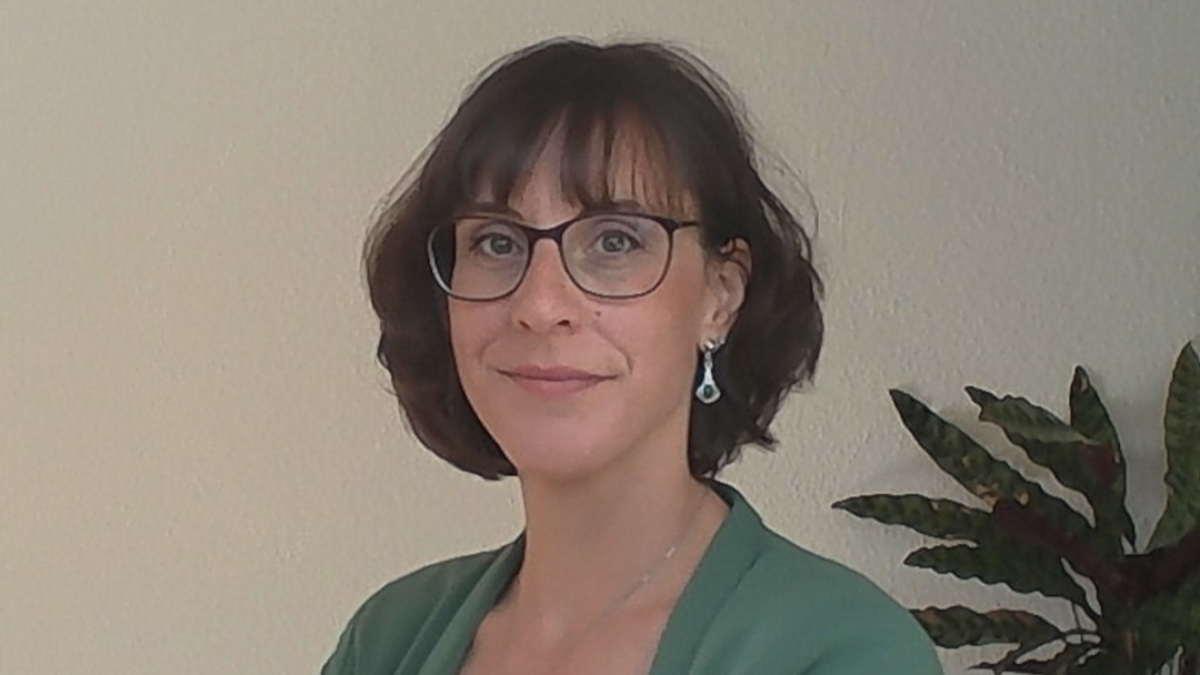
Dr. Carmen Wunderlich
Room: LS 030
Phone: +49 (0)203-379-2036
E-Mail: carmen.wunderlich[at]uni-due.de
Staff Portfolio
Participating Members
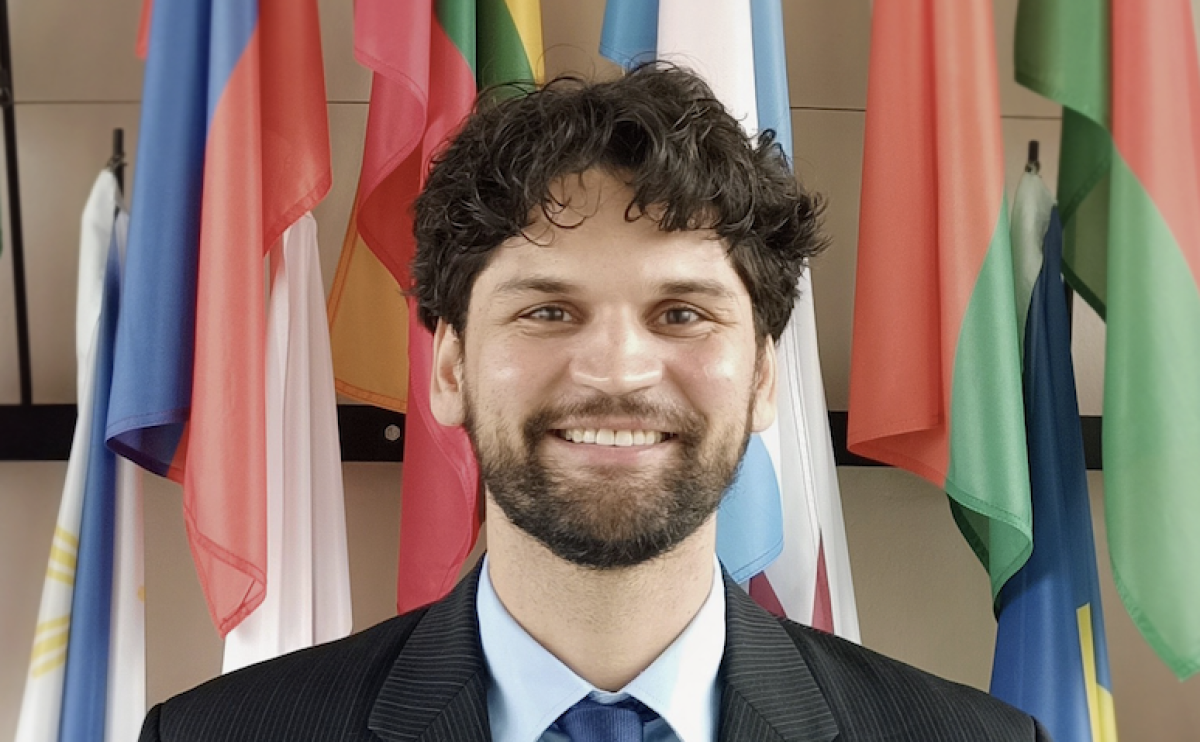
Dr. Leonardo Bandarra
Room: LS 033
Phone: +49 (0)203-379-1916
E-Mail: leonardo.bandarra[at]uni-due.de
Staff Portfolio

Prof. Dr. Tobias Debiel
Room: LF 324
Phone: +49 (0)203-379-2021
E-Mail: tobias.debiel[at]uni-due.de
Staff Portfolio

Prof. Dr. Christof Hartmann
Room: LS 120
Phone: +49 (0)203-379-4421
E-Mail: christof.hartmann[at]uni-due.de
Staff Portfolio

Sarah Kappert, M.A.
Room: LS 118b
Phone: +49 (0)203-379-3974
E-Mail: sarah.kappert[at]uni-due.de
Staff Portfolio

Andréa Noël, M.A.
E-Mail: andrea.noel[at]uni-due.de

Dr. Patricia Rinck
Room: LF 316
E-Mail: patricia.rinck[at]uni-due.de
Staff Portfolio

Dr. Jannis Saalfeld
Room: LS 034
Phone: +49 (0)203-379-3847
E-Mail: jannis.saalfeld[at]uni-due.de
Staff Portfolio