

Research Area I: Global Governance for Sustainable Development
Research Focus
► Maintaining multilateral cooperation and its contribution to sustainable development
► Critical discussion of the concept of development and identification of the interfaces between development, peace and security
► Redesigning “development policy”
► The contribution of digital transformation to the creation of enabling spaces
► Engagement of civil society actors in global political processes (e.g. in global health)
► Analysing the mechanisms and processes of norm appropriation and their translation into social practices (e.g. the role of women in achieving food security)
Even if the UN Sustainable Development Goals are not likely to be fully implemented by 2030 as originally planned, they remain the normative frame of reference to which most states refer. This is because the associated objectives for equitable and socially, ecologically and economically "sustainable" development continue to be widely shared and serve as a reference point for joint efforts to create and protect global public goods. However, the international institutions that have been instrumental in implementing the SDGs to date, above all those of the UN system, have been significantly weakened in the wake of the current power politics characterised by unilateral interests, particularly those of the former "liberal hegemon" USA. The associated structures of global governance are therefore changing. Regardless of this, the (global) pressure of problems, reflected in the shortcomings of SDG implementation, remains. The question therefore arises as to the structures and constellations within which multilateral cooperation can be maintained and what contribution it can still make to global sustainable development.
Read more
Against this backdrop, in this research area we also engage with the conceptual discussion on development and explore the interfaces between "development", "peace" and "security". This raises the question of how, in times of declining resources and an emphasis on national interests, development policy as a policy area can be designed in such a way that not only the values and objectives associated with the SDGs are considered, but also the problems addressed by them are effectively tackled.
How the enabling spaces we examine can contribute to problem solving is not solely based on technological conditions, in which digital transformation plays an important role. The contribution also depends on the access of various groups of actors and on shared values and norms that actors adopt in a context-specific manner and translate into social practices.
Research Projects
►Global Trends: Prospects for Development and Peace
Recent Publications
► Berks, Milena / Breitung, Claudia / Hartmann, Christof / Hummler, Teresa / Leonhard, Lucas K. / Müller-Koné, Marie / Noesselt, Nele / Rosenberg, Carolin / Ulbert, Cornelia / Vüllers, Johannes (Koordination) / Wunderlich, Carmen (Koordination) 2026: Reset der EZ?! Entwicklungszusammenarbeit als Schlüssel zu nachhaltigem Frieden. Nachhaltiger Frieden. in: Friedensgitachten 2026. Bielefeld: transcript Verlag, 69-89.
► Ulbert, Cornelia 2026: Common Ground amid Difference: Multilateral Cooperation for People and Planet, in: Ulbert, Cornelia / Kaplan, Marcus (eds.): Global Trends: Prospects for Development and Peace, Vol 1: Multilateral Cooperation for People and Planet, Opladen/Berlin/Toronto: Verlag Barbara Budrich, 15-36. https://doi.org/10.3224/84743196
► Ulbert, Cornelia 2026: Strengthening a Human-Centred Transformation: Rules for the Digital World, in: Ulbert, Cornelia / Kaplan, Marcus (eds.): Global Trends: Prospects for Development and Peace, Vol 1: Multilateral Cooperation for People and Planet, Opladen/Berlin/Toronto: Verlag Barbara Budrich, 37-58. https://doi.org/10.3224/84743196
► Ulbert, Cornelia / Kaplan, Marcus (eds.) 2026: Global Trends: Prospects for Development and Peace, Vol 1: Multilateral Cooperation for People and Planet, Opladen/Berlin/Toronto: Verlag Barbara Budrich. https://doi.org/10.3224/84743196
► Gaesing, Karin / Bliss, Frank / Rosenberg, Carolin 2025: Gender-Transformative Approaches in Development Cooperation: Analyses and Recommendations (AVE-Study 46b). Duisburg: Institute for Development and Peace.
► Gaesing, Karin / Bliss, Frank / Rosenberg, Carolin 2025: Gendertransformative Ansätze in der Entwicklungszusammenarbeit: Analysen und Empfehlungen (AVE-Studie 46). Duisburg: Institut für Entwicklung und Frieden.
► Rosenberg, Carolin 2025: Strengthening Women's Voice and Leadership : Gender Impacts of Agricultural Cooperatives in Zambia (AVE-Studie 45b). Duisburg: Institut für Entwicklung und Frieden.
Head of Research Area

Dr. Cornelia Ulbert
Room: LS 119
Phone: +49 (0)203-379-4422
E-Mail: cornelia.ulbert[at]uni-due.de
Staff Portfolio
Participating Members
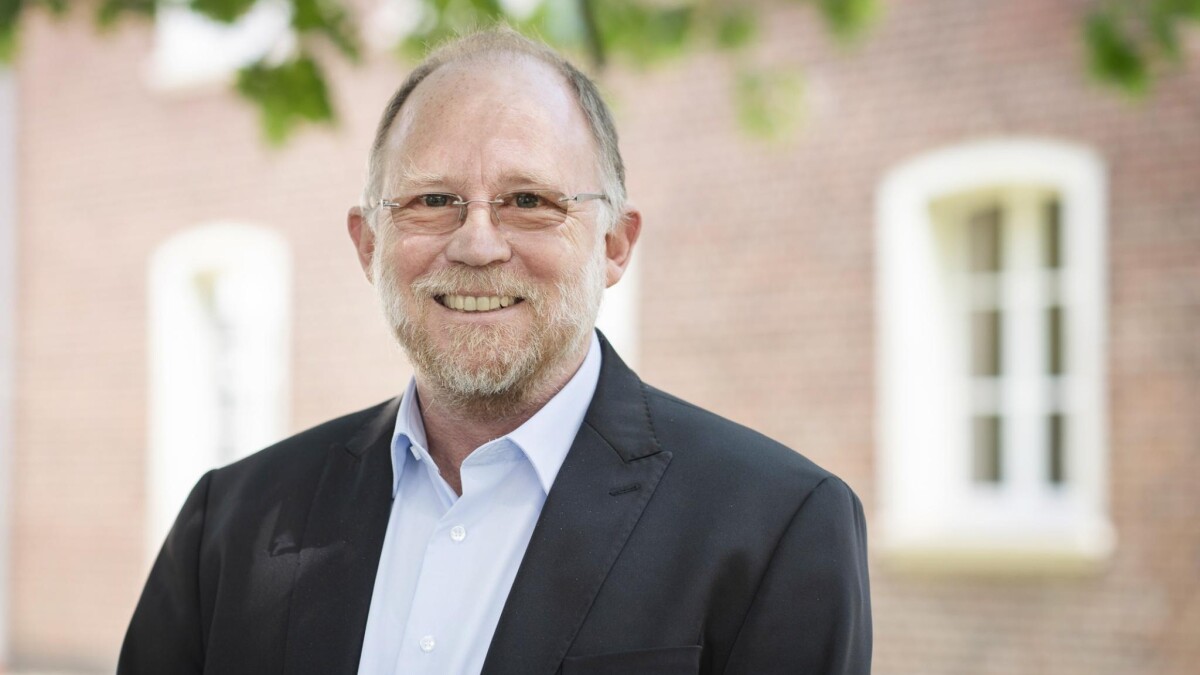
Prof. Dr. Tobias Debiel
Room: LF 324
Phone: +49 (0)203-379-2021
E-Mail: tobias.debiel[at]uni-due.de
Staff Portfolio

Carolin Rosenberg, M.A.
Room: LS 031
Phone: +49 (0)203-379-1436
E-Mail: carolin.rosenberg[at]uni-due.de
Staff Portfolio