

Open Positions
There are various opportunities in different projects, please contact Michael Farle:
We are continuously looking for highly motivated, skilled students and coworkers.
Magnetism of High Entropy Alloys
(contact Prof. Dr. M. Farle, Dr. Natalia Shkodich)
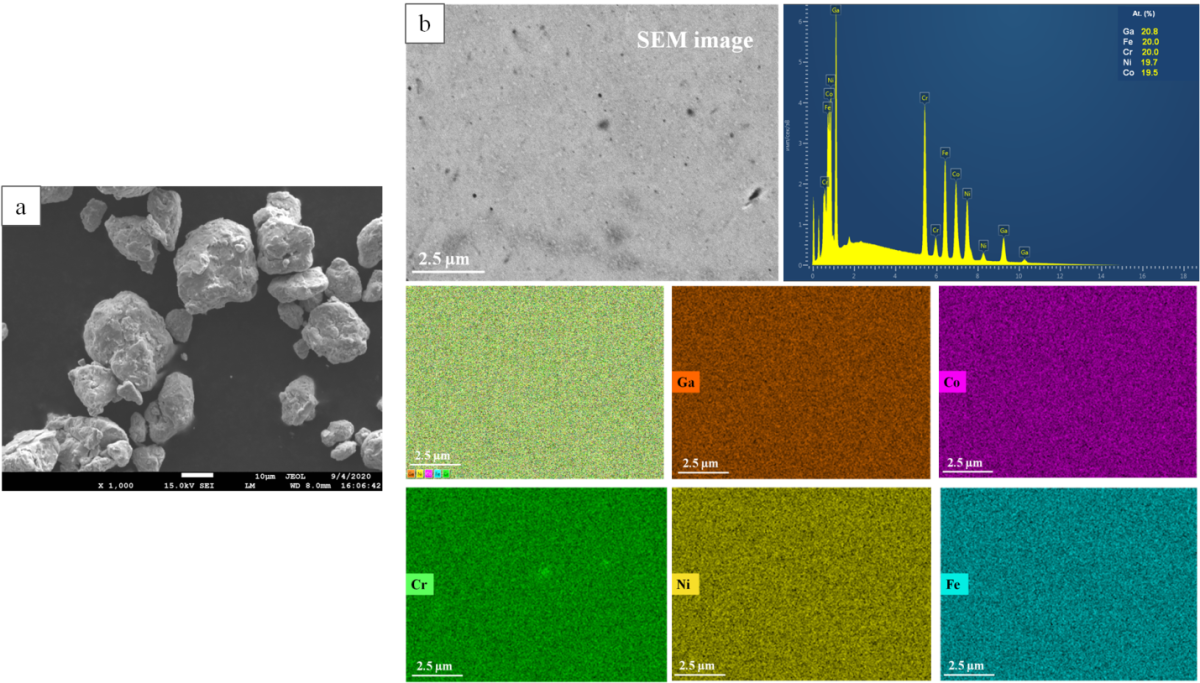
The theses has the goal to identifiy, produce and optimize magnetic high entropy alloy (magHEA) particles by high energy ball milling (HEBM) and analyze their properties after different consolidation procedures. The picture shows the chemical elemental map of a HEA (CoCrFeNiGa). Such alloys have very interesting secondary functionalities and are discussed for future applications in magnetic refrigeration and permanent magnets. The research is closely connected to our work in projects A04 (CRC 270) and FA 209/27-1 and connects training in nanoscale analysis of chemical composition and crystalline structure in transmission electron microscopy and scanning electron spectroscopy with integral magnetic characterization.
M.Sc. Thesis Physics/Nanoengineering
(contact Prof. Dr. U. Wiedwald)
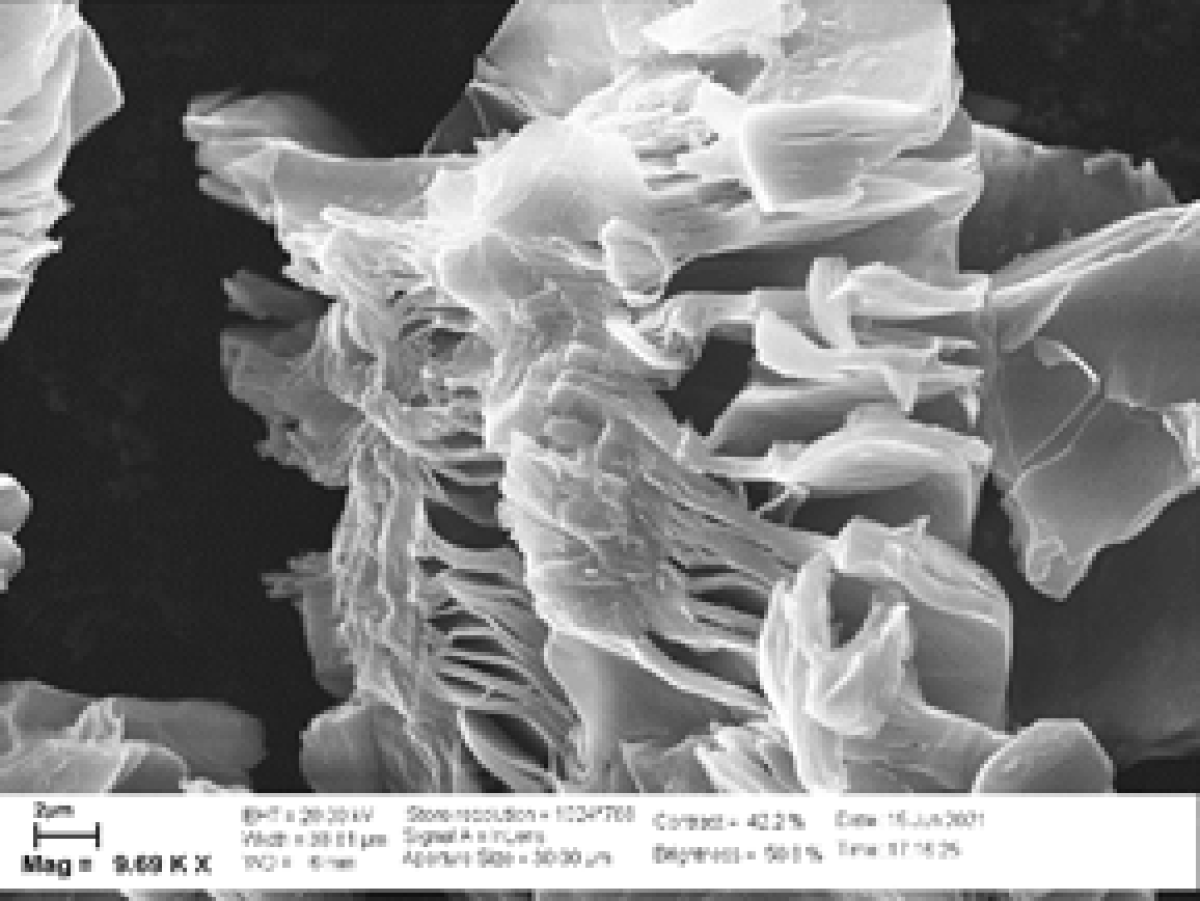
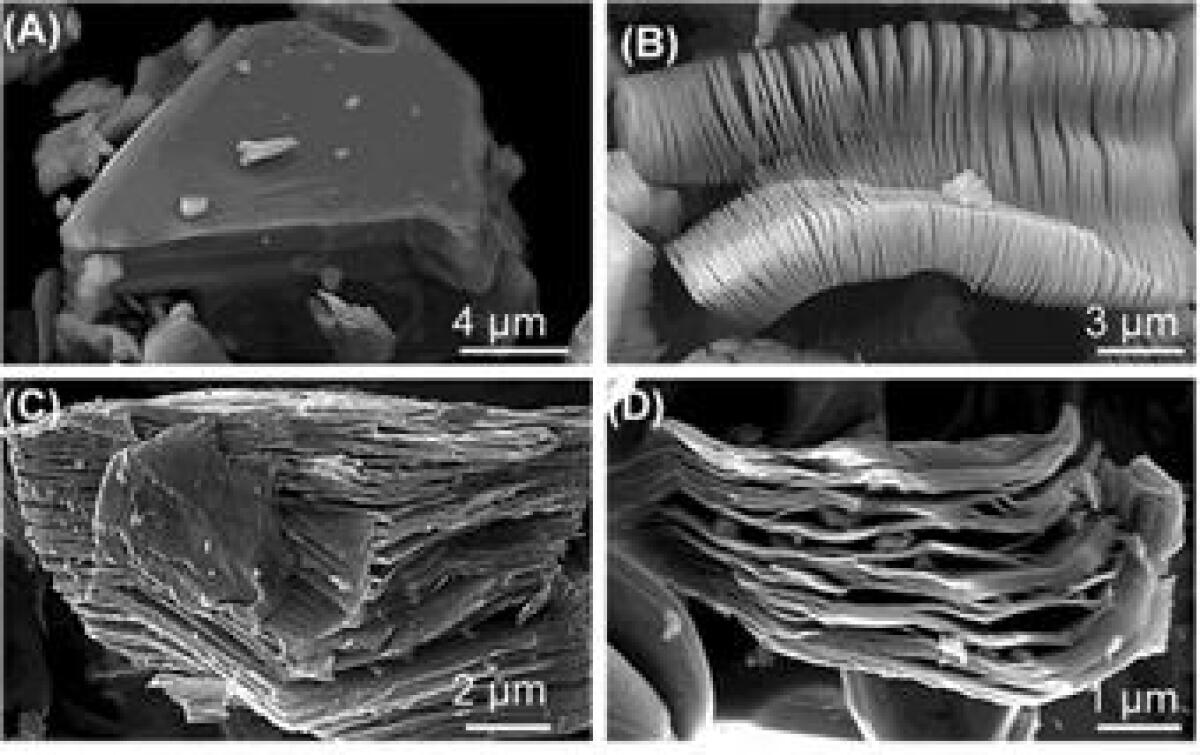
Two-dimensional (2D) transition metal carbides or nitrides – so called MXenes – have been recently discovered and have already shown a fascinating variety of electronic, optical, and mechanical properties. In the proposed thesis, you will synthesize 2D MXenes of various chemical composition using selective chemical etching to introduce magnetic properties to 2D structures. The produced 2D materials will be structurally and magnetically characterized (XRD, AFM, SEM, TEM, FMR, magnetometry) at the University of Duisburg-Essen and within national and international collaborations.
BA/MA Thesis offer: Detection of Inertia effects (nutation) in spin dynamics
(contact Dr. A. Semisalova, Prof. Dr. Michael Farle)
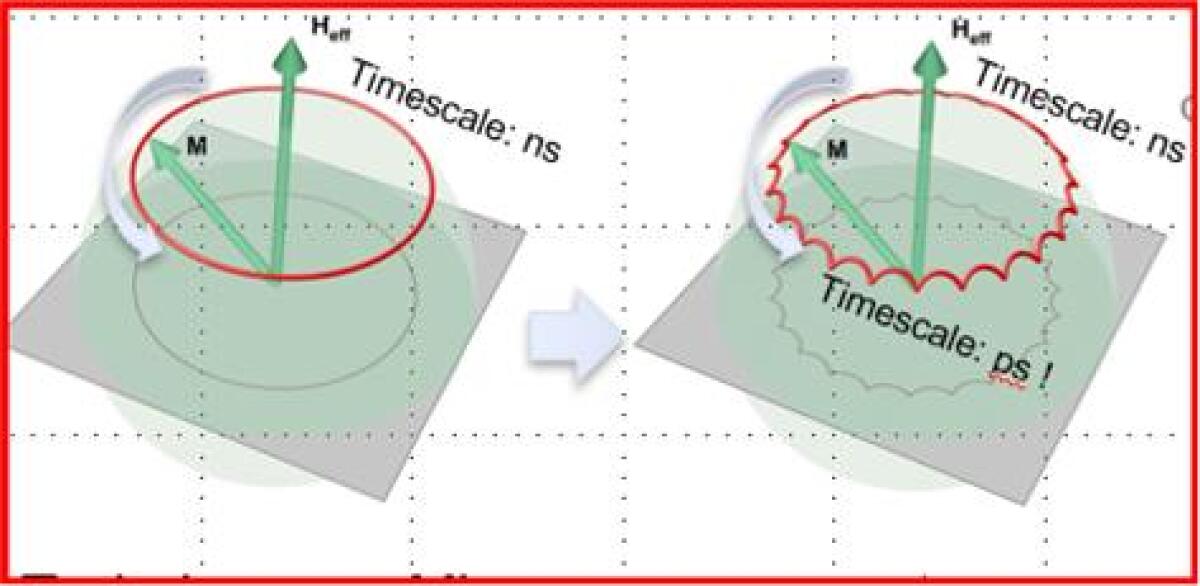
Inertia effects lead to a wobbling of the axis of the earth -in other words nutation . Similar Inertia effects have been predicted and recently observed in spin dynamics [1,2] . In this thesis you have the chance to contribute to the experimental investigations to observe this effect by microwave spectroscopy /THz spectroscopy in magnetic nanoscale structures.
[1] Neeraj, K., N. Awari, et al, Inertial spin dynamics in ferromagnets. Nature Physics 17(2) (2021) 245.
[2] Cherkasskii,, M, et al. , Nutation resonance in ferromagnets. Physical Review B 102(18) (2020) 184432.
BA/MA Thesis offer: Magnetism and Spin Dynamics in 2D materials
(contact Dr. A. Semisalova, Prof. Dr. U. Wiedwald)
Novel room temperature 2D materials have been theoretically predicted, and first experimental evidence for their existence has been obtained. In this thesis you will investigate 2D materials with microwave spectroscopy, magnetometry, and atomic/magnetic force microscopy.
Wiemeler, J., et al., Appl. Phys. Lett. (2024).
In an alternative approach 2D films will be grown and characterized in UHV.
Bhagat, B., et al., AIP Advances 10(7) (2020) 075219.
Contact: Dr. Anna Semisalova, Dr. Ulf Wiedwald

Spin pumping and spin-to-charge conversion in epitaxial heterostructures
(contact Dr. A. Semisalova, Prof. Dr. Michael Farle)
This project involves the growth and investigation of high-quality epitaxial thin-film heterostructures based on ferromagnetic (3d) and paramagnetic (4d and 5d) metals, with applications in spin pumping and spin-to-charge conversion for spintronic devices. You will learn how to operate an ultrahigh vacuum chamber (down to 10-11 mbar), how to deposit thin films using molecular beam epitaxy and how to perform in situ analysis using Auger electron spectroscopy and low energy electron diffraction. You will also learn the fundamentals of spin dynamics and microwave absorption using a ferromagnetic resonance setup. You will also participate in studies using advanced structural methods, such as transmission electron microscopy and X-ray absorption, to reveal the correlation between interface architecture and spin pumping efficiency.
Example video: LEED with GaAs(110), copyright: J. Wiemeler
Collaboration: Ernst Ruska-Centre for Microscopy and Spectroscopy with Electrons (ER-C, FZ Jülich), European Synchrotron Radiation Facility (ESRF, Grenoble)
References:
- Wiemeler et al., Appl. Phys. Lett. 2024 [https://doi.org/10.1063/5.0204395]
- Bhagat et al., AIP Advances 2020 [https://doi.org/10.1063/5.0004261]

Inertial effects in magnetization dynamics
(contact Dr. A. Semisalova, Prof. Dr. Michael Farle)
In this thesis, you have the chance to contribute to the experimental investigations of inertial effects in spin dynamics, including nutation - the "wobbling" of magnetic moment which occurs in sub-THz frequency range in ferromagnets. Using the newly developed high-frequency/high-field broadband ferromagnetic resonance setup and a theoretical modelling, you will join our efforts in investigation of these effect by microwave spectroscopy /THz spectroscopy in magnetic nanoscale structures.
Collaboration: AG Weimann (UDE), Ecole Polytechnique (Paris/Palaiseau), SPINTEC (Grenoble)
References:
- Wiemeler et al., Phys. Rev. B 2025 https://doi.org/10.1103/dhk6-78tt
- Cherkasskii et al., Phys. Rev. B 2022 https://doi.org/10.1103/PhysRevB.106.054428
- Neeraj et al. Nature Physics 2021 https://doi.org/10.1038/s41567-020-01040-y

Spin dynamics in 2D materials - TMPS3
(contact Dr. A. Semisalova, Prof. Dr. Michael Farle)
In this project you will investigate the spin dynamics and electron spin resonance, ferro- and antiferromagnetic resonance in 2D van der Waals materials TMPS3, TMPS4 (TM=Cr, Fe, Ni, Mn) grown by chemical vapor transport, The goal of the project is to establish a correlation between the high-frequency magnetization response and dimensionality of these materials as well as to investigate anisotropy, coupling and magnetic phase transitions, including metastable states driven by magnetic field. You will use magnetometry, cavity-based and broadband ferromagnetic resonance, atomic force microscopy, scanning electron microscopy and energy dispersive x-ray spectroscopy (EDX). For study of single microflakes you will use a unique micro-resonator ferromagnetic resonance setup (microFMR, uFMR), co-developed and recently advanced in AG Farle group.
Collaboration: NTU Singapore, AG Bacher (UDE)

Magnetic phase transitions in thin films and nanostructures
(contact Dr. A. Semisalova, Prof. Dr. Michael Farle)
Here you will use magnetron-sputter deposition setup to grow Fe-based thin films and multilayers and investigate their structure and magnetism. The project focuses of spin dynamics and microwave absorption across the magnetic phase transition and correlation of spin fluctuations with magnetocaloric effect and spin pumping.
Collaboration: Uni Münster

For Lehramtsstudium students or SHK positions without Physics degree:Advancing the demo experiments for quantum phenomena - Stern-Gerlach apparatus (Phywe) and Quanten Koffer (qutools)
(contact Dr. A. Semisalova)
In this project you will have chance to contribute to advancing two existing experimental setup designed for educational purposes and demonstration of fundamental quantum phenomena. The Stern-Gerlach apparatus based on vacuum chamber equipped with Potassium (K) oven source, magnetic analyzer and Langmuir-Taylor detector is used visualize the famous Stern-Gerlach experiment on quantization of spatial orientation of angular momentum. The Quanten Koffer is a unique portable "suitcase" setup for demonstration of quantum photonics effects using photons source. Your work will include the design of the advanced experiments using one of these tools.
Collaboration: PHYWE, Uni Bochum