
Welcome to the Faculty of Biology
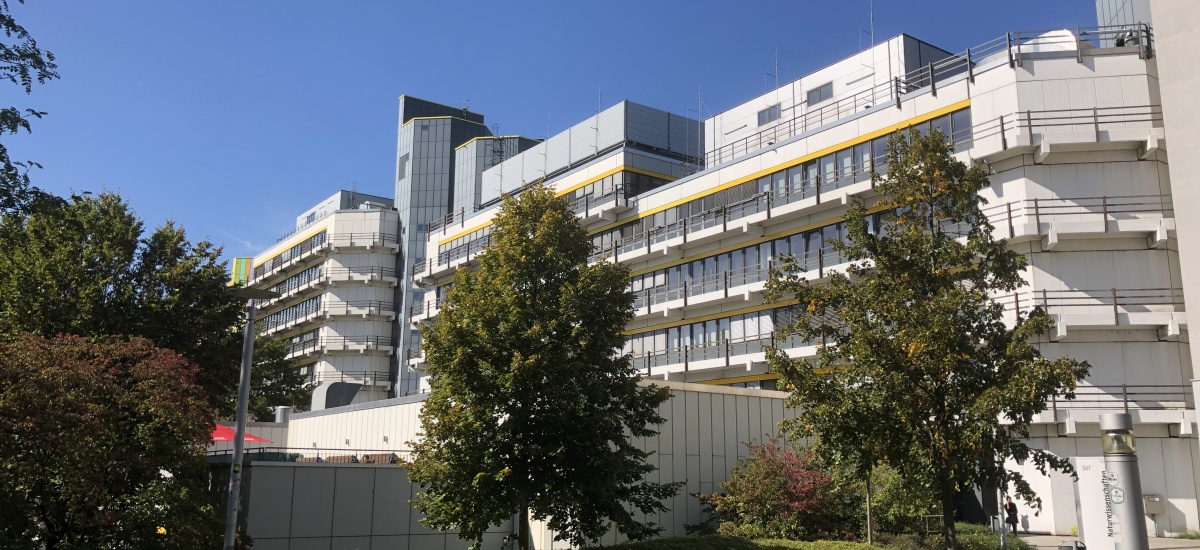
Faculty of Biology
has three main areas of research: medical biology, water and environmental research
and empirical teaching and learning research.
The faculty in numbers
> 1600 students
7,5M€ grants
7,85 M€ budget
54 non scientific staff
130 scientific staff
22 professors
The website of the Faculty of Biology is currently under construction!
Our research focuses
from molecular biology issues, through the level of organs and organisms to complex ecosystems
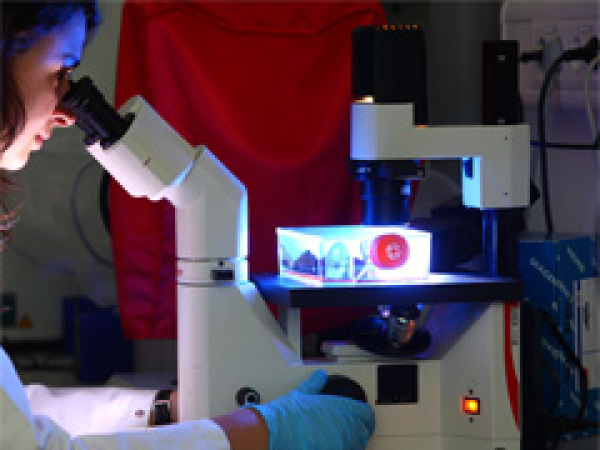
Research focus Medical Biology
Biomedical research at the Faculty aims to identify disease mechanisms at the molecular level and to develop biotechnological methods that can be used to influence these processes in order to develop more precise diagnostics and novel active substances.
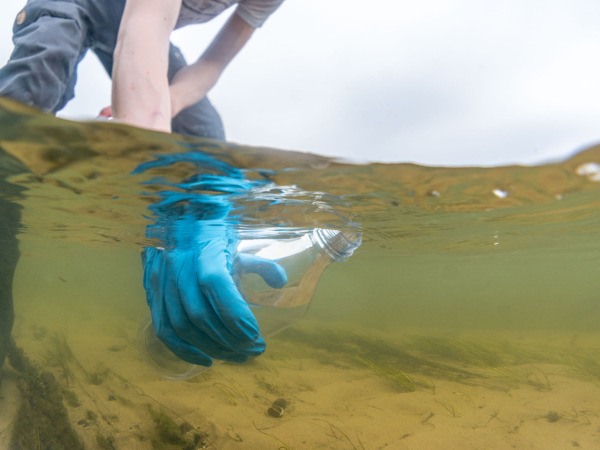
Research focus Water and environmental research
The focus of the working groups on "Water Research" is on questions relating to the development, changes and restoration of aquatic biodiversity from the level of genes and species communities to ecosystems and their function. In addition to basic research, the focus is on interdisciplinary, application-oriented research projects.
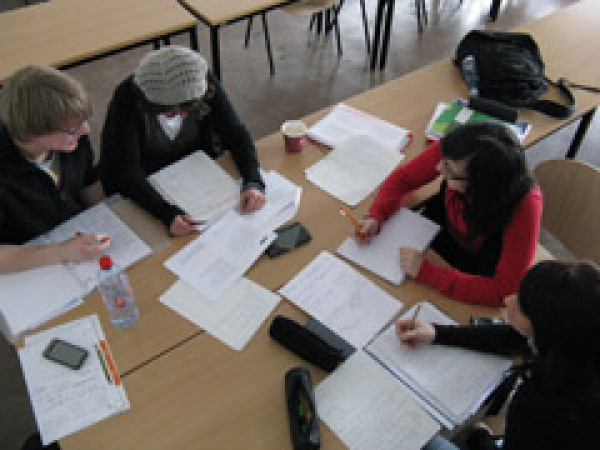
Research focus Empirical teaching and learning research
The research focus on subject-related empirical teaching and learning research investigates questions relating to the learning and teaching of biology at school, at university or at extracurricular learning venues. In cooperation with other working groups in subject didactics and teaching-learning research, they also investigate interdisciplinary questions. They are integrated into the Interdisciplinary Center for Educational Research (IZfB) and the Center for Teacher Education (ZLB).
Latest news from the Faculty of Biology

Summer 2026
New Funding for Glioblastoma Research
Novel Therapeutic Approach Under Investigation
- von Juliana Fischer
- 02.07.2026
Glioblastoma is one of the most aggressive forms of brain cancer. Even after surgery, radiotherapy and chemotherapy, the tumour often returns rapidly. Researchers at the University of Duisburg-Essen are therefore pursuing a new strategy: targeting the key protein Taspase1 by modulating its activity while simultaneously removing it through a natural cellular degradation pathway. The Dr Rolf M. Schwiete Foundation will support the project with funding for 24 months from October 2026.

Summer 2026
When teamwork doesn't stop at the lab door. Several members of the #ZMB and #CRC1430 from the research groups of Hemmo Meyer and Perihan Nalbant, together with colleagues from the #ICCE, took part in this year's E.ON Company Run in Essen. 🏃♀️🏃♂️ A great example of team spirit beyond the lab and a reminder that strong collaborations are built both in research and outside of it.

Sonja Rückert President of the International Society of Protistologists
- von Astrid Bergmeister
- 26.06.2026
A major international recognition for the aquatic sciences at the University of Duisburg-Essen: Protistologist and parasitologist Prof. Dr. Sonja Rückert assumed the presidency of the International Society of Protistologists on June 1, 2026. Her research focuses on eukaryotic microbiology: she studies parasitic and symbiotic single-celled eukaryotic organisms—known as protists—in aquatic ecosystems.

Summer 2026 University Day
On 25 June, the UDE is inviting all interested school pupils to its Open Day. Of course, the Biology Department will also be taking part with a comprehensive programme. There will be information on all Bachelor’s degree programmes, taster lectures and practical sessions.
You can register via:https://www.uni-due.de/abz/studieninteressierte/hochschultag
Anyone wishing to drop in at short notice is very welcome to do so.

Spring 2026 Blue Classroom
University of Duisburg-Essen launches the excursion season in the Blue Classrooms of the Emscher-Lippe region
As implementing partners of the Emschergenossenschaft and the Lippeverband (EGLV), teams from two working groups at the University of Duisburg-Essen (UDE) are now supporting the excursion programme to 13 Blue Classrooms in the region. Under the motto “Join in – Discover your Blue Classroom”, ten educational learning modules combine environmental education with a hands-on experience of nature along the renaturalised waters of the Emscher and Lippe rivers.
The UDE’s Aquatic Ecology and Biology Education – Biology Education Research and Learning Lab working groups will design and lead up to 100 excursions in 2026 and 2027, tailored to different age groups and target audiences – from nursery and primary school groups through lower and upper secondary schools to vocational school classes. The aim of the excursions is to make ecological relationships tangible directly on site: participants discover typical organisms, learn how to assess water quality using simple methods, and experience how renaturation creates new habitats. In this way, key content from the Collaborative Research Centre 1439 RESIST is also communicated to a broad target audience.

Winter 2026 FutureWaterCampus brings together water research
Grant notification for €11.5 million handed over
by Juliana Fischer 13 March 2026
The University of Duisburg-Essen is to receive a new centre for its internationally recognised water research: the Ministry for the Environment, Nature Conservation and Transport of the State of North Rhine-Westphalia and the European Regional Development Fund are funding the FutureWaterCampus. Environment Minister Oliver Krischer today presented a grant approval notice for €11.5 million. The new building will be constructed in the immediate vicinity of the ACTIVE SITES research facility at Thurmfeld in Essen.