
ERASMUS+ Staff Mobility

Erasmus+ staff mobility offers employees of the University of Duisburg-Essen (UDE) the opportunity to participate in Staff Weeks or gain new professional insights through job shadowing. These activities are financially supported through the Erasmus+ Programme and provide valuable opportunities to establish and strengthen international professional networks.
Changes to the Allocation of Erasmus+ Staff Mobility Funding from 15 May 2026
The University of Duisburg-Essen (UDE) receives a limited amount of Erasmus+ funding from the European Union to support staff training and professional development activities.
Please note that funding is subject to availability. Once the budget allocated for the respective funding period has been exhausted, we regret that no further applications can be considered.
The following regulations apply to Erasmus+ staff mobility funding:
- Funding is available for a maximum of five working days, plus individual travel days where applicable.
- As a general rule, financial support can only be granted once every two calendar years.
- The planned mobility must demonstrate a clear connection to the applicant's current area of work or professional development. Cross-cutting topics such as internationalisation, intercultural collaboration, digitalisation, communication, or administrative processes may also be considered.
- Funding is generally not available if a comparable training opportunity is offered internally at UDE.
- A maximum of three UDE staff members may receive funding to participate in the same Staff Week, workshop, or similar event.
- Funding can only be requested for a specific mobility activity. Applicants must therefore provide appropriate documentation, such as a programme, a link to the Staff Week, an invitation from the host institution, or a comparable description of the planned activity. It is not possible to reserve funding without a concrete mobility proposal.
- Applications may be submitted no earlier than seven months before the start of the mobility. They should be submitted as early as possible and no later than eight weeks before the mobility begins.

Information on Erasmus+ Staff Mobility
Objectives of an Erasmus+ Staff Mobility
- Internationalisation across all areas of the University of Duisburg-Essen (UDE)
- Professional exchange and new perspectives
- Strengthening personal and professional competencies
- Expanding and deepening professional networks
Which types of mobility can be funded through Erasmus+?
- International Staff Weeks
- Job shadowing
- Participation in workshops and seminars
- Participation in language courses (subject to prior approval)
Eligible mobilities must have a duration of at least 2 days and no more than 60 days. Financial support is available for a maximum of 5 programme days, plus individual travel days where applicable.
The planned mobility must demonstrate a clear connection to the applicant's current area of work or professional development. Cross-cutting topics such as internationalisation, intercultural collaboration, digitalisation, communication, or administrative processes may also be considered.
Activities that are comparable to training opportunities already offered internally by UDE are not eligible for Erasmus+ funding.
Who is eligible for Erasmus+ funding?
The programme is open to all employees of the University of Duisburg-Essen (UDE), with a particular focus on staff working in central administration and technical services, including:
- Library Services
- Faculties
- Finance
- International Office
- Public Relations and Communications
- Student Services
- Technology Transfer
- Continuing Education
A maximum of three UDE staff members can receive funding to participate in the same Staff Week, workshop, or similar activity.
Frequency of Funding
Staff members who have previously received Erasmus+ funding for a staff mobility are generally eligible to apply for funding again after two years.
Where can an Erasmus+ Staff Mobility take place?
Belgium, Bulgaria, Croatia, Cyprus, Czech Republic, Denmark, Estonia, Finland, France, Germany, Greece, Hungary, Ireland, Italy, Latvia, Lithuania, Luxembourg, Malta, the Netherlands, Austria, Poland, Portugal, Romania, Slovakia, Slovenia, Spain, and Sweden.
In addition, the following non-EU countries also participate in the programme:
Iceland, Liechtenstein, North Macedonia, Norway, Serbia, and Türkiye.
Erasmus+ staff mobilities may take place at higher education institutions as well as other eligible organisations. An inter-institutional agreement between UDE and the host institution or organisation is not required for staff mobility for training.
What does the Erasmus+ financial support cover?
The Erasmus+ financial support consists of a daily allowance to contribute to subsistence costs and a travel grant to help cover travel expenses.
Any participation or registration fees incurred are not reimbursed separately. These costs must be covered from the total Erasmus+ grant.
Funding is available for travel and subsistence costs for mobilities lasting at least two consecutive days and up to one week (a maximum of five working days or seven calendar days). Grant amounts are based on the EU funding rates, which vary according to the destination country. Additional financial support may be available for participants with children and for participants with disabilities.
The daily allowance is calculated on the basis of the applicable daily funding rates. The mobility programme must clearly demonstrate that eligible mobility-related activities took place on each funded programme day.
Daily allowance rates by destination country:
|
Destination Country |
Daily grant per participant for up to the 14th day of the activity (excluding travel days) |
|
Group 1: Belgium, Denmark, Finland, France, Ireland, Iceland, Italy, Liechtenstein, Luxembourg, the Netherlands, Norway, Austria, Sweden. |
180 EUR |
|
Group 2: Estonia, Greece, Latvia, Malta, Portugal, Slovakia, Slovenia, Spain, Czech Republic, Cyprus. |
160 EUR |
|
Group 3: Bulgaria, Croatia, Lithuania, North Macedonia, Poland, Romania, Serbia, Türkiye, Hungary. |
140 EUR |
In addition to the daily allowances, participants receive a travel grant based on the actual distance between the place of departure and the destination of the mobility. The distance is calculated uniformly using the European Commission’s distance calculator.
Under the “Green Travel” scheme, individual support may be granted for sustainable travel. Participants are eligible if the use of sustainable means of transport results in a longer travel time. In such cases, up to four additional days may be funded as individual support.
“Green Travel” refers to travel where low-emission means of transport, such as train, bus or carpooling, are used for the majority of the journey, i.e. for more than 50% of the outward and return journey.
Lump-sum travel grants are paid depending on the travel distance:
|
One-way distance according to the European Commission Distance Calculator |
Amount (lump-sum grant) per participant (round trip) |
Green Travel |
|
10 - 99 km |
28 EUR |
56 EUR |
|
100 – 499 km |
211 EUR |
285 EUR |
|
500 – 1.999 km |
309 EUR |
417 EUR |
|
2.000 – 2.999 km |
395 EUR |
535 EUR |
|
3.000 – 3.999 km |
580 EUR |
785 EUR |
|
4.000 – 7.999 km |
1188 EUR |
1188 EUR |
|
8.000 km und mehr |
1.735 EUR |
1.735 EUR |
Additional financial support (real-cost funding)
Participants travelling with one or more children, or participants with a disability or chronic medical condition that results in additional financial needs, may apply for real-cost funding to cover eligible additional expenses.
Further information is available on the DAAD website:
DAAD – Additional funding for participants with fewer opportunities
Important: If you wish to apply for real-cost funding, please contact the International Office at erasmus.personal@uni-due.de at least four months before the start of your mobility.
Taxation
If your actual travel and subsistence costs are lower than the Erasmus+ lump-sum grant you receive, you are required to declare and pay tax on the surplus in accordance with the applicable tax regulations.
Green Travel – Exceptional Costs for Expensive Travel
If the Green Travel travel grant covers less than 70% of your actual travel costs, you may apply for reimbursement of up to 80% of the documented costs for sustainable travel to and from your destination.
To be eligible, you must provide proof of your actual travel expenses. In addition, reimbursement of exceptional travel costs is subject to prior approval by the DAAD.
Application Procedure and Administrative Steps for an Erasmus+ Staff Mobility
Application Procedure
Please notify the International Office of your planned mobility at least two months before the start of your trip by sending an email to erasmus.personal@uni-due.de.
Your email should include details of your planned mobility, ideally together with an invitation from the host institution. Please note: If participation in a Staff Week or similar event requires a registration fee, do not complete the registration until your funding has been approved by the International Office.
Before applying, you should discuss your travel plans with your supervisor to ensure that the business trip can be approved.
Applications may be submitted no more than seven months before the planned start of the mobility and only if a specific mobility activity has already been identified.
Required Documents
All documents may be submitted by email as scanned copies or PDF files with digital signatures or facsimile signatures.
Before the mobility
- Official invitation from the host institution
- Signed business travel request
- Mobility Agreement
- Grant Agreement
After all pre-departure documents have been submitted and approved, 70% of the Erasmus+ grant will be paid.
After the mobility
- Confirmation of Stay issued by the host institution
- EU Participant Report (you will automatically receive an email invitation from the EU Mobility Tool to complete the report)
Once all required post-mobility documents have been submitted, the remaining 30% of the Erasmus+ grant will be paid.
Important Information – A1 Certificate
If you are travelling to France or Austria, you must obtain an A1 Certificate before departure and carry it with you during your trip.
For travel to other countries, the certificate may generally be submitted after the mobility if required.
Further information can be found in the A1 Certificate information leaflet published by the German Federal Ministry of Labour and Social Affairs (BMAS). Additional information is provided below.
What is the A1 Certificate?
Simplified regulations apply to the A1 Certificate. As of now, employees are only required to carry the A1 Certificate when travelling to France, Austria, or Switzerland. If requested during an inspection, the certificate may be applied for retrospectively.
Applications must be submitted to entsendung@uni-due.de no later than three weeks before the start of the trip.
Further information is available here: A1 Certificate
Travel Safety
- Please consult the latest travel advice and entry requirements provided by the German Federal Foreign Office before travelling.
- German nationals are advised to register with the German Federal Foreign Office's ELEFAND crisis preparedness system, regardless of the destination or the duration of their stay abroad.
Is Erasmus+ Staff Mobility considered working time?
As Erasmus+ staff mobilities are considered official business trips, the time spent on the mobility counts as working time.
In agreement with the Human Resources Department, the following regulations apply to working time recording for employees participating in the flexitime scheme:
- Travel time that takes place within the flexitime framework (Monday to Friday, 6:00 a.m. to 8:00 p.m.) may be recorded in full as working time.
- If travel takes place outside the flexitime framework, 50% of the travel time may be counted as working time. When submitting your time correction (via the workflow or time correction form), please enter the travel time already reduced by half.
- For the days spent on the staff mobility itself, your contractual daily working hours will be credited. Please record these as "External Training" using the workflow or the time correction form.
Current Staff Weeks
If you are looking for current Staff Week opportunities, please visit our dedicated page:
On this page, you will find current Staff Week announcements as well as information about the IMOTION online platform for Erasmus+ staff mobility opportunities.
"Our hosts made our stay truly unforgettable through their exceptional commitment and warm hospitality. I gained many valuable insights and ideas that will certainly influence my work. The exchange with colleagues from universities across numerous countries was particularly inspiring, and I had the opportunity to use and further improve my English language skills."
Sophia Kenbrock
Staff Week in Växjö, Sweden
Staff members at the University of Duisburg-Essen are often the first point of contact for international students and therefore make an important contribution to the internationalisation of UDE. Staff mobilities offer employees a wide range of opportunities to acquire the necessary skills.
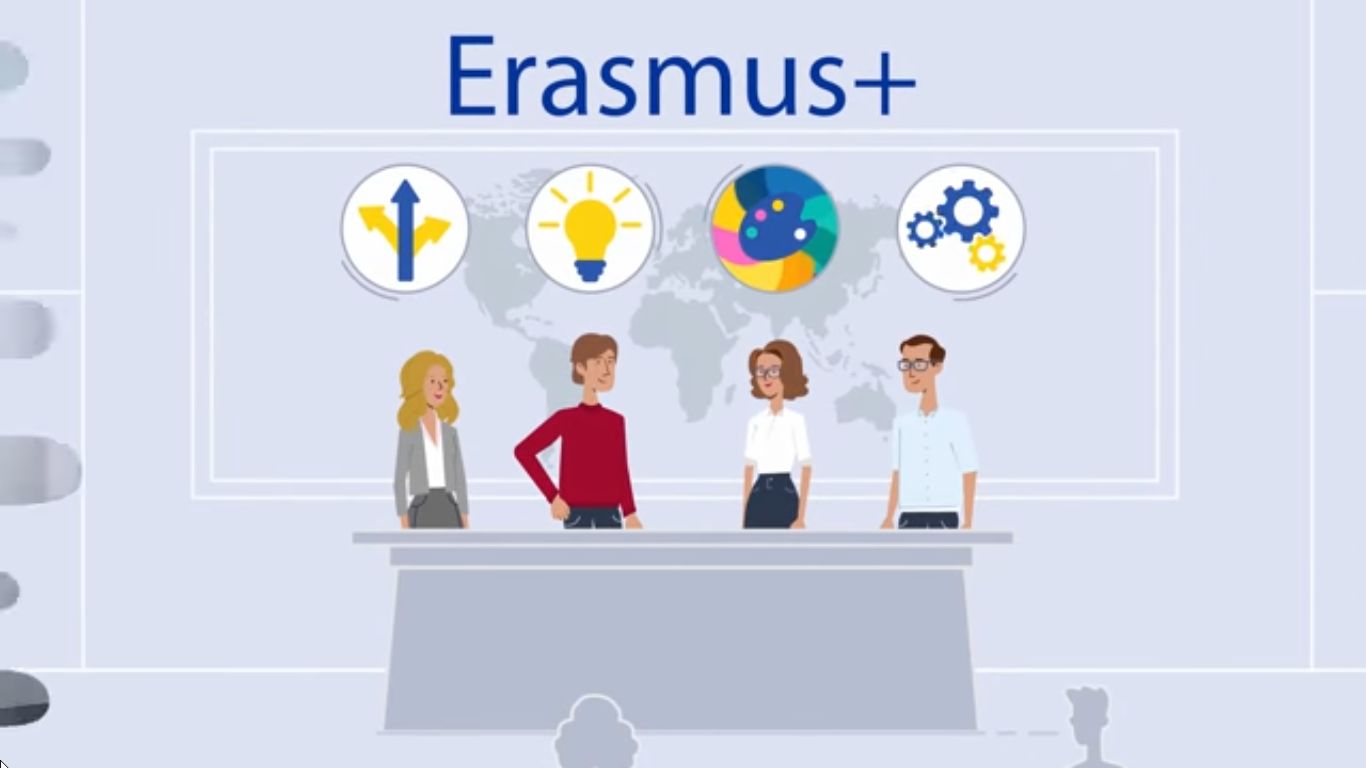
Find out more about the opportunities and benefits of staff mobility in Europe in the accompanying DAAD #kurzerklärt video.

This project has been funded with the support of the European Commission. The content of this publication reflects the views of the author only, and the European Commission cannot be held responsible for any use which may be made of the information contained therein.