
Research
Despite advances in reperfusion therapy, heart failure remains a common long-term consequence of acute myocardial infarction (AMI). The irreversible loss of cardiomyocytes and an imbalanced immune response can lead to impaired healing, ventricular dysfunction, and progressive heart failure. Understanding the underlying mechanisms of cardiac repair is crucial to develop effective therapies.
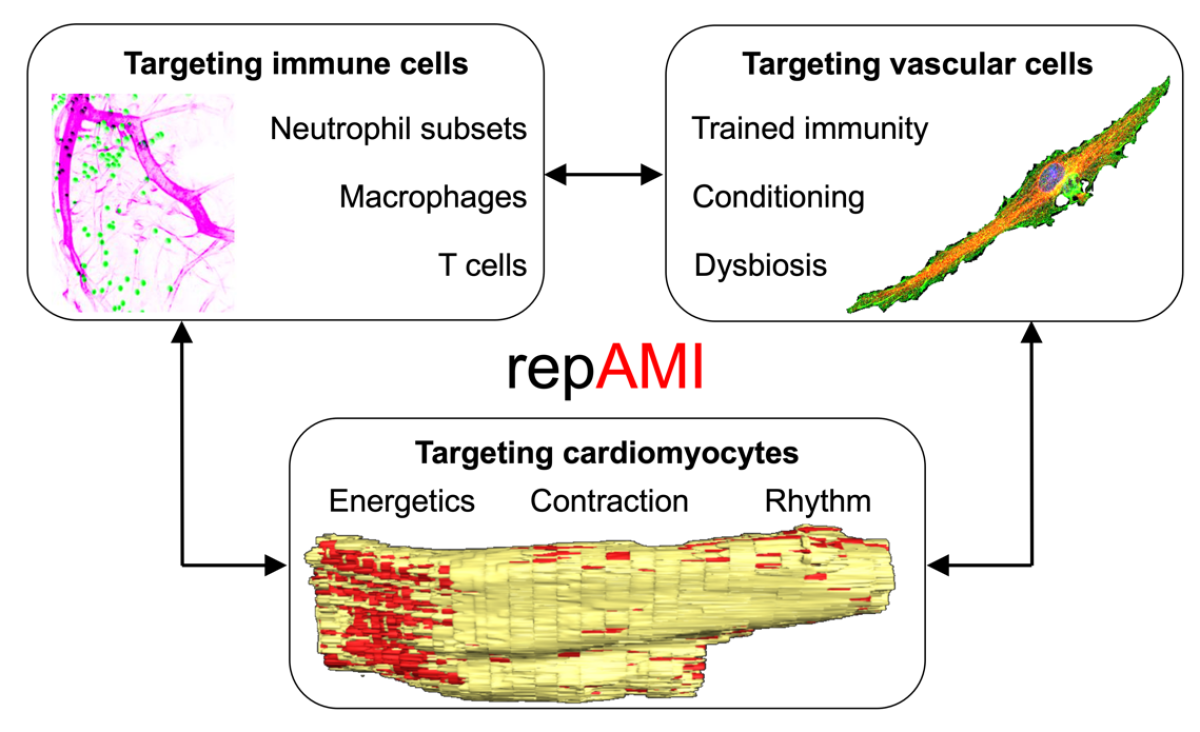
RTG 2989 focuses on the complex interplay between immune cells, vascular endothelial cells, and cardiomyocytes during the repair process after reperfused AMI. Key research goals include:
-
Understanding the plasticity and regulation of immune cells (e.g., neutrophils, macrophages, T cells) and their spatial and temporal roles in inflammation and healing of the injured heart
-
Exploring the role of endothelial cell diversity and vascular signaling in modulating the repair response
-
Characterizing the heterogeneity, remodeling, and interactions of cardiomyocyte subtypes, including their role in triggering or resolving inflammation and there reaction to fibrotic processes following cardiac inflammation
Across three research areas and 11 interdisciplinary projects, the RTG 2989 integrates basic research and clinical expertise in a tandem supervisory model to gain deeper insights into non-cardiomyocyte and cardiomyocyte signatures and their complex intra- and intercellular communication network. This may bridge current gaps and contribute to the creation of a basis for the development of effective interventions sufficient to minimize cardiac damage and dysfunction in reperfused myocardial infarction.