
Research Area 2: targeting vascular cells
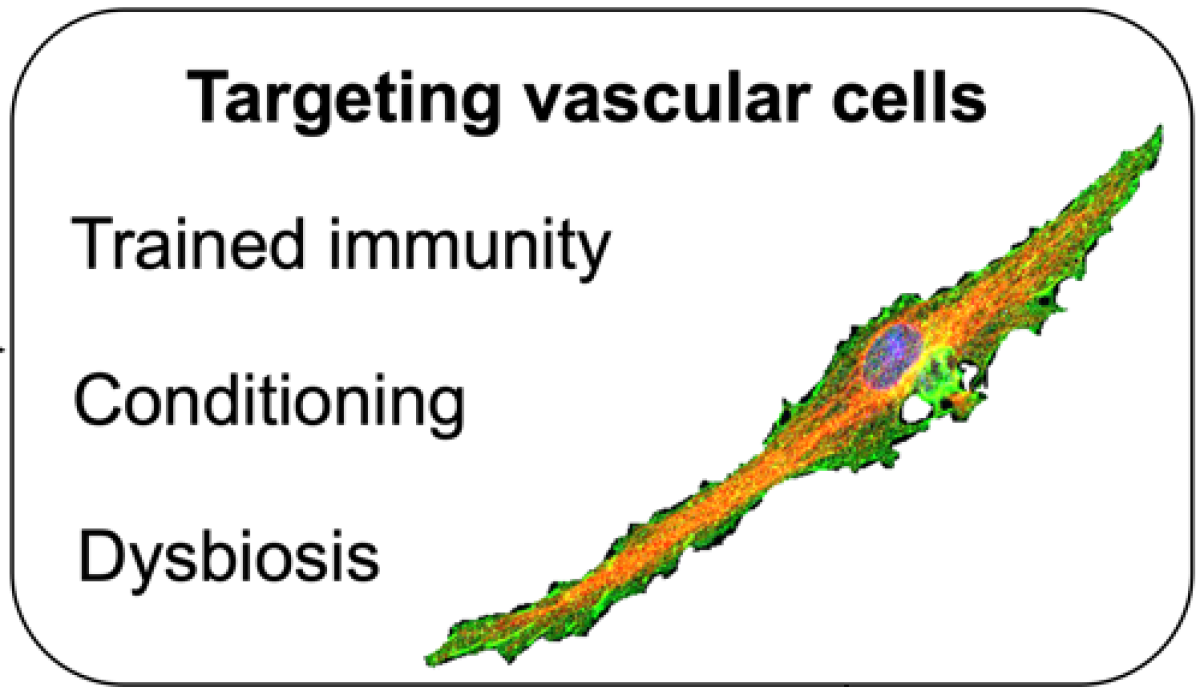
Myocardial infarction followed by reperfusion not only damages heart muscle cells (cardiomyocytes), but also leads to significant injury of the coronary microvasculature. Endothelial dysfunction, inflammation, and even capillary rupture are common and represent independent predictors of poor outcomes, beyond infarct size alone. Recent evidence also highlights the role of the gut microbiome, extracellular vesicles, and trained immunity in shaping inflammation and cardiac recovery after infarction. This research area aims to explore mechanisms that contribute to cardiac injury and repair in reperfused myocardial infarction (repAMI), with a focus on the intestinal microbiome, the vascular system and the concept of innate immune memory ultimately leading to better options for cardioprotection.
The Gut Microbiome and Vascular Injury in repAMI
Emerging data show that the gut microbiota—the community of microorganisms living in the intestine—plays a crucial role in regulating systemic immune responses that affect cardiovascular health. In the context of repAMI, gut dysbiosis has been linked to larger infarct size, impaired cardiac repair, and increased mortality in preclinical models. Microbiota-derived metabolites such as short-chain fatty acids and TMAO influence inflammatory pathways, endothelial function, and immune cell activity. In accordance, probiotic administration preserved the deterioration of ventricular function in a preclinical model of chronic myocardial ischemia. Moreover, T cell subsets itself—especially regulatory T cells and IL-17-producing γδ T cells—are shaped by microbial signals and in interaction with the microbiota contribute to both intestinal and cardiac inflammation as well as homeostasis and late-stage LV remodeling in repAMI. Lastly, myocardial infarction can impair gut perfusion, leading to barrier dysfunction, microbial translocation, and systemic inflammation. Project 4 aims to deeply characterize how gut microbiota composition and metabolite signaling influence vascular injury and immune responses in repAMI.
Coronary Vasculature as a Target of Remote Cardioprotection
Increasing evidence implicates a relevant role for microvesicles in intercellular crosstalk. It is suggested that human vascular endothelial extracellular vesicles - members of the family of extracellular vesicles, shed from activated or apoptotic cells - may protect cardiac tissue in repAMI. Upon treatment, cardiac cell death and the loss of contractile capability were diminished, and respiratory capacity was improved. Remote ischemic conditioning (RIC) by brief episodes of ischemia/reperfusion in limbs before repAMI is a non-invasive strategy for protecting the myocardium of patients undergoing interventional acute surgical coronary revascularization. Signals potentially released from peripheral vessels to the heart are probably transported via the circulation, because cardioprotection can be transferred from one species to another via plasma. RIC increases the circulating levels of microvesicles, thus contributing to the protection of cardiomyocytes. Understanding the source and amount of the microvesicle release, the distinct composition of these microvesicles, and the interaction with coronary vasculature and the mechanism of cardioprotection in repAMI is the basis of project 5.
Trained Immunity Mechanisms in the Post-Infarct Heart
The concept of trained immunity describes a process by which cells—especially of the immune system—develop a heightened, memory-like response to subsequent stimuli through epigenetic and metabolic reprogramming, e.g. shifts from oxidative phosphorylation to aerobic glycolysis that enable faster inflammatory responses. While this adaptation boosts defense, inappropriate activation can contribute to autoimmunity or chronic inflammation. Trained immunity is now being explored in non-immune cells such as cardiomyocytes and coronary vascular smooth muscle cells, which may undergo similar changes after ischemic events. This idea is strenghtend by recent studies showing that hypoxia/reoxygenation causes epigenetic changes in cardiac cells. Though clear evidence of such a functional “cardiomyocyte memory” remains to be demonstrated. This is the main objective of project 6.