
Research Area 3: targeting cardiomyocytes
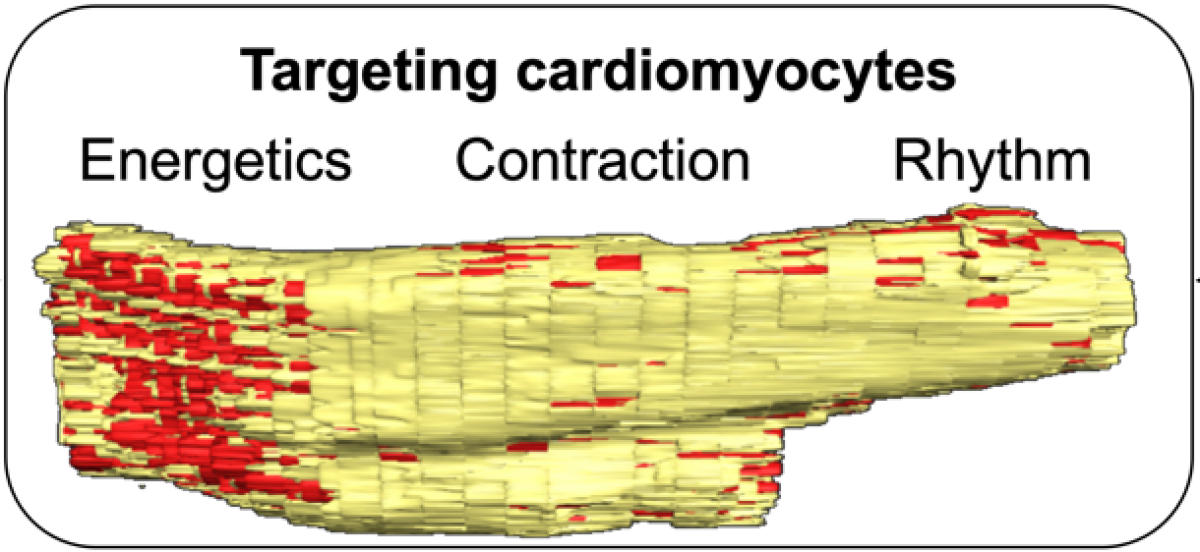
The explosive burst of cardiomyocyte death in early reperfused myocardial infarction (repAMI) and the subsequent maladaptive remodeling of surviving cardiomyocytes with changes in Ca2+ cycling and aggravation of inflammatory activities, result in deterioration of cardiac output. This scenario inflicts a secondary stress on the heart in the form of increased afterload that is chronic and unremitting, providing a strong stimulus for cardiomyocyte death, which initiates a vicious cycle of unfavorable geometrical remodeling that stimulates yet more cell death and progressing heart failure. This research area deals with changes in cardiomyocytes during and after myocardial infarction and how these changes can affect the rest of the heart tissue. In addition, the focus is on understanding which factors can contribute to improving heart function and how interventions can be optimized that come into play when the damage to the heart has become too great.
Characterization of Cardiomyocyte Communication Network, Plasticity and Fate Landscape
Cardiomyocytes are strongly involved in the two-way communication with other non-resident and resident cells detectable in reperfused myocardial infarction, particularly immune and endothelial cells and fibroblasts. Therefore, the main research question of project 7 is whether and how cardiomyocyte heterogeneity in the peri-infarct and remote myocardium and its spatiotemporal functional dynamics, including cell-cell-communications, determine the outcome of an ischemic event. In this context, there is also an increased focus on whether BCL2 family members are involved in these processes.
Investigation of the Rootes of Atrial Fibrillation after Myocardial Infarction
Atrial fibrillation (AF) is the most common supraventricular arrhythmia, often resulting from disrupted atrial cardiomyocyte homeostasis. While myocardial infarction primarily affects the left ventricle, its role in triggering AF remains unclear. Early inflammation and interstitial fibrosis after repAMI are likely contributors. The immune cell composition in atrial tissue and its effects on cardiomyocyte structure and function are still poorly understood. Evidence points to NLRP3 inflammasome signaling as a key player in AF development, including diet-related forms, suggesting a link between atherosclerosis and AF. The evaluation of inflammation-induced atrial remodeling is the focus in project 8.
Unbiased Screening of Molecular Targets Underlying Recovery after Ventricular Unloading
Recent studies suggest that human cardiac cells retain plasticity and recovery potential, even in end-stage heart failure. Transcriptomic analyses from failing hearts indicate that impaired contraction and metabolism are key factors in disease progression. LVAD implantation is a common intervention in terminal heart failure, used as a bridge to recovery, transplant, or as destination therapy. While recovery cases after LVAD support do exist, the underlying molecular mechanisms are not fully understood. Chronic unloading leads to changes in calcium handling, cytoskeletal structure, extracellular matrix composition, and immune activity, but their clinical relevance remains unclear. Unbiased molecular screening of patient tissue may uncover new targets and improve the therapeutic use of the heart’s innate ability to recover. Project 9 is employing a multi-omics approach to address this question.
Preservation of Donor Hearts through Novel Oxygen Carriers
Heart transplantation is the definitive treatment for end-stage heart failure, but donor hearts are vulnerable to ischemia-reperfusion injury during retrieval and implantation. Machine perfusion offers a superior alternative to cold storage by preserving the heart in a beating, oxygenated state, maintaining aerobic metabolism, and improving graft quality—especially with longer ischemic times. However, current systems depend on donor blood and can cause tissue edema during extended perfusion due to extravasation of perfusion solution. Project 10 investigates a promising approach to address these limitations: the use of novel oxygen carriers, which can support oxygen delivery without the need for blood and potentially protect the endothelium, improving both preservation and transplant outcomes.
Influence of Mitochondrial Remodeling and Clearance on the Shaping of Cell Fate Decisions
Cardiomyocytes possess an abundant and complex mitochondrial network. In reperfused myocardial infarction, mitochondrial damage drives alterations in metabolism, a decline in bioenergetic capacity, inflammatory responses, and impaired mitophagy in the remote zone, which compromises cardiomyocyte integrity and cardiac output. Recent evidence suggests that cardiomyocytes clear mitochondrial debris via membranous vesicles, with substantial interplay between intracellular mitophagy and tissue-resident macrophages. Dissecting how these multiplicity of processes is regulated and altered in reperfused myocardial infarction at the level of the mitochondrial network is the key question in project 11.