

Research Area 1: targeting immune cells
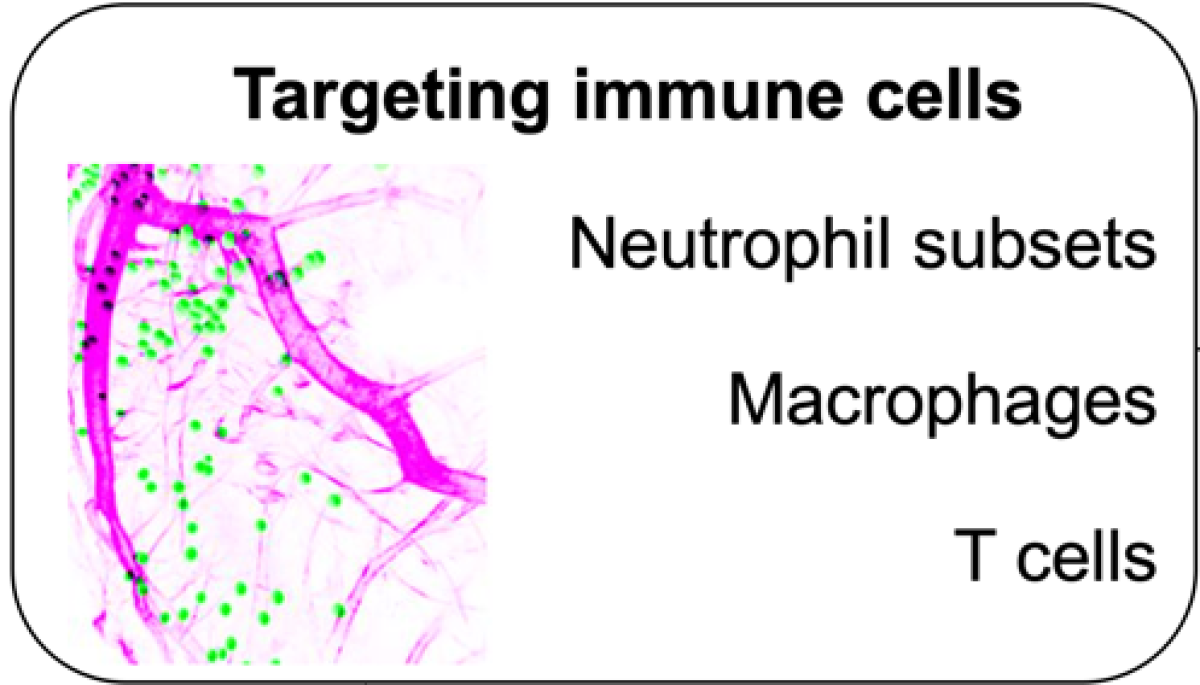
Following an acute myocardial infarction (AMI), especially after successful reperfusion therapy, the heart undergoes a complex immune response. This reaction is essential for clearing damaged tissue and initiating repair—but if not properly regulated, it can also contribute to adverse cardiac remodeling and dysfunction. Our research focuses on the distinct roles of immune cells—particularly neutrophils, macrophages, and T cells — in shaping cardiac outcomes after reperfused myocardial infarction (repAMI).
Neutrophils – Early Responders with Dual Roles
Neutrophils are rapidly recruited to the injured heart by signals such as damage-associated molecular patterns (DAMPs), cytokines, and chemokines. Excessive neutrophil activity has been associated with poor prognosis, remodeling, and mortality after AMI, but experimental data suggest, that neutrophils are also vital for the clearance of debris, the resolution of inflammation, the regulation of other sets of immune cells, and the return to tissue homeostasis. It is now speculated that different neutrophil subtypes may exist within the myocardium, with both detrimental and beneficial effects depending on their phenotype and localization. Elucidation of these phenotypes and localizations is the core of project 1.
Macrophages – Orchestrators of Healing
Macrophages play a central role in clearing dead cells and coordinating wound healing in many different ways. They are controlled by a complex signaling networks and exhibit a wide range of phenotypes beyond the simple "inflammatory vs. anti-inflammatory" classification and single-cell RNA sequencing has revealed multiple macrophage populations in the infarcted heart. In reperfused infarcts, macrophage function is influenced by these specific subtypes including CCR2⁺ and CCR2⁻ cardiac-resident macrophages that differentially regulate the recruitment of inflammatory monocytes and immune responses. However, exact mechanisms of polarization into subsets, location, and specific functionality are still unresolved. Main research goal of project 2 is to dissect how macrophage polarization is regulated and influences cardiomyocyte fate after reperfused AMI.
T Cells and Epicardial Adipose Tissue – Hidden Regulators of Cardiac Inflammation
Emerging evidence highlights the role of T lymphocytes in modulating inflammation after myocardial infarction. In particular, epicardial adipose tissue (EAT) — a metabolically active fat layer surrounding the heart—has been identified as a rich source of immune cells, including T cells and dendritic cells, especially in the reperfused heart. EAT produces both pro- and anti-inflammatory mediators and can influence T cell behavior and cardiac immune responses. Although T cell activity in the myocardium is relatively well studied, their specific phenotypes and impact on cardiomyocyte homeostasis and EAT inflammation remain unclear. Project 3 focuses on these investigations.