
Internationally Influential and Recognised
UDE researchers are highly cited
- 17.11.2025
Seven researchers have received the ‘Highly Cited Researchers Awards 2025’ – an important signal for the international visibility and influence of research at the University of Duisburg-Essen. The award honours scientists whose publications are cited particularly frequently and who have also met other important scientific quality criteria over a period of eleven years. According to the Institute of Scientific Information at Clarivate Analytics, those included in this list are among the 6,868 people worldwide who have the greatest scientific influence..
‘Germany ranks fourth in the Clarivate ranking, with a total of 363 awards, behind the USA, China and the United Kingdom. Leading the field in Germany is the Max Planck Society, whose institutes have received a total of 66 awards. We are immensely pleased that the University of Duisburg-Essen has also performed exceptionally well: with seven honoured researchers, two of whom are also members of the Research Center One Health Ruhr of the Research Alliance Ruhr,’ says the Rector of the University of Duisburg-Essen, Prof Barbara Albert. The calculation is based on the Web of Science database and takes into account publications from the past eleven years (2014–2024). Worldwide, 7,131 awards were given to 6,868 researchers, including the following scholars from the University of Duisburg-Essen:
Prof Alexander Probst, Professor of Environmental Metagenomics in the Faculty of Chemistry at the University of Duisburg-Essen and at the Research Center One Health Ruhr of the Research Alliance Ruhr, and since 2024 Affiliate Scientist at the Joint Genome Institute of the Lawrence Berkeley National Laboratory. His research combines microbiology and bioinformatics to understand the diversity and function of microorganisms and viruses in aquatic and subsurface habitats. In 2023, he received an ERC Synergy Grant from the European Research Council. Within the DFG-funded Collaborative Research Centre RESIST, he investigates how anthropogenic stress affects river ecosystems.
Prof Dirk Schadendorf, Professor of Dermatology and Venereology at the Medical Faculty and the Centre for Medical Biotechnology of the University of Duisburg-Essen, Director of the Research Center One Health Ruhr of the Research Alliance Ruhr, Director of the West German Cancer Center Essen, and Director of the Department of Dermatology at University Medicine Essen. Dirk Schadendorf is one of the world’s leading experts on skin cancer. His research focuses on malignant melanoma and rare tumours such as Merkel cell carcinoma, squamous cell and basal cell carcinoma, as well as cutaneous T-cell lymphomas. Through translational approaches, he continually advances diagnostics and therapy.
Prof Bernd Giebel, Professor of Translational Extracellular Vesicle Research at the Institute for Transfusion Medicine of the Medical Faculty and the Centre for Medical Biotechnology of the University of Duisburg-Essen. He studies how early blood stem cells develop and which mechanisms govern their renewal and specialisation, with a particular interest in asymmetric cell divisions that give rise to daughter cells with different properties. Since 2009, his research group has also been working on extracellular vesicles – tiny membrane-bound particles used by cells to communicate. These vesicles, including those derived from stem cells, show great potential for new therapeutic approaches, for example in inflammatory or immunological diseases.
Prof Steven X. Ding, Senior Professor of Automation Engineering and Complex Systems in the Faculty of Engineering at the University of Duisburg-Essen. His work focuses on the analysis, monitoring and control of complex dynamic systems. Central to his research are model-based and data-driven methods for process monitoring, fault diagnosis and the development of fault-tolerant systems. Another emphasis is the use of digital twins to make technical processes more precise and resilient. Applications of his research range from automotive systems to chemical processes, renewable energy systems, and intelligent buildings and energy networks.
Prof Wolfgang Fendler, Senior Consultant in the Department of Translational and Oncological Research at the Department of Nuclear Medicine at University Medicine Essen. His work centres on the clinical application of new imaging and therapeutic procedures for cancer. His goal is to further develop molecular imaging and radionuclide therapy to enable more precise diagnoses and more personalised treatment strategies. With the internationally recognised research project PROMISE, Fendler has established a new standard in prostate cancer diagnostics, enabling significantly more accurate tumour visualisation. For this work, his team received the 2025 Award of German Academic Medicine.
Prof Ken Herrmann, Professor of Nuclear Medicine at the Medical Faculty and the Centre for Medical Biotechnology of the University of Duisburg-Essen, and Director of the Department of Nuclear Medicine at University Medicine Essen. He is among the leading experts in modern radiopharmaceuticals for cancer diagnostics and therapy. He develops new tracer and treatment methods, particularly for thyroid cancer, endocrine tumours and prostate cancer, and drives the clinical application and advancement of innovative PET and PET/CT technologies to make diagnoses more precise and therapies more effective.
Prof. Martin Schuler, director of the Department of Medical Oncology (Tumour Research) at University Medicine Essen and spokesperson for National Center for Tumor Diseases (NCT). He is one of the leading experts in the field of personalised lung cancer therapy. He researches biological mechanisms in certain forms of lung cancer in order to enable individually tailored treatment of the disease. His other research interests include biomarker-stratified early clinical drug development and immuno-oncology. As part of international teams, he conducts clinical-related basic research into the mechanisms of drug resistance and immune evasion, as well as tumour progression and metastasis. He is also a recognised expert in lung cancer biology.
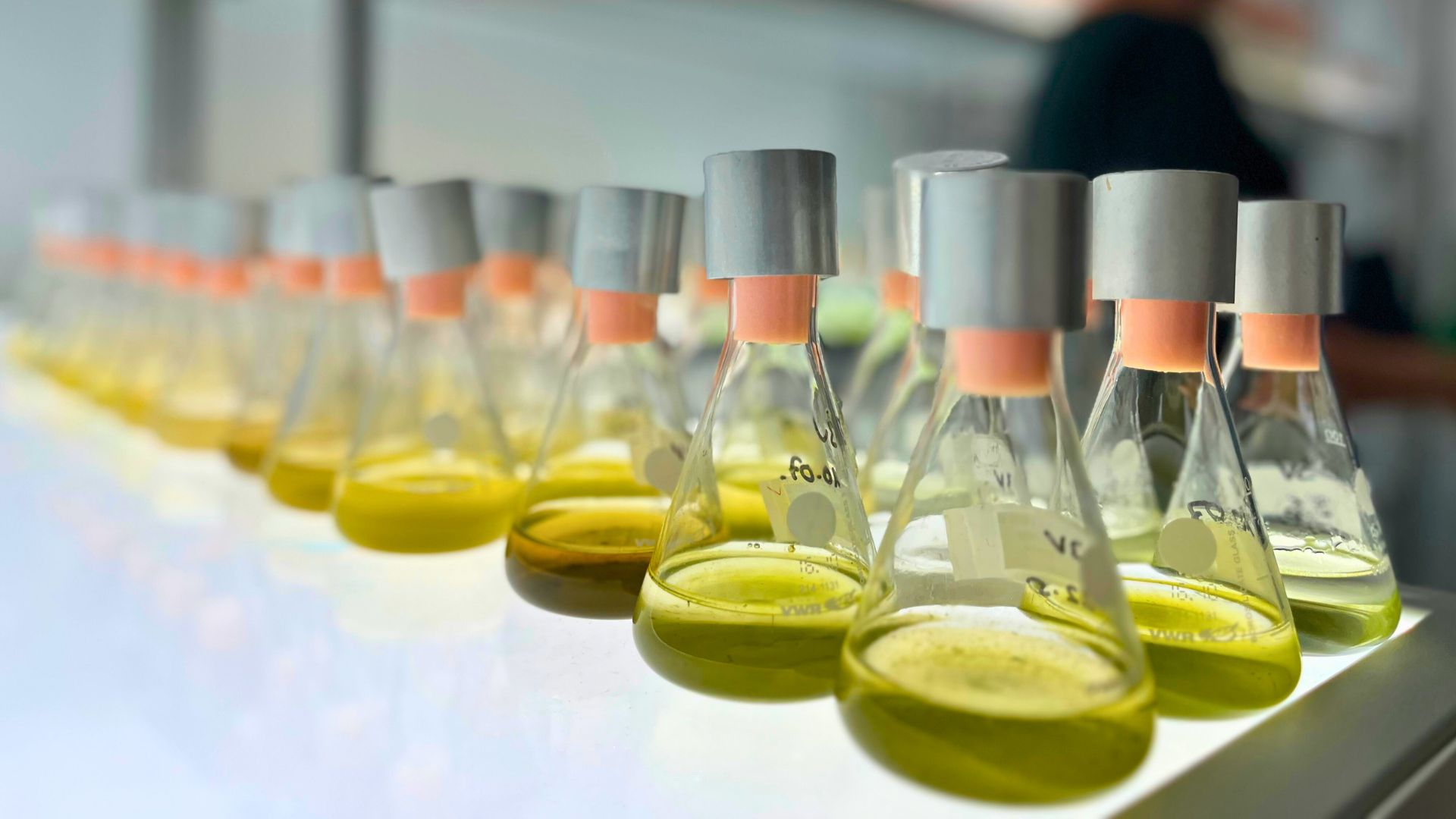
Image caption: The University of Duisburg-Essen houses the world’s largest algae collection, with more than 7,000 strains. Prof Alexander Probst analyses their genomes in cooperation with the renowned Joint Genome Institute of the Lawrence Berkeley National Laboratory (USA).
Further information: The list of Highly Cited Researchers 2025: https://clarivate.com/highly-cited-researchers/#list