|
2026-09-13: Jan Eser: BSc thesis defence

|
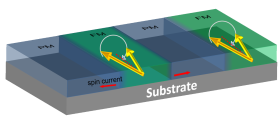
We congratulate Mr. Jan Eser on the successful defence of his BSc thesis, titled "Resonanz-Tunnel-Dioden für Ferromagnetische Resonanz: Kritische Magnetfelder und Spindynamik an Permalloyschichten" (EN: Resonant Tunneling diodes for ferromagnetic resonance: Critical magnetic field and spin dynamics in permalloy films). The thesis was carried out in collaboration with AG Prof Nils Weimann (Bauelemente der Höchstfrequenzelektronik, UDE). We wish Jan all the best for the future!
|
|
2026-07-06: Should a Cantor (high entropy) alloy have an hcp structure?

|
In a collaboration of projects of the Deutsche Forschungsgemeinschaft (Project No. 405553726-CRC/TRR 270) and The Scientific and Technological Research Council of Turkey Science Fellowships and Grant Program (Grant No. 1059B192000916) we studied magnetization, magnetic susceptibility, and Fe hyperfine fields of the Cantor alloy Cr20Mn20Fe20Co20Ni20 in relation to the electronic (valence electron concentration VEC=8 e/a) and crystallographic structure (fcc). The VEC of the Cantor alloy can be considered to be electronically equivalent to fcc-Fe, except that it is stable throughout the solid-state temperature range unlike fcc-Fe. Noteworthy, according to the periodic scheme of the elements, the structure of 3D elements and alloys at VEC=8 e/a should be hcp. However, the hcp phase of both Fe and the Cantor alloy are attained only under nonambient conditions, namely, at pressures around 14 GPa. Here, we show that the hcp phase can be stabilized by adding hcp Ru in low concentration. For details see:
https://journals.aps.org/prb/abstract/10.1103/3p5b-qlgx.
|
|
2026-07-03: Congratulations on your PhD defense, Dr. Jonas Wiemeler!

|

|

|
We warmly congratulate Jonas Wiemeler on successfully defending his PhD thesis on July 2, 2026!
Jonas began his academic journey in the AG Farle group as an undergraduate (BSc) student, continued through his Master (MSc), and completed his doctoral studies achieving the highest grade.
Over the course of his PhD, Jonas mastered ultrahigh vacuum techniques for thin film deposition using molecular beam epitaxy (MBE), acquiring essential expertise in the fabrication of high-quality magnetic heterostructures. He developed a deep understanding of microwave spectroscopy and ferromagnetic resonance (FMR), which he applied to investigate spin pumping at magnetic interfaces - a key mechanism for efficient spin-current generation. In parallel, he extended his work into the realm of inertial spin dynamics, exploring the effects of spin transfer torque and identifying an experimentally relevant scenario in which nutation resonance is significantly enhanced.
We wish Jonas all the best in his next steps!
|
|
2026-06-30: Congratulations! Master of Science for Moritz Küster with highest grades!

|
Moritz Küster successfully completed the physics MSc study program! In his thesis "Analysis of Spin Dynamics and Dimensionality in the layered Antiferromagnet MnPS3" he studied the spin dynamics and magnetic phase transitions in quasi-2D van der Waals MnPS3 crystals using broadband electron spin resonance (ESR) and antiferromagnetic resonance (AFMR). He found a remarkable temperature-dependent transition from 2D to 3D correlations. Pictures show the MnPS3 crystal tructure from different viewpoint (a-c). (d) shows a characteristic false color plot of the observed resonances as function of magnetic field and frequency.
|
|
2026-06-28: ExtraSchicht 27.06.2026 at the Faculty of Physics

|


|
AG Farle actively participated in the
ExtraSchicht event, when faculty doors were opened to the public. Michael Farle delivered a public lecture titled "Magnete als Klimaretter – Materialien für eine emissionsfreie Zukunft" (Magnets as Climate Protectors: Materials for an Emission-Free Future), highlighting the role of advanced magnetic materials in sustainable technologies as for example researched in the CRC270 "Hysteresis design of magnetic materials for efficient energy conversion".
The event featured nightly lab tours "Magnete für die Energie von Morgen – Magnets for Tomorrow's energy" (Michael Farle, Anna Semisalova), where visitors explored our experimental facilities for research on magnetic materials synthesis and high-frequency spin dynamics. One highlight of the evening was the live demonstration of a superconducting maglev train (sponsored by CRC270), designed and explained by Nicolas Josten, offering a striking showcase of future technologies and the potential of magnetic materials.
|

|
|
2026-02-19: New CRC/TRR 270 HoMMage publication: High-temperature additive manufacturing of Nd-Fe-B by powder bed fusion
In this study, crack-free and dense near-net-shape parts were successfully produced via electron beam powder bed fusion (PBF-EB) using a stress-reducing spot melting strategy. Identical gas-atomized powder powder (68.7Fe-19.2Nd-1.7B-1.9Ti-2.5Co-4.3Zr-1.4Pr) was also processed by laser powder bed fusion (PBF-LB). While PBF-EB samples showed high density and mechanical integrity, the PBF-LB parts suffered from significant porosity and cracking despite preheating, indicating insufficient thermal stress management. Magnetic characterization revealed coercivities up to 9.3 kA/m (11.7 mT) and specific saturation magnetization values of 136 Am2/kg at 310 K for PBF-EB samples. In contrast, PBF-LB samples exhibited considerably higher but still low coercivity (127 kA/m; 0.16 T) compared to the powder state, attributed to oxidation, phase inhomogeneity, and structural discontinuities. PBF-EB samples remained largely unaffected by post-processing heat treatment up to
1050 °C, suggesting a stable near-equilibrium microstructure already formed during PBF processing. PBF-LB samples underwent a breakdown of the initial finely structured matrix, the emergence of soft magnetic α-Fe phases and consequently magnetic deterioration, highlighting the metastable nature of their as-built state. These findings emphasize that magnetic performance in AM of rare-earth (RE) lean Nd-Fe-B alloys is governed not only by thermal exposure but also by process-inherent solidification kinetics and oxidation sensitivity. By highlighting the critical importance of decoupling thermal effects and solidification dynamics in AM, a framework for future alloy and process design strategies aimed at achieving high-performance, binder-free permanent magnets is provided.
For details see here: High-temperature additive manufacturing of Nd-Fe-B by powder bed fusion | Progress in Additive Manufacturing | Springer Nature Link.
|
|