
B.Sc. Mechanical Engineering
B.Sc. Mechanical Engineering
Study period
Full time: 7 semesters (3,5 years)
Part time: 9 semesters (4,5 years)
Credits
210
Study begin
Winter semester
Study place
Campus Duisburg
Language
German
Description
The Bachelor's degree program in Mechanical Engineering is broad in scope and provides, over the course of seven semesters, the essential competencies needed to lay the foundation for a versatile and future-oriented career in mechanical engineering.
In the first semesters, students acquire fundamental knowledge in mathematics, mechanics, natural sciences, and technical visualization, which are essential for understanding technical systems and developing solutions for them.
In subsequent modules, subjects such as engineering mechanics, thermodynamics, materials science, electrical engineering, and information technology are explored in greater depth. The program fosters systematic and analytical thinking – a skill indispensable for tackling engineering challenges.
Starting from the fourth semester, students can pursue their individual interests by choosing from a wide range of specialization areas.
These include: General Mechanical Engineering, Autonomous Systems, Sustainable and Autonomous Maritime Systems, Sustainable Energy and Process Engineering, Management, Mechatronics, Product Design and Engineering, Sustainable Metal Cycles, and Technologies of Logistic Systems.
A large elective area allows students to develop a personal academic profile even during their bachelor’s studies. By selecting from a variety of modules, students strengthen their independence while also gaining the opportunity to delve deeper into specific areas of interest.
The program places particular emphasis on systematically addressing engineering problems. Technical challenges are represented through mathematical and physical models to enable computer-based analysis. This approach allows real-world applications to be designed in a targeted and practice-oriented manner.
In addition to technical expertise, the supplementary area of the program focuses on developing non-technical skills such as communication, project management, and intercultural competence – preparing students for interdisciplinary and international requirements.
With the Bachelor’s degree, graduates are well prepared to continue into a Master’s program or to enter directly into professional fields of future-oriented technologies. The technical knowledge and key skills acquired during the program form the foundation for a successful career in mechanical engineering.
This degree program equips students to help shape the technology of tomorrow.
Study at UDEInformation about the degree program
Study plan
Study plan
You can find the examination regulations for your study program here: Examination regulations according to study programs
Study plans as well as information about the modules in the study program can be found in the module handbook:
Module handbook: B.Sc. Mechanical Engineering
Information material
Prospective students will find an overview of the study program, as well as current information on exams, practical and research project selection and other relevant topics here.
Study plan as well as information about the modules in the study program can be found in the module handbook: B.Sc. Mechanical Engineering
Admission
Admission requirements
Entitlement to admission to the Bachelor's program is acquired by the certificate of higher education entrance qualification (general higher education entrance qualification or subject-linked higher education entrance qualification) or a certificate recognized as equivalent by legal regulation or by the competent state authority. Access to studies is also granted to those who have qualified in vocational education. Further details are regulated by the regulations on university admission for those qualified in vocational education
Admission is also possible without an Abitur (e.g. with a Fachhochschulreife) through an aptitude test or aptitude assessment. The entrance examination consists of a written examination (written test) in three subjects (mathematics, physics and German or English, teaching content: Gymnasiale Oberstufe) lasting a total of 3 hours and an oral examination lasting 30 to 45 min. The application deadline for admission to the aptitude test is June 15. Applicants with a general university entrance qualification do not have to take the aptitude test. Further information can be found on the website of the study course.
Prerequisite for the study program is an internship (basic internship) of at least 8 weeks. It is not part of the study program, but can also be completed during the study program. It must be proven at the latest when registering for the examinations of the second study year and does not result in ECTS credits. Further details are regulated by the internship regulations.
Admission
Unrestricted admission (study places are not limited)
Enrollment takes place during the enrollment period at the student registrar's office at campus Duisburg.
Prospective students from non-EU countries submit their application to uni-assist (see application deadline).
Eligibility assessment procedure
For the aptitude test, the previous school and extracurricular education and qualifications with details of the subjects completed and the grades achieved must be proven by copies of certificates. Before making its decision, the board of examiners may invite the applicant to an interview and/or a written and/or oral aptitude test.
Special enrollment requirements
It is also strongly recommended that the preliminary or basic internship (min. 8 weeks) be completed prior to the study begin.
Pre-courses
You can find a selection of for non-mandatory, but recommended preliminary courses at Mintroduce.
Language Skills
The language of instruction at the University of Duisburg-Essen is German (except in the English-language programs). Therefore, you must have good German language skills if you want to study successfully. The majority of foreign applicants must pass the "Deutsche Sprachprüfung für den Hochschulzugang" (DSH 2 level; with some exceptions) before beginning their studies.
- German nationals (persons who have acquired their higher education entrance qualification in Germany or at a German school abroad) do not require any special proof of German language skills.
- Citizens of an EU member state (and citizens of Iceland, Liechtenstein, Norway) or German citizens with a foreign educational qualification, as well as
- Citizens of a country outside the EU with a foreign university entrance qualification must pass the "Deutsche Sprachprüfung für den Hochschulzugang" (DSH 2 level) or the TestDaF (TDN 4) before the begin of their studies.
Information on the German Language Test for University Entrance (DSH)
Additional language skills
In the international environment of mechanical engineering, English plays an increasing role as an international technical language. The goal of the program is therefore also to provide a familiarity with the English technical language through the use of the English language in selected elective and optional courses.
Study abroad
A study abroad can be easily integrated into your degree program. With a wide range of international exchange programs, you can spend one or more semesters abroad without extending your studies.
Your planned courses and academic achievements are coordinated with your faculty in advance, ensuring that the credits you earn abroad can be easily recognized. Many students take this opportunity to gain international experience and new perspectives for their studies and future career.
Your exchange opportunities:
- Europe: through ERASMUS+ and Aurora partner universities, e.g., in Italy, Spain, Austria, France, Finland, Turkey, and many other countries.
- Asia: Our exchange program with two partner universities in Southeast Asia is particularly attractive, including Universiti Kebangsaan Malaysia (UKM) and Universitas Indonesia (UI).
- Worldwide: our faculty maintains numerous cooperation programs worldwide – from Brazil and Mexico to South Korea, Taiwan, Japan, and many other countries.
Further information:
https://www.uni-due.de/iw/en/international/fiw
General Information
Living & Studying at the University of Duisburg-Essen

Semester
The academic year is divided into semesters.
- Winter semester: from October to March
- Summer semester: from April to September
Lecture period
The winter lecture period usually starts in mid-October and ends in mid-February. In summer, the lecture period usually starts in mid-April and ends in July. During the winter semester there is a break of about two weeks during the Christmas holidays.

Examination phase
The examination phase begins about one week after the end of the lecture period and lasts about seven weeks.
Semester fee
All students have to pay a semester fee (social contribution) of about 320,- Euro per semester. You can find the current amount here. The social contribution includes, among other things, a semester ticket for public transportation in North Rhine-Westphalia and discounts on meals in the university's canteen and cafeteria.
Living expenses
We recommend to consider approximately 800 to 1000 Euro of personal expenses per month.
Accommodation
Accommodation is possible in dormitories of the Studierendenwerk and in premises of the free housing market. The rent in a room in a student dormitory is about 300,- Euro per month. You can find more information about housing options here.
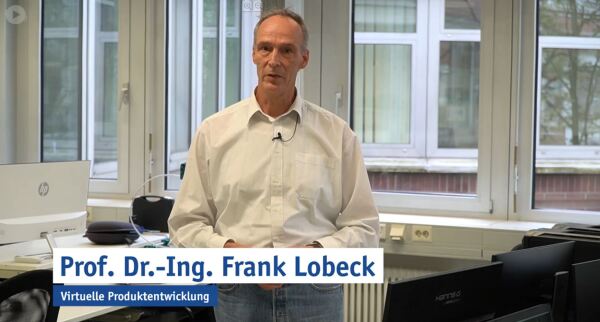
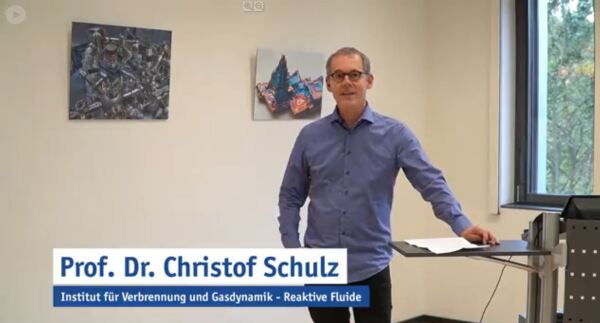
Introduction of the institutes


Contact
You have questions? We have answers!
Support Center for (International) Engineering Students Student advisory service
SG 119
Geibelstr. 41
47057 Duisburg
Tel.: +49 (0)203 379 3776
E-mail: scies@uni-due.de
Opening hours: Check website
Student council Mechanical Engineering
We are your point of contact! If you have questions about your studies or general concerns about us or our lecturers, you can contact us. We will solve your problems and answer your questions directly if possible or forward you to the right people. Just write us an email (fachschaft-maschinenbau@uni-duisburg.de) oder auf Facebookoder instagram
For prospective students and enrolled students General student counseling
ABZ offers counseling to prospective students, enrolled students and graduates on all questions concerning the choice of study program, studies and the transition into working career.
Support in the Faculty
Prof. Dr.-Ing. Frank Lobeck
MG 171 Tel.: 0203/37-92508
Office hours: by arrangement
Dr.-Ing. Jens Neugebauer
Study focus ship and offshore technology
BK 116, Tel.: 0203/37-91168
Office hours: by arrangement
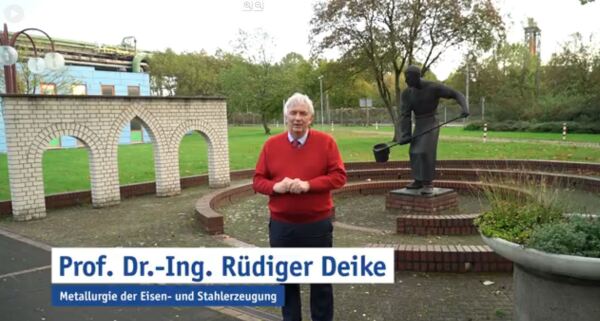
Prof. Dr.-Ing. Rüdiger Deike
Major in Metal Processing and Application
Friedrich-Ebert-Str. 12, 47119 Duisburg
Room ST 111
Phone: 0203/37-93455
Office hours: by arrangement
https://www.uni-due.de/mus
Dr.-Ing. Frederic Kracht
Major in Mechatronics
MD 227, Tel.: 0203/37-93951
Office hours: by appointment
M.Sc. Marius Janßen
Product Engineering
MA 230a, Tel.: 0203/37-92721
Office hours: by arrangement
Dr.-Ing. Jürgen Roes
Major in Energy and Process Engineering
MA 325, Tel.: 0203/37-93010
Office hours: by arrangement