Transfer
The Faculty of Engineering (FIW) at the University of Duisburg-Essen is actively involved in knowledge transfer and thus creates a bridge between academic research and practical application. The close link between science and industry is not only a key strength of the Faculty, but also a traditional feature of German engineering.
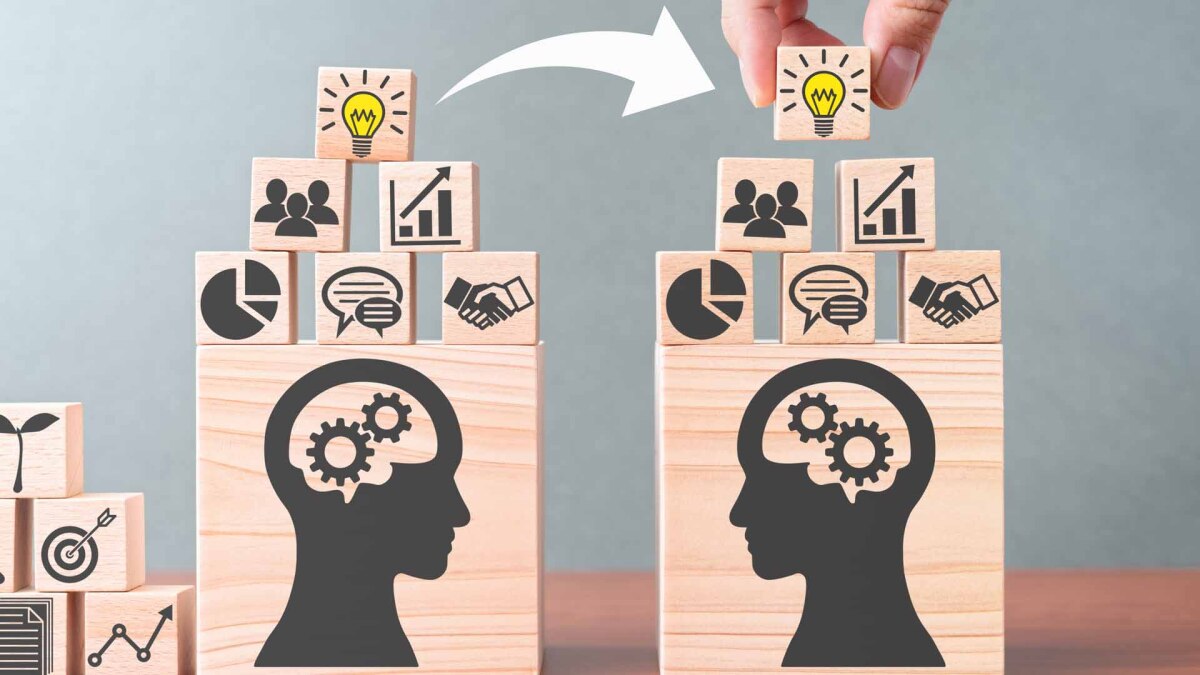
We understand transfer as a dynamic process in which research results, technological innovations and creative ideas find their way from the laboratories and institutes into industry and society. This happens in a variety of ways - from joint research projects and technology transfer to business start-ups.
There are many transfer paths - from the idea to the application:

1. Research-Based Cooperations
In publicly funded projects, researchers from the faculty work closely with companies, public institutions and other research organisations. These collaborations not only create innovations, but also make a direct contribution to solving social challenges. An overview of current research projects can be found here.
2. Technology transfer and Patents
The systematic transfer of scientific findings into marketable products is supported by the university's technology transfer programme. Researchers receive advice on patenting and commercialisation as well as access to a network of industrial partners. The University of Duisburg-Essen has a central technology transfer centre that bundles various services. Applications are supported here, for example, by the two co-creation labs Product Innovation and the Place Beyond Bytes.

3. Entrepreneurship and Startups
The Faculty's wealth of ideas regularly leads to successful spin-offs. In collaboration with the Centre for Start-ups & Innopreneurship (GUIDE), students and researchers are supported on the path from idea to company foundation. The aim is to transfer innovations into the economy and strengthen the entrepreneurial spirit. Anyone interested in founding an idea is welcome to contact us by e-mail .
Greenlyte Carbon Technologies
Emerging from the field of particle science, the start-up is developing an innovative electrolysis technology for the direct capture of CO₂ from ambient air (Direct Air Capture). Greenlyte aims to make industrial decarbonization and CO₂ circular economy more efficient and scalable.
LastBIM
The Essen-based start-up is developing software to optimize information management in BIM projects. The platform enables the efficient definition, attribution, and validation of requirements in digital construction projects. For its innovative solution, LastBIM was awarded the Start-up Prize by the Federal Ministry for Economic Affairs and Climate Action.
Red Cable Robots
Originating from years of research at the Chair of Mechatronics, Red Cable Robots develops high-dynamic cable-driven robots for industrial applications. The technology enables precise movement of heavy loads in three-dimensional spaces and is particularly suited for large work areas where conventional robots reach their limits. The start-up was supported by the EXIST Research Transfer program and guided by the UDE’s GUIDE initiative.

Spin-offs since 2005
The FIW stands not only for excellent research and practice-oriented teaching – it also serves as an active incubator for innovative start-up ideas. Numerous companies that have emerged from the FIW in recent years are impressive proof of the entrepreneurial potential of technical research.
The adjacent diagram presents a selection of spin-offs and start-ups founded in various FIW departments since 2005 – ranging from high-frequency technology to medical engineering, from sensor systems and additive manufacturing to energy and mobility transition.

4. Knowledge transfer and Scientific communication
The faculty is actively involved in knowledge transfer in order to present complex scientific findings in an understandable way and to disseminate them to society. Science communication plays a key role in this - current research topics are made accessible to a wide audience in lectures, workshops and public dialogues. Centrally organised, there are various offers for knowledge and technology transfer: Link
Current news from our faculty can be found on the faculty's LinkedIn-Account or under the mainpage "News".
Energopolis
In this interdisciplinary podcast series, scientists – including researchers from the FIW – discuss key questions surrounding the energy transition. Topics range from the hydrogen economy and heating networks to the public acceptance of renewable technologies.
Science Chatter Ruhr
A low-threshold audio format in which researchers from the region present their projects – including FIW-related topics such as synchrotron radiation and the impacts of the energy transition.
Pint of Science
FIW regularly takes part in this international science format, where researchers present their topics in pubs and cafés. The contributions highlight how application-oriented and accessible engineering research can be – for example, on exoskeletons, ultrafast processes, or nanotechnology.

5. Transfer-Orientated teaching and further education
The involvement of external partners in teaching and learning formats enables students to establish contacts with practice at an early stage. In addition, the faculty offers extra-occupational continuing education programmes that transfer current scientific findings directly into professional practice. For example, the institutes affiliated with the faculty have a wide range of practice partners who are actively involved in teaching at FIW.

6. Scientific advice
The faculty makes its expertise available to political decision-makers and social actors. It makes a valuable contribution to evidence-based decision-making in business, politics and society through expert reports, studies and specialist lectures.

7. Research infrastructure for external partners
The faculty also makes its high-quality research infrastructure, such as laboratories, large-scale equipment and specialised software solutions, available to external partners. This makes a valuable contribution to promoting innovation. One example is the Interdisciplinary Center for Analytics on the Nanoscale (ICAN) in the NanoEnergieTechnikZentrum (NETZ), which bundles research into functional materials for energy applications.