Trial Lectures

For pupils in the Duisburg-Essen region who want to find out more about studying engineering, the Faculty of Engineering has developed the following offers for “trial lectures”, which provide a first insight into the university and the various aspects of an engineering degree programme.
Read moreThe Faculty of Engineering is looking forward to meeting you!Subject areas for trial lectures
We, the sponsoring association of the faculty of Engineering organise a visit to a trial lecture at the University of Duisburg-Essen for groups of 20-30 pupils. Our programme is aimed at students in years 11 to 13 at grammar schools and comprehensive schools.
Several visits can also take place on one day or within the same week. There are no costs, only the transport costs must be borne by the schools.
Click here to register.

Quantum technology
Experience the fascinating world of quantum technology. This course offers you exclusive insights into topics and methods that are shaping the future of technology:
- Quantum Computing and cryptography: Explore the functioning of quantum computers and secure data transmission.
- Random numbers and entanglement: Understand the basics of quantum security.
- Augmented Reality in quantum research: Delve deeper into the quantum world with AR and specialised software.
Read more
The career opportunities in quantum technology are exciting and varied:
- High technology and IT security: Development of tap-proof communication.
- Medical Technology: Use of highly sensitive quantum sensors.
- Research and Development: Innovation in quantum research and technology.
Using practical examples and the latest technologies, you will learn about the key applications and potential of quantum technology.
Duration: Half- or full-day
Professor: Dr. Kirsten Dunkhorst
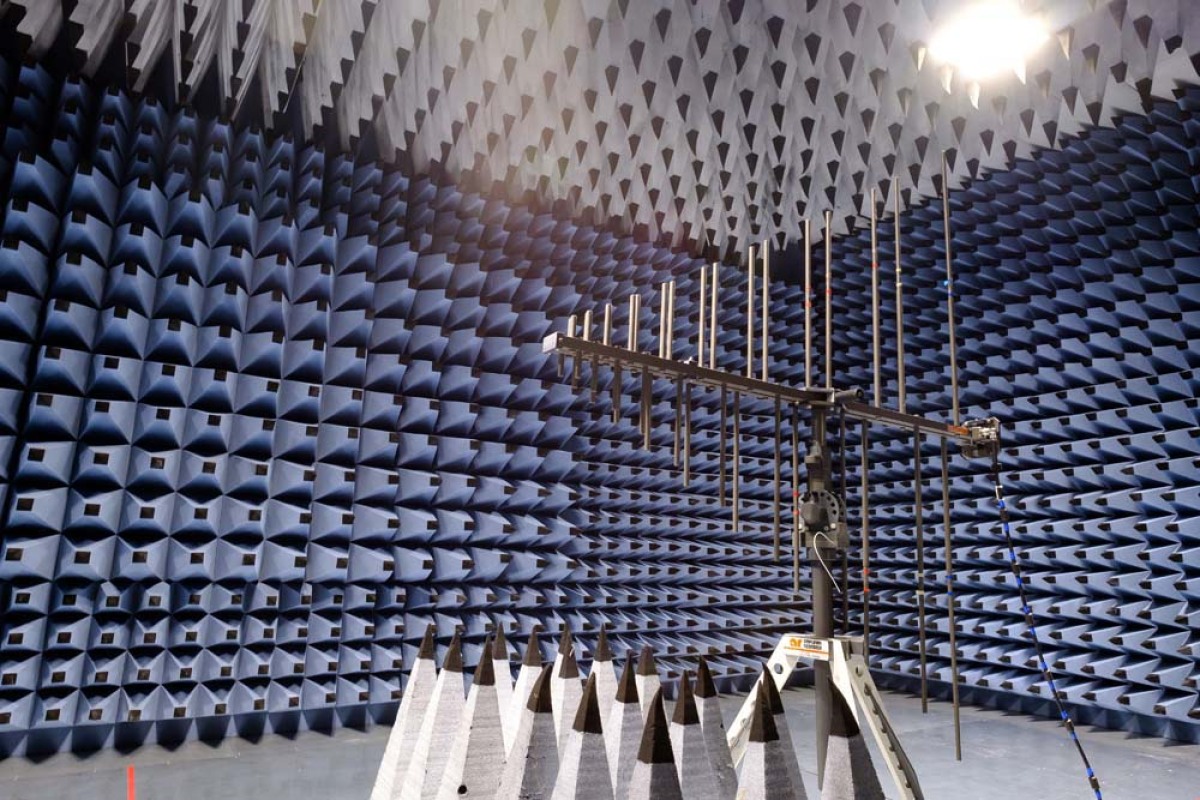
High-voltage technology & electromagnetic compatibility (EMC)
Immerse yourself in the fascinating world of high-voltage technology and electromagnetic compatibility (EMC). This course offers you exclusive insights into technologies that are essential for modern power transmission and the protection of electrical systems.
- High-voltage systems and testing: Learn how high-voltage systems for power transmission are designed and tested to ensure safety and efficiency.
Read more
- EMC - protection and test methods: Discover how electrical devices are protected against electromagnetic interference and how immunity tests are carried out.
The career opportunities in the field of high-voltage engineering and EMC are varied and offer exciting prospects in different sectors:
- Energy industry: Work on the planning and maintenance of high-voltage networks, which are essential for energy supply.
- Electrical industry: Develop EMC-compliant electrical devices and systems.
- Automobile industry: Ensure EMC protection in modern electric vehicles.
- Test institutes: Perform tests and certifications for EMC and high voltage.
Laboratory demonstrations and accompanying lectures will give you an in-depth understanding of high-voltage technology and EMC test procedures.
Duration: Half-or full-day
Professor: Prof. Dr. Holger Hirsch, Uni Duisburg

Nano-engineering & Information Technology
Indulge yourself into the fascinating world of Nano-Engineering and Information Technology! Innovative semiconductor chips are developed and researched for applications at the highest frequencies, the so-called terahertz waves, in the field of ultra-high frequency electronics. This advanced technology has a wide range of applications and is of great importance for many forward-looking areas:
- Sensors for sustainable agriculture: These sensors significantly increase the efficiency and environmental friendliness of agricultural processes. They help to conserve resources and maximise yields.
Read more
- Medical imaging: Terahertz technology enables high-resolution, non-invasive examinations that open up new possibilities in medical diagnostics.
- Wireless data transmission: Experience the future of communication with ultra-fast data transmission rates of up to 1 terabit (1000 Gbit/s) bandwidth, setting new standards in information transmission.
The career opportunities in nano-technology are diverse. Graduates find positions in:
- Electrical and microelectronics industry: Development and production of miniature components for electronic devices.
- Optical industry: Production and optimisation of optical components and systems.
- Automobile industry: Use of nanomaterials to improve vehicle components and systems.
- Energy industry: Development of efficient nano-based energy converters and storage systems.
- Plant engineering and process engineering: Implementation of nanotechnologies in industrial processes and plants.
- Chemical industry: Production and application of nanomaterials in various chemical products.
This course offers you not only theoretical insights, but also practical experience that will awaken your enthusiasm for these innovative technologies. Visit us and discover how nanoengineering and information technology are shaping the world of tomorrow.
Duration: Approx. 2 hours on selected afternoons, either at school or at the University of Duisburg (preferred)
Professor: Prof. Dr. Wolfgang Mertin, Uni Duisburg

Hydraulic engineering & water management
Experience, how engineers at Wasserbau-Institut of the University of Duisburg-Essen are helping to solve crucial water problems worldwide. With an interdisciplinary approach that combines expert knowledge from engineering and data science, innovative and sustainable solutions are developed.
This course will give you an in-depth insight into the exciting challenges and techniques of hydraulic engineering and water management:
- Hydraulic engineering projects: Learn how engineers plan and realise flood protection systems to protect cities and landscapes from flooding.
Read more
- Water management: Find out how modern water supply systems are designed to ensure the sustainable and efficient use of water resources.
There are many career opportunities in hydraulic engineering and water management. Graduates find positions in:
- Engineering offices and construction companies: Work on the planning and realisation of large hydraulic engineering projects.
- Research institutes and universities: Participate in the scientific study of water resources and environmental issues.
- Authorities and environmental organisations: Develop strategies for flood protection and the sustainable use of water resources.
- Consultancy firms: Support projects for sustainable development and environmental management.
Practical demonstrations in the test halls and laboratories of the University of Duisburg will show you how theoretical knowledge is translated into real projects. See at first hand how engineering solutions can contribute to overcoming global water problems.
Duration: One afternoon each in the test halls and laboratories of the University of Duisburg
Professor: Gregor Johnen, Uni Duisburg, Campus Essen
Visit us and discover how hydraulic engineering and water management improve the quality of life worldwide and what role innovative technologies play in this.

Process engineering
Our subjects areas deals with the processing of particles and covers a wide range of applications. These include:
- Energy applications: Development and optimisation of electrodes for electrolysis, batteries and fuel cells.
- Chemical industry: Applications in the life sciences and in the manufacture of paints and coatings.
Read more
Die job opportunities in process engineering are versatile. Graduates find positions in:
- Middle-sized companies: Work in dynamic and innovative environments that develop customised solutions.
- Big chemical companies: Companies such as Evonik and BASF offer extensive opportunities in the traditional chemical industry.
- Aerospace: Participate in pioneering projects such as the development of fuel cell aeroplanes at Airbus.
- Technical sales: Support the sales of technically sophisticated products and solutions.
This course offers you a combination of laboratory visits and practical demonstrations that show you how theoretical knowledge is translated into real industrial processes. Experience first-hand how process engineers develop and implement innovative solutions.
Duration: One afternoon each with laboratory visits and demonstrations at the University of Duisburg
Professor: Prof. Dr. Doris Segets, Uni Duisburg
Visit us and discover the diverse career opportunities in process engineering, a discipline that forms the basis for many modern technologies and industrial processes.
Semiconductor technology & opto-electronics
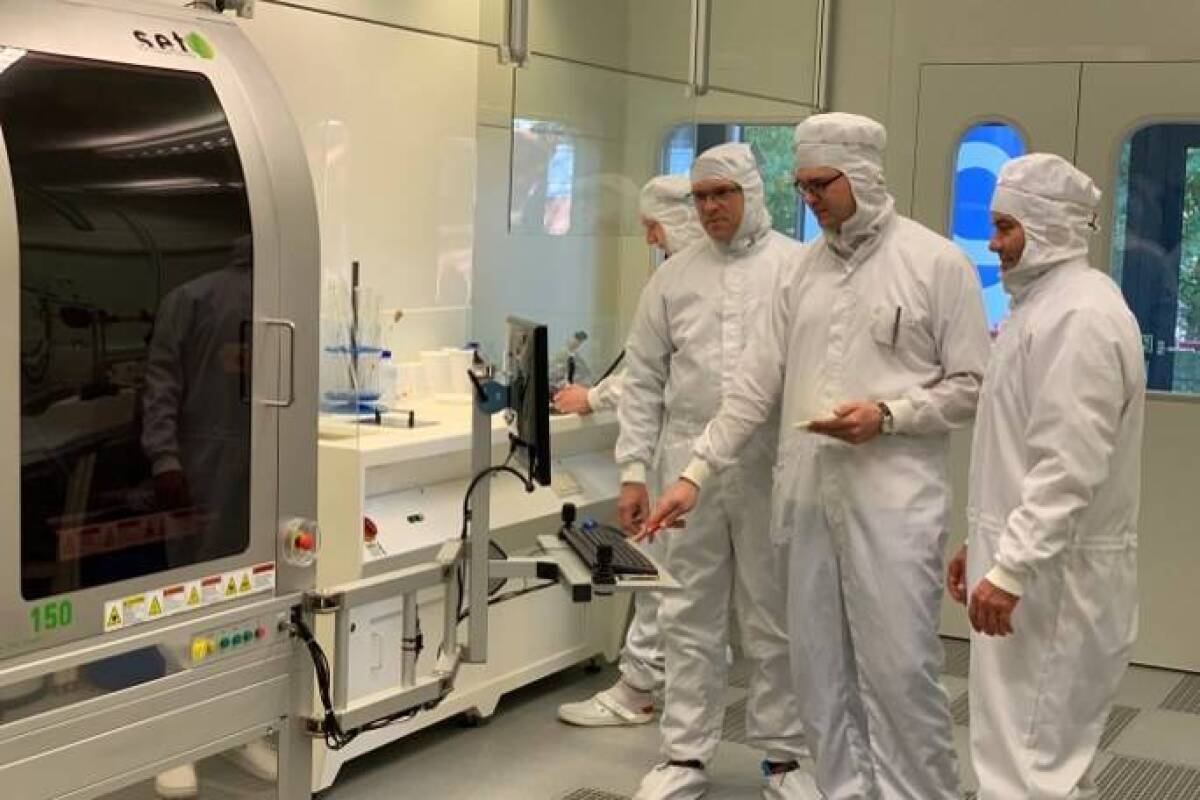
Immerse yourself in the highly specialised world of semiconductor technology and optoelectronics. This course offers you exclusive insights into the technologies that form the basis for modern electronic devices:
- Clean room and special equipment for semiconductor chip production: Find out how semiconductor chips are manufactured in special clean rooms under highly controlled conditions.
- Measurement setups for researching tera-hertz components: Discover the latest developments in terahertz technology used in applications such as imaging and ultra-fast communication.
Read more
The career opportunities in the field of semiconductor technology and optoelectronics are diverse and offer exciting prospects in various sectors:
- Semiconductor industry: Work in the development, production and quality control of semiconductor chips, which are used in numerous electronic devices.
- Medicine technology: Develop innovative solutions for medical imaging and diagnostics based on terahertz technology.
- Telecommunication: Participate in the development of high-speed data transmission systems that are shaping the future of communications technology.
- Agriculture: Develop and implement sensor systems that improve the efficiency and sustainability of agricultural production.
- Research and development: Work at the forefront of technological innovation by researching new applications for semiconductor and terahertz technologies.
Through lab demonstrations and accompanying lectures, you will gain an in-depth understanding of the processes and techniques used in semiconductor and opto-electronics.
Duration: Half-or full-day
Professor: Prof. Dr. Nils Weimann, Uni Duisburg
Experience at first hand how semiconductor and optoelectronics engineers are shaping the technology of tomorrow and the important role these technologies play in the modern world.

Industrial Engineering and Management
With its synthesis of business and technology, the industrial engineering and management is fit for the job market. The degree programme combines a wide range of technical and business management options and prepares you for attractive and relevant interface positions.
There are hardly any areas in which industrial engineers cannot work and are not in demand. For example, they work as production managers, project managers, sales engineers, management consultants, controllers, etc. Industrial engineers are particularly in demand in Germany's important and dominant sectors of mechanical engineering and the electrical industry.
Duration: One morning or afternoon, approx. 1 hour
Professor: Prof. Dr. Andreas Wömpener, Uni Duisburg

Thermodynamics
Explore the fascinating world of thermodynamics and its applications in mechanical engineering and process engineering. This course offers you comprehensive insights into the fundamentals and practical applications of this important discipline:
- Mechanical engineering: Find out how thermodynamic principles are used to develop and optimise machines and drives.
- Process engineering: Learn how thermal processes are used in process engineering to manufacture and improve products.
Read more
Through illustrative experiments and lectures, you will gain a deep understanding of the importance of thermodynamics in various technical areas.
Duration: On selected afternoons, either at school or at the University of Duisburg (preferred)
Professor: Prof. Dr. Burak Atakan, Uni Duisburg
Discover how thermodynamics influences the efficiency and performance of machines and systems and what career opportunities are available in this field.

Mobility & Autonomous Systems
Experience the pioneering developments in mobility and autonomous systems. This course offers you valuable insights into the concepts and technologies that will shape the mobility of the future:
- Mobility concepts: Find out more about innovative approaches to designing sustainable and efficient transport systems.
- Driving simulators and driving dynamics: Creation and utilisation of simulators for the investigation and improvement of driving dynamics and the development of modern driver assistance systems.
Read more
- Driver assistance systems and human-machine interfaces: Research and application of machine learning methods to improve the interaction between driver and vehicle and to increase road safety.
- Traffic simulations: Visualisation and analysis of traffic flows and real traffic situations in order to investigate the effects of new drive technologies and assistance systems.
The career opportunities in mobility are diverse. Graduates find positions in:
- Automotive and supplier industry: Development and implementation of new technologies and systems to improve vehicle dynamics and safety.
- Research institutes and universities: Scientific research and teaching activities in the field of vehicle technology and electromobility.
- Technological development: Collaboration on projects to optimise traffic flow and integrate electromobility into existing traffic systems.
Using practical examples and simulations, you will learn how engineers master the challenges of modern mobility and what role you can play in this exciting field.
Duration: One morning or afternoon at the University of Duisburg
Professor: Prof. Dr. Ellen Enkel & Prof. Dr.-Ing. Dr. h.c. Dieter Schramm, Uni Duisburg
Experience how mobility concepts and driving dynamics are revolutionising the way we get around and what career opportunities are available in this promising field.

Metallurgy & Forming Technology
Discover the versatile world of metallurgy and forming technology. This course offers you practical insights into various metallurgical and forming processes:
- Metallurgy laboratory:
- Melting test, e.g. with aluminium, steel or copper
- Casting test in sand or ingot mould
- Examination methods such as spectroscopy, scanning electron microscopy, X-ray fluorescence analysis
Read more
- Forming technology laboratory:
- Open-die forging test e.g. hot or cold forging of aluminium, steel or copper
- Rolling test e.g. hot or cold rolling
- Wire drawing test of copper or steel
- Test methods such as tensile test or compression test
Experience how metallurgical and forming processes are used to produce and optimise metallic materials and the importance of these processes in modern industry.
Duration: Half or full day at the University of Duisburg
Professor: Prof. Dr. Rüdiger Deike, Uni Duisburg
Visit us and discover how metallurgy and forming technology form the basis for many industrial applications and what exciting career opportunities are opening up in this field.